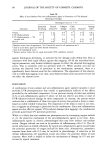
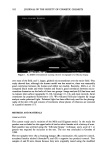
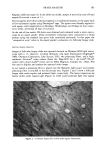
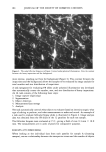
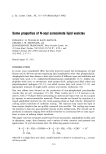
114 JOURNAL OF THE SOCIETY OF COSMETIC CHEMISTS The state of the N-acyl sarcosinates in the presence of water depends markedly on the ionization of the carboxyl group (pK near 4.5). At low pHs, where this group is fully protonated, N-acyl sarcosinates are water-insoluble and can form lipid bilayers. As the carboxyl group dissociates, N-acyl sarcosinates become water-soluble. Lipid vesicles made of N-acyl sarcosinates thus constitute simple carrier systems allowing pH- triggered delivery of active materials. EXPERIMENTAL N-lauroyl sarcosinate, N-cocoyl sarcosinate, and N-oleoyl sarcosinate (94% purity) were obtained from W. R. Grace (Lexington, MA) and R. T. Vanderbilt (Norwalk, CT), and cholesterol was obtained from RITA (Woodstock, IL). Lipid vesicles were formed es- sentially as in (17). Two ml of un-ionized sarcosinate or sarcosinate/cholesterol mixture, plus or minus oil cargo, were heated to 65-70øC and transferred to a 10-ml syringe. This syringe was connected via a stopcock to a second syringe containing 10 ml of deionized water at 60-65øC. The lipid mixture was immediately injected into the aqueous phase, and the resulting mixture was injected back into the first syringe. This process was repeated 20 times in 30 sec. The resulting cooled vesicle suspension was examined by dark-field and polarization microscopy, and sized using a Coulter NS particle counter. In separate experiments the above procedure was used to hydrate un-ionized sarcosinates at high proportions (0.4-0.75, v/v). To measure vesicle water volume, 10 ml of the vesicle suspension was mixed with 10 ml of 20% dextran (M. Wt. 100,000-200,000 Sigma Chemical Co., St. Louis, MO) in deionized water. After centrifugation for 15 min at 3,500 rpm (Jouan bench top centrifuge), the vesicles had separated into a sharp layer floating atop a clear infranatant. The volumes of the layers were determined and the vesicle volume, in ml/g and ml/ mMol sarcosinate, calculated, using average molecular weights of 270,280, and 349 for N-lauroyl, N-cocoyl, and N-oleoyl sarcosinate, respectively. Vesicle diameters were obtained with a Coulter NS4DS submicron analyzer. To measure vesicle oil uptake, increasing proportions of mineral oil (Drakeol 19, Pen- reco, Butler, PA) were dissolved in the lipid phase prior to hydration, microscopy, and centrifugation over dextran. The limit to oil uptake is marked by the appearance of microscopically discernible oil droplets and, after centrifugation, separation of a layer of free oil atop the vesicle layer. Oil uptake is calculated in ml/g and ml/mMol sarcosinate. Freeze fracture of samples frozen in liquid propane was carried out using a Baizers freeze fracture apparatus (BAF 400) followed by shadowing with platinum/carbon. Replicas were examined with a JEOL electron microscope (JEM 100 SX). RESULTS At proportions of 0.5 and less, using deionized water as aqueous phase, all of the N-acyl sarcosinates gave paucilamellar vesicles exhibiting no membrane birefringence upon polarization microscopy. Important features of these vesicles are given in Table I. At a N-lauroyl sarcosinate proportion of 0.6 or a N-cocoyl sarcosinate proportion of

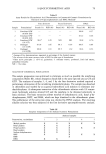
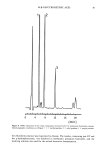
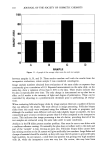
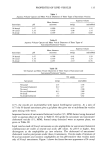
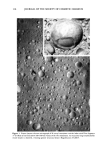
PROPERTIES OF LIPID VESICLES 115 Table I Aqueous Volume Capture and Mean Vesicle Diameters of Three Types of Sarcosinate Vesicles Sarcosinate Mean diameter pH (microns) (ml/g) Aqueous volume (ml/mMol) N-lauroyl 3.67 0.600 4.16 1.12 N-cocoyl 3.24 0.466 4.08 1.14 N-oleoyl 3.54 0.399 2.55 0.89 Table II Aqueous Volume Capture and Mean Vesicle Diameters of Three Types of Sarcosinate/Cholesterol Vesicles Sarcosinate Mean diameter pH (microns) f (ml/g) Aqueous volume (ml/mMol) N-lauroyl 3.67 0.209 4.41 1.19 N-cocoyl 3.24 0.339 4.41 1.23 N-oleoyl 3.54 0.255 2.19 0.76 Table III Oil Capture and Mean Vesicle Diameters of Three Types of Sarcosinate and Sarcosinate/Cholesterol Vesicles Oil uptake Sarcosinate (ml/g) (ml/mMol) N-lauroyl 12.5 3.38 N-lauroyl/cholesterol 16.2 4.37 N-cocoyl 7.1 2.00 N-cocoyl/cholesterol 10.3 2.88 N-oleoyl 7.1 2.49 N-oleoyl/cholesterol 13.2 4.62 0.75, the vesicles are multilamellar with typical birefringence patterns. At a ratio of 0.75 the N-lauroyl sarcosinate gives a gel phase that gives rise to multilamellar vesicles upon mixing with water. Important features of sarcosinate/cholesterol vesicles (3/1 M/M) formed using delonized water as aqueous phase are given in Table II. Oil uptake by sarcosinate and sarcosinate/ cholesterol vesicles (3/1 M/M), formed using deionized water as aqueous phase, are given in Table III. Lipid vesicles made of N-acyl sarcosinates as sole amphiphiles (or sarcosinate/cholesterol combinations) are stable at neutral and acidic pH values. At pH 8 or higher, they disintegrate as the amphiphiles go into solution. The cholesterol of sarcosinate/ cholesterol vesicles precipitates under these circumstances. Vesicles made of mixtures of N-acyl sarcosinates and nonionic amphiphiles are less pH-sensitive than vesicles made only of N-acyl sarcosinates. Figure 1 shows the freeze fracture appearance of N-cocoyl
Purchased for the exclusive use of nofirst nolast (unknown)
From: SCC Media Library & Resource Center (library.scconline.org)