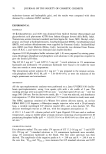
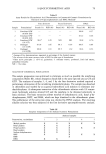
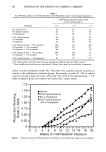
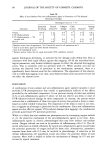
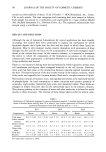
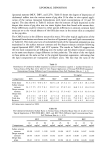
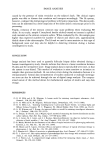
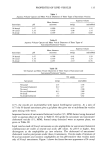
96 JOURNAL OF THE SOCIETY OF COSMETIC CHEMISTS carried out after addition of about 15 ml of Ecolite + (ICN Biomedical, Inc., Irvine, CA) to each system. The tape strippings and remaining skin were assayed as follows: Each sample was placed in a combustion cone and burned in a tissue oxidizer (Model 306, Packard Instrument Co., Downers Grove, IL). The separated radionuclides were assayed using a scintillation counter. RESULTS AND DISCUSSION Although the use of liposomal formulations for topical application has been steadily increasing, few studies have been undertaken to explain the mechanism by which liposomes deposit their lipids into the skin and the depth to which these lipids are deposited. Most in vitro transport studies concern themselves with permeation of drug through the skin and do not focus on the accumulation of lipid and entrapped ingre- dients in the various skin strata. In the cosmetic industry, it is essential to determine the extent to which the components of the formulation accumulate in the stratum corneum and, more importantly, to determine whether or not they are transported to the living epidermis and beyond. There is a vast literature dealing with the mechanisms by which liposomes interact with cell membranes and deposit their entrapped materials in the cell interior. However, little work has been done on the interactions between topically applied liposomes and the skin. The barrier function of the skin resides mainly in the stratum corneum, which lacks nuclei and organella but contains keratin fibers and a complex mixture of lipids. The stratum corneum of humans, mice, and pigs has been shown to be essentially devoid of phospholipids. Its lipid composition is rather non-polar and consists primarily of ceramides, triglycerides, cholesterol, fatty acids, and cholesteryl sulfate. These lipids are arranged in bilayer structures that fill the intercellular space in the stratum corneum. The primary pathway to the transport of water and other molecules is believed to reside mainly in these structures. The removal of these bilayer sheets either by solvent treat- Table I Distribution of Cholesterol (expressed as percent formulation applied + standard deviation) in Various Strata of Hairless Mouse and Pig Skin 24 hr After In Vitro Topical Application of Various PC/CH/CS Liposomal Formulations Onto Full-Thickness Skin (n = 4-5) REV DRV MLV Compartment Mouse Pig Mouse Pig Mouse Pig Total donor 29.6 --- 0.03 41.4 +- 8.03 64.3 + 5.6 42.0 + 7.6 49.0 --- 8.9 46.6 +- 4.2 Surface stratum corneum 48.2 -+ 6.8 25.3 +-- 4.9 18.6 -+ 3.9 26.4 -+ 2.8 27.1 + 3.3 22.9 -+ 3.8 Deeper stratum corneum 21.6 -+ 4.2 27.8 + 5.8 16.7 -+ 4.3 25.7 + 5.8 22.2 -+ 6.5 22.0 + 0.8 Deeper skin strata 1.2 -+ 0.3 5.5 + 0.7 1.4 + 1.3 5.8 + 0.5 1.6 -+ 0.2 8.3 + 1.6 Total skin 70.3 + 2.4 58.6 -+ 11.5 35.6 + 6.2 57.9 -+ 8.0 50.9 + 9.6 53.2 -+ 6.2 Receiver 0.1 -+ 0.05 0.05 -+ 0.05 1.1 + 0.02 0.1 -+ 0.1 1.2 + 0.03 0.2 + 0.06 All values were corrected to 100%.

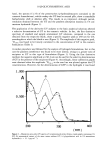
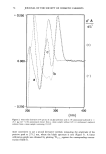
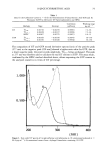
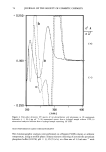
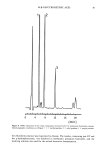
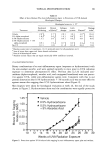
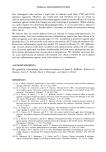
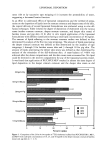
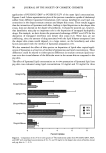
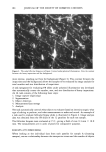
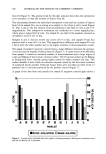
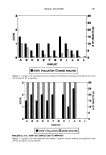
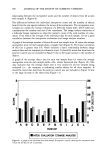
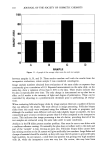
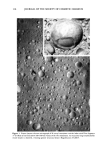
LIPOSOMAL DEPOSITION 97 ment (10) or by successive tape stripping (11) increases the permeability of water, suggesting a decreased barrier function. In an effort to understand effects of liposomal compositions and the method of prepa- ration on the deposition of lipids into the stratum corneum and deeper strata of the skin, the topical delivery of several liposomal formulations was evaluated using in vitro dif- fusion techniques. Table I shows the degree of deposition of cholesterol into the various strata (surface stratum corneum, deeper stratum corneum, and deeper skin strata) of hairless mouse and pig skin 24 hr after in vitro topical application of the liposomal formulations with different lamellarities having a total lipid concentration of 10 mg/ml. The amount of lipids adhering to the stratum corneum surface was defined as that determined by analysis of the first two tape strippings. The amount of lipids penetrating the deeper stratum corneum was defined as that determined by the analysis of tape strippings 3 through 9 for hairless mouse skin and 3 through 18 for pig skin. The amount of lipids penetrating the deeper skin strata was defined as that determined by analysis of the remainder of the full-thickness skin. A mass balance of 96% was achieved after the donor compartment and the skin rinses were accounted for. No lipid could be detected in the receiver compartment for any of the liposomal systems tested. It was found that application of PC/CH/CS MLV resulted in almost the same degree of lipid deposition in the deeper stratum corneum and the deeper skin strata as did 50mg/m I-Pig 50mg/mI-Mouse 25mg/mI-Pig 25mg/mI-Mouse 10mg/mI-Pig 10mg/mI-Mouse .......................... , : [] REV : [] I I ' I ' I 0 10 20 30 40 50 Percent Uptake Figure 1. Comparison of the 24-hr in vitro uptake of Z4[C]-cholesteryl sulfate from PC/CH/CS DRV, MLV, and REV with total lipid concentrations of 10, 25, and 50 mg/ml in the deeper stratum corneum of hairless mouse and pig skin (n = 4-5).
Purchased for the exclusive use of nofirst nolast (unknown)
From: SCC Media Library & Resource Center (library.scconline.org)