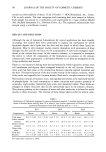
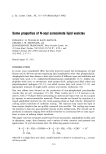
j. Soc. Cosmet. Chem., 43, 113-118 (March/April 1992) Some properties of N-acyl sarcosinate lipid vesicles DONALD F. H. WALLACH, RAJIV MATHUR, GERARD J. M. REDZINIAK, and JEAN-FRANCOIS TRANCHANT, Micro Vesicular Systems, Inc., 20 Cotton Road, Nashua, NH 03049 (D.F.H.W., R.M.), and Parfums Christian Dior 45804 Saint Jean de Braye, France (G.J.M.R., J.-F.T.). Received August 1 O, 19910 INTRODUCTION In recent years considerable effort has been directed toward the development of lipid bilayer vesicle delivery systems employing lipid amphiphiles other than phospholipids. Amphiphiles have been shown to form lipid vesicles of different types and stabilities and include fatty acids (1,2), dialkyldimethylammonium amphiphiles (3-7), dialkyl amo phiphiles with ionic or zwitterionic head groups (8,9), polyglycerol alkyl ethers and polyethoxylated analogues (10,11), two-tailed sucrose fatty acid esters (12,13), and appropriate mixtures of single-tailed cationic and anionic surfactants (14). Our own efforts have focused on the production of nonophospholipid paucilamellar vesicles that we call "novasomes" (15-20). These vesicles are 0.1-1.0 microns in di- ameter, with 2-5 bilayer shells surrounding an unstructured space that can be occupied by aqueous or water-immiscible materials. These vesicles are formed by injection of a liquid amphiphile mixture into the excess aqueous phase at high velocity, followed by cooling under conditions of turbulent mixing. The injection step causes the lipid to form minute droplets that are quickly converted into micelies. The cooling step causes the micelles to fuse into paucilamellar vesicles within milliseconds. The vesicles can be produced in amounts ranging from milliliter batches to continuous flow at costs equiv- alent to those of making simple emulsions. This paper concerns novasomes made from N-acyl sarcosinates, amphiphiles widely used in shampoos, soaps, skin cleansers, and a variety of other cosmetic and personal care applications. Noacyl sarcosinates have the following general structure: R - C - N - CH2 - COOH (--) R - C - N - CH2 - CH2 - COO - -4- H + O CH 3 O CH 3 where R is a single fatty acyl chain, usually lauroyl or oleoyl or a mixture (e.g., coconut oil fatty acids). 113

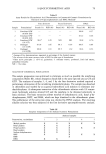
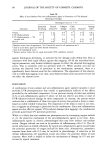
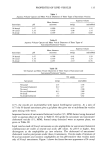
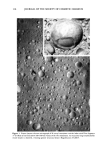
114 JOURNAL OF THE SOCIETY OF COSMETIC CHEMISTS The state of the N-acyl sarcosinates in the presence of water depends markedly on the ionization of the carboxyl group (pK near 4.5). At low pHs, where this group is fully protonated, N-acyl sarcosinates are water-insoluble and can form lipid bilayers. As the carboxyl group dissociates, N-acyl sarcosinates become water-soluble. Lipid vesicles made of N-acyl sarcosinates thus constitute simple carrier systems allowing pH- triggered delivery of active materials. EXPERIMENTAL N-lauroyl sarcosinate, N-cocoyl sarcosinate, and N-oleoyl sarcosinate (94% purity) were obtained from W. R. Grace (Lexington, MA) and R. T. Vanderbilt (Norwalk, CT), and cholesterol was obtained from RITA (Woodstock, IL). Lipid vesicles were formed es- sentially as in (17). Two ml of un-ionized sarcosinate or sarcosinate/cholesterol mixture, plus or minus oil cargo, were heated to 65-70øC and transferred to a 10-ml syringe. This syringe was connected via a stopcock to a second syringe containing 10 ml of deionized water at 60-65øC. The lipid mixture was immediately injected into the aqueous phase, and the resulting mixture was injected back into the first syringe. This process was repeated 20 times in 30 sec. The resulting cooled vesicle suspension was examined by dark-field and polarization microscopy, and sized using a Coulter NS particle counter. In separate experiments the above procedure was used to hydrate un-ionized sarcosinates at high proportions (0.4-0.75, v/v). To measure vesicle water volume, 10 ml of the vesicle suspension was mixed with 10 ml of 20% dextran (M. Wt. 100,000-200,000 Sigma Chemical Co., St. Louis, MO) in deionized water. After centrifugation for 15 min at 3,500 rpm (Jouan bench top centrifuge), the vesicles had separated into a sharp layer floating atop a clear infranatant. The volumes of the layers were determined and the vesicle volume, in ml/g and ml/ mMol sarcosinate, calculated, using average molecular weights of 270,280, and 349 for N-lauroyl, N-cocoyl, and N-oleoyl sarcosinate, respectively. Vesicle diameters were obtained with a Coulter NS4DS submicron analyzer. To measure vesicle oil uptake, increasing proportions of mineral oil (Drakeol 19, Pen- reco, Butler, PA) were dissolved in the lipid phase prior to hydration, microscopy, and centrifugation over dextran. The limit to oil uptake is marked by the appearance of microscopically discernible oil droplets and, after centrifugation, separation of a layer of free oil atop the vesicle layer. Oil uptake is calculated in ml/g and ml/mMol sarcosinate. Freeze fracture of samples frozen in liquid propane was carried out using a Baizers freeze fracture apparatus (BAF 400) followed by shadowing with platinum/carbon. Replicas were examined with a JEOL electron microscope (JEM 100 SX). RESULTS At proportions of 0.5 and less, using deionized water as aqueous phase, all of the N-acyl sarcosinates gave paucilamellar vesicles exhibiting no membrane birefringence upon polarization microscopy. Important features of these vesicles are given in Table I. At a N-lauroyl sarcosinate proportion of 0.6 or a N-cocoyl sarcosinate proportion of
Purchased for the exclusive use of nofirst nolast (unknown)
From: SCC Media Library & Resource Center (library.scconline.org)