j. Cosmet. sc/., 51, 323-341 (September/October 2000) Papers presented at the Annual Scientific Seminar of the Society of Cosmetic Chemists (Friday's ProDraml May 11-12, 2000 Hilton Toronto Toronto, Ontario

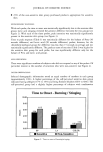
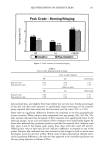
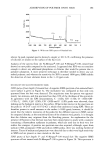
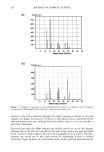
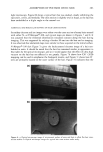
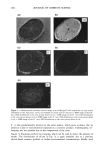
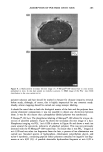
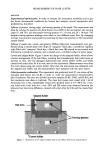
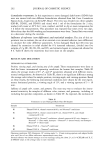
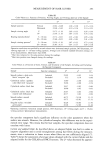
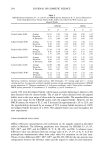
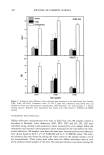
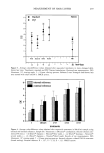
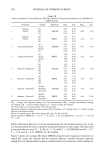
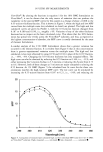
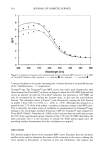
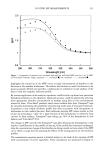
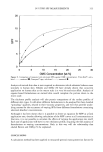
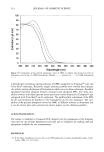
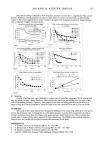
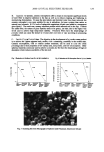
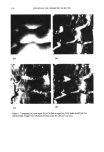
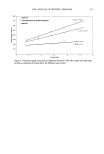
324 JOURNAL OF COSMETIC SCIENCE A STUDY ON PIGMENT DISPERSION IN COLOR COSMETICS: MILLING PROCESS AND SCALE-UP Di Qu, Ph.D. and Jeffrey W. Duncan Amway Corporation, 7575 E. Futon Street, Ada, MI 49555) INTRODUCTION Pigment dispersion in color cosmetics is a critical aspect which directly affects product quality and manufacturing cost. Typical pigments are supplied in powder form and contain different sizes of primary particles, aggregates, and large agglomerates that need to be adequately dispersed in final products. In addition to chemical means such as surfactants and surface coatings, mechanical means are also widely used to disperse pigment. In this study, a batch milling process using a high-speed rotor-stator mill was evaluated at two different setups, namely in-tank and in-line milling. MATERIALS, EQUIPMENT AND METHODS Commercially available oil and water dispersible pigments (red and black iron oxides) were used in this study. A hydrogenated jojoba oil (in colored beads form) was chosen as a model material for establishing milling process conditions due to its uniform particle size distribution. A batch is typically prepared by mixing 1% pigment or beads, 0.04% sodium lauryl ether sulfate, and 0.01% defoamer, in either an aqueous or an anhydrous medium. A Rotor-stator mill was used to mill the batch in two different processes. The first process involves milling a batch inside a tank, whereas the latter refers to recirculating through the mill outside the tank. A FBRM (focused beam reflectance measurement) in-line particle size analyzer supplied by Lasentec was used to monitor the changes in particle size and count. RESULTS AND DISCUSSION The pigment dispersion process was affected by several processing parameters such as rotor speed, impeller pumping capacity, batch viscosity, and recirculation flow rate. Experiments were designed to evaluate each of these parameters individually. Changes in particle count and size (mean chord length) were captured by the FBRM during milling, as shown in Figure 1. Mean particle size and the count for large particles decreased over time until they stabilized at a constant level, which indicated the effective end of the milling process. The counts for total and small particles increased as the result of milling. A. Effect of Rotor Speed: In-Tank Milling Rotor speed exhibited a significant effect on pigment dispersion. The higher the speed, the faster the particle size decreases. Two contributing factors are tip speed and turnover rate. Tip speed of the mill provides high shear and impingement force, which act to break down the particles. The batch turnover rate dictates how frequently the particles pass through the mill. Figure 2 shows the rate of large particle count reduction at various mill rotation speeds. B. Effect of Recirculation Flow Rate: In-Line Milling At constant rotor speed, the in-line milling process was primarily affected by the recirculation flow rate. Higher flow rate caused the particles to flow through the mill more frequently and therefore yielded a faster milling process, as shown in Figure 3. To achieve a 60% reduction in large particle count, the milling time was about five times longer at the flow rate of 22.3 ml/s than that at 71.2 ml/s. C. In-Tank vs. In-Line Figure 4 shows the performance comparison between in-tank and in-line milling processes. At the same rotor speed, in-tank milling is much more efficient than in-line milling. The result also supports the conclusion that batch milling is a flow-controlled process. The batch turnover rate is much slower for in- line milling than that of in-tank milling, resulting in a loss efficient unit operation. D. Effect of Batch Viscosity
Purchased for the exclusive use of nofirst nolast (unknown)
From: SCC Media Library & Resource Center (library.scconline.org)