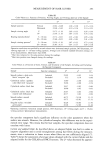
2000 ANNUAL SCIENTIFIC SEMINAR 327 In vivo testing of lip-color was preformed in a similar manner to the foundation testing. Pre-weighed lip-color was applied to the lips and allowed to set a predetermined amount of time. The amount of color applied was determined through the weight difference of the stick after application. Participants were then asked to "kiss" a pre-weighed tissue for five seconds. Amount transferred was again calculated through weight gain of the tissue. Visual assessments and Image Analysis were used in correlating the data. Variables were reviewed. Variables such as color of product, pressure of removal and time product was allowed to be worn were examined. RI•SULTS: The first variable to be examined was product color. Color of some formulation types (i.e. most lip-colors} demonstrated a large impact on the visual amount transferred. The darker the shade the easier transferred pigment was to observe. However, it is important to note that actual weight transferred did not change due to color variations and that certain formulation types did not demonstrate this phenomena. Pressure of rubbing was the next variable to be evaluated in vivo. Only light pressure was important, since simulating casual contact was the intent. A Wagner Force 5 Capacity Gauge (Model FDV-30} was used to determine pressure for the in vivo testing. Minor pressure variations (500+/-200g} did not effect percent transferred. Visual assessments and Image Analysis also correlated with these results. Initial transfer resistance testing, which was preformed five minutes after application, was the most straightforward testing to preform on cosmetics. However this manner of testing provides limited information to the cosmetic formulator. Since long wear is also of importance to the consumer, this aspect too must be evaluated. Long-term transfer resistance has proven to be a challenge to objectively measure since the skin is not static. It is known that sebum, which develops throughout the day, can have negative consequences on makeup 2. Currently surveys are underway to determine if short-term transfer resistance results correlate to consumers' perceptions and expectations for all day wear. (•ONCLUSIONS: Certain variables were examined in the testing. Color of product was determined to be of little importance to the amount transferred via weight. However darker shades of some formulation types had a direct influence on the visual perception of the transfer resistance while other did not demonstrate this phenomena. Light pressure variations during removal were also evaluated as a variable for accurate transfer measurements. This variable, surprisingly, allowed for slight changes without affecting the amount transferred immediately after application. Time was also varied in assessing the transferability throughout the day. 1. Kintish, Lisa. Soap Cosmetics Chemical Specialties. 1998. Vol. 74, Issue. $, pp. 32. 2. Aust, et al., Cosmetic Claims Substantiation. Vol. 18.

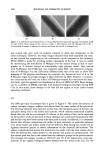
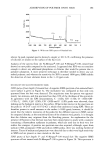
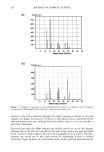
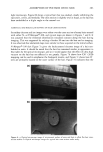
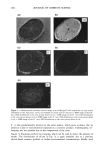
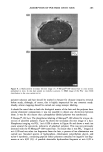
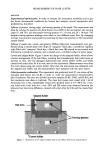
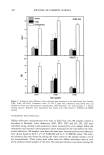
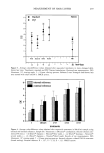
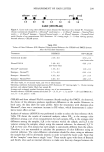
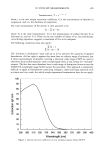
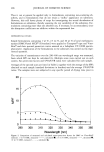
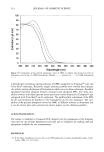
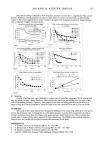
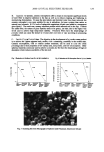
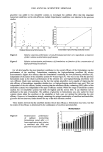
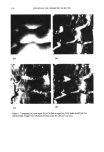
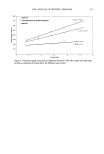
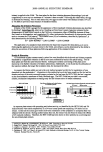
328 JOURNAL OF COSMETIC SCIENCE CERAMIC MICROSPHERES Madeline P. Shinbach 3M Company, 3M Center, St. Paul, MN 55144-1000 INTRODUCTION: A new class of cosmetic raw materials has been engineered using ceramic technology. Ceramic spheres of high purity and excellent color are manufactured in a controlled narrow particle size range, representing a new generation of filler pigments suitable for use in a wide range of decorative cosmetics and other personal care products. The manufacture of the ceramic spheres involves a proprietary high temperature technique. The process is capable of transforming amorphous shaped inorganic particles into spheroidal forms. As do all spherical particles, the ceramic microspheres possess excellent skin feel due to the "ball bearing" effect as they are rubbed out. The microspheres are unusual in their low oil absorption and relatively high bulk density which pernfits incorporation into dispersed systems at significant levels without either initial or long term viscosity increase. The particles function as an "invisible" filler useful in formulating deep shades in which the chalky whitening effect of many ingredients is a disadvantage. The inorganic microspheres offer a cost effective alternative to polymeric microparticles and are completely compatible with the full range of aqueous and non- aqueous formulations. MATERIAL, PROCESS AND PROPERTIES OF CERAMIC MICROSPHERES: A. Process: Particles are passed through a natural gas/air flame of approximate stoichiometric proportions with the particles reaching temperatures up to 1350øC. As the mineral particles melt, spheroidal formation occurs. The flame-formed product is cooled by mixing with ambient temperature air and then separated from the resulting gas stream with a cyclone device. B. Materials: Materials with chemical compositions substantially consisting of the following categories - clay, talc, and hydrated silicates such as mica will be topics of discussion. The high temperature process converts the morphology from crystalline to amorphous resulting in a ceramic or-glass composition. This ceramic composition of the microspheres provides its extreme chemical inertness, stability, and insolubility. C. Properties: The transformation from an amorphous or platy shaped particle to a sphere can be expected to yield a number of interesting changes in material properties. The significant reduction in surface area achieved can be demonstrated in Fig. 1. A result of the minimized surface area can then be shown in Fig. 2 by the corresponding reduction in oil absorption by these nonporous spheres. The reduced surface area also enables increased ease of dispersibility of the microspheres as well as higher pigment loading potential due to lower viscosity buildup. The microspheres allow for an efficient packing factor leading to increased bulk densities as compared to the unspheroidized material. The spherical nature, as shown in Fig. 3, provides lower coefficient of friction values as would be expected with a "ball bearing" as opposed to a platy structure leading to an enhanced texture or "feel". COSMETIC APPLICATIONS: A. Pressed Powder: The performance of spheroidal magnesium silicate was evaluated in a pressed powder formulation versus a talc control. The spherical filler improved slip and imparted the perception of increased softness and creaminess. In a pressed powder eyeshadow formulation, 20% spheroidal magnesium silicate was found to yield equal or better slip and skin feel when compared to 10% boron nitride or polymethylmethacrylate (PMMA). Even at these levels, the spherical ceramic product offers an economical alternative to other texture enhancers. The nonporous nature and inermess of the spheroidal magnesium silicate are advantageous in that the texture of the formulated product remains constant over time,
Purchased for the exclusive use of nofirst nolast (unknown)
From: SCC Media Library & Resource Center (library.scconline.org)