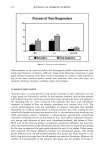
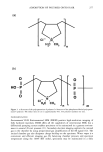
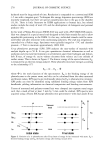
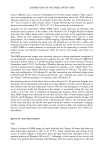
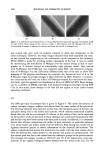
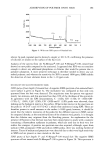
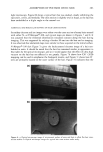
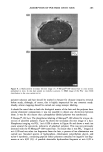
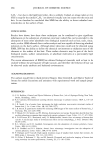
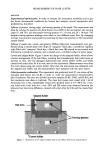
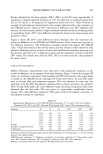
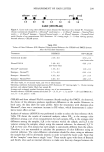
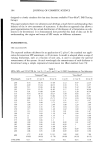
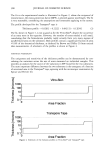
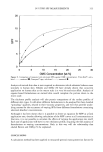
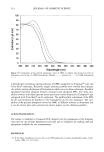
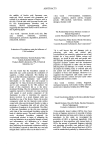
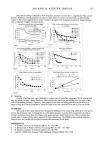
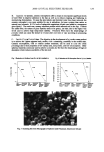
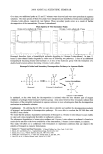
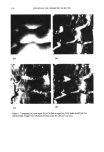
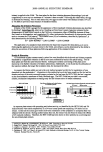
2000 ANNUAL SCIENTIFIC SEMINAR 329 B. Lipstick: In lipsticks, ceramic microspheres offer a means to incorporate significant levels of inert filler to improve adhesion to the lips as well as to reduce creeping and feathering in moisturizing formulations. Because the atmospheric and chemical water have been removed, the ceramic microspheres are more suitable for use in anhydrous, hot pour systems than native or natural (raw) minerals. 8-11% levels of spheroidal magnesium silicate were added to a transparent gloss lipstick. The result was a creamy emo!!ient product which adhered well to the lips. Without the added filler, the texture of gloss lipsticks tends to be greasy, yet hard, due to the higher wax levels used to achieve high temperature stability. Polymeric fillers have the disadvantage of porosity which can cause the texture to become drier over time or vary according to processing conditions. C. Powder Cream Formulation: The objective in the development of a powder cream product is to achieve the highest pigment load possible while maintaining pourability in the melted state. Ceramic microspheres, with or without surface treatment, can be used to raise the solids percentage due to their properties of low surface area, nonporosity, and low oil absorption. Other spherical materials commonly used to achieve a smooth, dry feel have the disadvantage of high oil absorption which reduces pourability of the hot melt. Fig. 1 Reduction in Surface Area Due to Spheroidization Fig. 2 Reduction in Oil Absorption Due to Spheroidization 10 . 5- 0 • ', -89% ß ld•oestum • Alumltmm • PoP.slum • • S/•e •te•e •e •,,n Aluminum 1.2- 1.1 - 1.0- 0.8- 0ø7- 0•8- 0.4- o.3- xx -45% \ \ \\ •7% \ \ Aluminum Alumthorn Fig. 3 Scanning Electron Micrograph of Spheroidized Potassium Aluminum Silicate

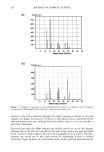
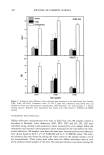
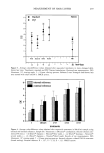
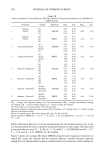
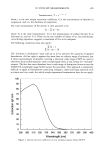
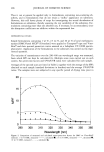
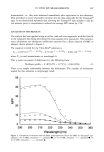
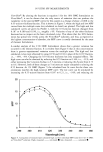
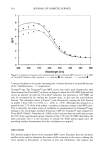
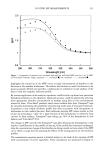
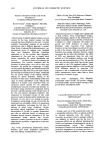
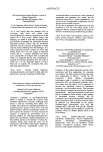
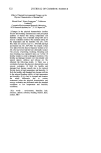
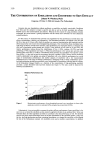
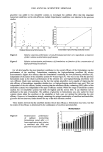
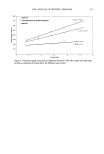
330 JOURNAL OF COSMETIC SCIENCE TI-m CONTRIBUTION OF EMOLLIENTS AND EMUSIF1ERS TO SKIN EFFICACY Johann W. Wiechers, Ph.D. Uniqema, PO Box 2, 2800 AA Gouda, The Netherlands Cosmetic skin care formulations without emollients or emulsifiers are hardly conceivable. Emollients have been used for centuries to impart a specific skin feel as well as for their secondary skin efficacy benefits such as skin moisturization and elasticity. Whereas the first reason fbr using emoIlients remains unchanged, the second reason is gaining importance with the current strive towards ever more efficacious cosmetic products. For this reason, we measured many personal care ingredients for their performance towards three skin effects: moisturization, elasticity and substantivity. Non-formulated emollient was applied to the skin and left for a time up till 6 hours after which the product was removed (moisturization and elasticity) and the effect measured by non-invasive skin bioengineering techniques. This revealed that these emollients had a wide range of efficacy towards these activities. Their performance was expressed relative to untreated skin (0%) and a benchmark product-treated skin (100%). Using artificial cut-off values at 30 and 70%, this relative performance testing allowed the identification of low (30%), medium (30-70%) and high performing (70%) ingredients (see Figure 1). When the performances in the various skin activities were plotted against each other, it could be concluded that these personal care ingredients were specific in their skin efficacy, i.e. they may be good in one property but poor in another. Figure 2 shows that the emollients could be subdivided in two groups, one group of ingredients with a low elasticity performance but a wide range of moisturization performances and another category of emollients with a low moisturization performance but a wide range of elasticity performances. Subsequent work in which combinations of low- and high-performing moisturizing emollients were incorporated in formulations indicated that the efficacy of the formulation changed linearly as a function of the concentration of high-performing emollient, provided a certain threshold value had been reached (see Figure 3). The same could be observed for elasticity and substantivity. Relative Performance (%) 120 100 40 =o ili1111111111111111111111 o Figure I Moisturization performance of non-formulated personal care ingredients six hours drier application relative to untreated (0%) and glycerine-treated skin (100%), Unfortunately, it was not possible to measure the relative efficacy performance of pure emulsifiers in the same way as we tested the emollients as they cannot be applied to the skin in an undiluted form. When you formulate them, the other ingredients are likely to contribute to the skin performance as well. We therefore used the previously tested formulation series as the base formulation for the emulsifier studies. Using only the low- and high-performing emollient containing formulations, we changed the emulsifier whilst keeping the rest of the formulations constant. All emulsifiers were used at realistic concentrations. In addition,
Purchased for the exclusive use of nofirst nolast (unknown)
From: SCC Media Library & Resource Center (library.scconline.org)