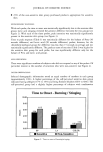
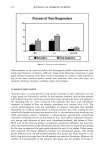
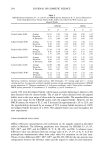
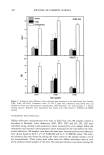
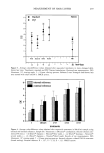
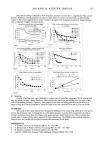
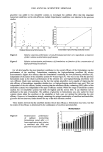
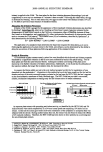
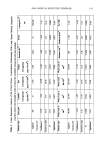
272 JOURNAL OF COSMETIC SCIENCE lOO Percent of Non-Responders 75- 50- 25- 22 36 54 'I 36 7 11 BP LA CHLOR I ß Sensitive [] Non-Sensitive I Figure 4. Percent of non-responders. Peak responses to the chemical probes and demographic profile information were ana- lyzed using Pearson's correlation coefficient. None of the following comparisons to peak grade indicated anything more than a trivial relationship to a subject's peak response to any of the three chemical probes: overall skin condition, skin tone, skin type, sun exposure, blushing categories, smoking status, and allergies. SUMMARY/DISCUSSION "Sensitive skin" is a term that has a very distinct meaning to each individual, but over a large group the definition is variable. In the literature, sensitive skin has been assessed with a facial sting test, involving a potentially strong irritant like lactic acid applied to the nasolabial fold (2). Tests conducted with materials like lactic acid, chloroform/ methanol, or balsam of Peru can identify individuals with sensitive skin (3-5). The current epidemiological study was undertaken to compare individuals who classified themselves on a written questionnaire as having sensitive skin with a group of indi- viduals self-classified as having non-sensitive skin. In this multisite study involving over 1000 participants, subjects completed a self-assessment questionnaire categorizing themselves as having sensitive or non-sensitive skin. Each subject underwent neurosen- sory testing with solutions of lactic acid, chloroform/methanol, and balsam of Peru. With each of the chemical probes, a statistically significant difference was found be- tween the responsiveness of the self-assessed sensitive skin and non-sensitive skin groups for the time to onset and the peak grade achieved for each of the probes. Other param- eters indicated directional differences between the self-assessed groups. The overall results indicated that the self-assessed sensitive skin group was more sensitive to the facial sting tests on average than the self-assessed non-sensitive skin group. However, the number of non-responders in the sensitive skin group and the number of strong re-

SELF-PERCEPTION OF SENSITIVE SKIN 273 sponders in the non-sensitive skin group indicates that individual perception of sensitive skin by self-assessment may not always conform to the functional determination of sensitivity to chemical probes. CONCLUSIONS Our major findings were: 1. Perception of sensitive skin and reaction to probes did not correlate. 2. Questionnaire items did not forecast reactions to probes. 3. Balsam of Peru reactions decreased with age. 4. There was a surprising number of non-responders to the probes. 5. Results were not climatically dependent. The goal of this research was to identify individuals whose acceptance of prototype formulations, under use conditions, would be predictive of that of the target consumer with sensitive skin. As we did not specifically demonstrate/define individuals with sensitive skin, it is therefore recommended to test a product designed for sensitive skin consumers utilizing a panel of subjects who both define themselves as sensitive and who react to the application of chemical probes. REFERENCES (1) L. P. Oddo, J.P. Bowman, L. Lockhart, and O. H. Mills, An epidemiological study of adult female sensitive skin in differing climates, 55th Annual Meeting of the American Academy of Dermatology, San Francisco, 1997, p. 151. (2) P.J. Frosch and A.M. Kligman, A method for appraising the stinging capacity of topically applied substance, J. Soc. Cosmet. Chem., 28, 197-209 (1977). (3) D. Soschin and A.M. Kligman, "Adverse Subjective Responses," in SaJkty and Efficacy of Topical Drugs and Cosmetics, Albert M. Kligman and James J. Leyden, Eds. (Grune & Stratton, New York, 1982), pp. 377-388. (4) Z. D. Draelos, Sensitive skin: Perceptions, evaluations, and treatment. Am. J. Contact Dermatitis, 8(2), 67-68 (1997). (5) N. Muizzuddin, K. D. Marenus, and D. H. Maes, Factors defining sensitive skin and its treatment. Am. J. Contact Dermatitis, 9(3), 170-175 (1998).
Purchased for the exclusive use of nofirst nolast (unknown)
From: SCC Media Library & Resource Center (library.scconline.org)