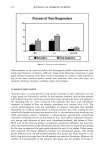
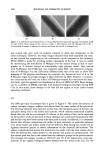
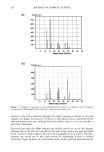
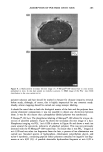
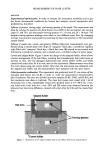
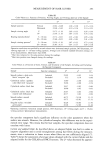
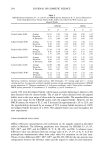
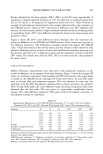
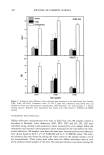
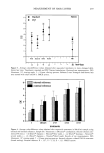
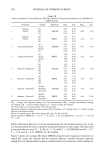
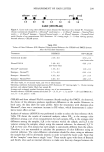
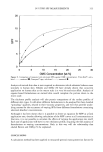
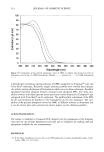
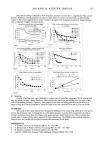
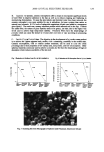
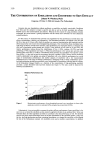
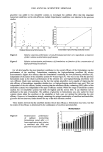
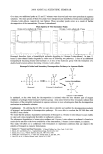
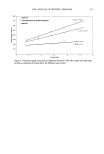
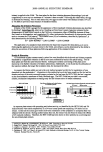
2000 ANNUAL SCIENTIFIC SEMINAR 331 glycerine was added to two emulsifier systems to investigate the addition effect that this important humectant could have on the skin efficacies studied. Experimental conditions were identical to the previous studies. 20 ao 6'o 8'o 4oo Relative Moisturising Performance (%) A 55 õ 5o iI. 35 • 3o I• 25 ß 120 0 ' 1 '0 ' 1 '5 ' 2•0 ' 2'5 Concent•etion high-performing moisturiser (%wlw) Figure 2 Relative elasticity performance of non-formulated personal care ingredients as function of their relative moisturization performance Figure 3 Relative moisturization performance of formulations as function of the concentration of high-performing moisturizers For all skin benefits, the most important contributor to the overall efficacy of the formulation was the performance of the emollient. Formulations containing the high-performing emollient (B) always demonstrated a higher skin efficacy than the formulations containing the low-performing emollient (A), independent of the nature of the emulsifier system (#1-9) (see Figure 4). This was in line with the previous formulation study as the relative performances of the selected low- and high-performing emollients were very different. Much more surprising was the fact that certain emulsifiers were capable of improving the skin efficacy of formulations, regardless whether low- or high-performing emollients were used. This was independent of the skin efficacy studied, meaning that the emollient efficacy enhancing (EEE) effect of the emulsifier (system) was independent of the type of efficacy studied. Within the range of emulsifier systems studied, the w/o-emulsifier systems had both the highest and the lowest EEE. It can therefore not be attributed to the type of emulsifier. The addition of glycerine to formulations was only useful for those systems where either the emollient or the emulsifier or both were not optimal for delivering the skin efficacy. However, in formulations already containing the optimal combination of emollient and emulsifier, glycerine did not exert any further benefit for any of the skin efficacies studied. These studies showed that the emollient decides which skin efficacy a formulation may have, but that the extent of the efficacy is determined by the combination of emollient and emulsifier. M oisturisation Figure 4 Moisturization performance of eighteen moisturising formulations tested after a 6 hours application time, relative to untreated skin (0%) and glycerine-treated skin (100%). Formulation

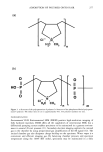
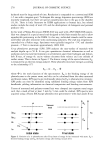
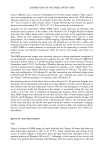
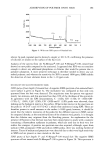
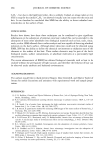
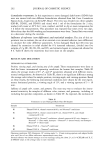
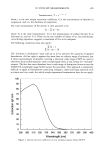
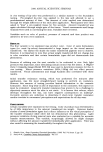
332 JOURNAL OF COSMETIC SCIENCE ANALYSIS OF THE STABILITY OF THE PRESERVATIVE• BRONOPOL• AND IDENTIFICATION OF ITS DECOMPOSITION PRODUCTS Asira Ostrovskaya, Peter A. Landa, Anthony D. Rosalia and Daniel Maes Estee Lauder Inc., Research and Development Center, 125 Pinelawn Road, Melville, NY 11747 Introduction: Bronopol (2-bromo-2-nitropropane-l,3-diol) has broad-spectrum anti-bacterial activity and is, therefore, used as a preservative in many toiletries, pharmaceuticals, household items and cosmetics (1). Despite its common usage, the stability of bronopol has been suspect and of great concern to the industry as a whole, because of its stability issues in products under certain conditions (2). In order to stabilize bronopol in products, we investigated the kinetics and decomposition pathways of bronopol. We further compared degradation patterns of bronopol in aqueous and methanolic solutions. The decomposition products of bronopol have been previously postulated and examined by UV spectrophotometry, NMR, and HPLC (3-5). However, to fully identify and confirm bronopol's decomposition products we employed Gas Chromatography - Mass Spectroscopy (GC-MS). This led us to a better understanding of the degradation products, and to confirm the postulated mechanisms of bronopol's decomposition. Methods: The stability of bronopol was investigated by High Performance Liquid Chromatography in aqueous and methanolic solutions at concentrations of 0.04g/250mL. The method employs an Inertsil ODS-2 column with a mobile phase of acetonitrile and water at 220nm. The decomposition products of bronopol, were determined and identified via Gas Chromatography - Mass Spectroscopy (GC-MS) using a DB-1 column. This method uses an oven temperature program consisting of 40øC for 10 minutes, 5øC/min to 280øC, hold for 2 minutes. The MS collected masses 40-550 AMU at 1.4 scans/see and data were subsequently analyzed and interpreted. Results and Discussions: HPLC: The kinetics of bronopol were studied at room and elevated ten,.peratures in both aqueous and methanolic solutions. In aqueous solutions at room temperature, Bronopol degraded readily due to hydrolysis, and when solutions were heated the rate of decomposition increased. In methanolic solutions no apparent decomposition was observed even at elevated temperatures. The HPLC method is limited to the determination of bronopol levels in solutions but is not useful for determining by-products of bronopol degradation. GC-MS: To identify the decomposition products of Bronopol and determine its degradation pathways, GC-MS was employed. GC-MS chromatograms obtained for both aqueous and methanolic solutions of bronopol, initially contained one major and one minor peak. The major peak was identified as bronopol. The mass spectrum for the minor peak was identified as 2-bromo-2-nitroethanol, previously described in the literature as result of a retroaldol decomposition ofbronopol (1). Mass Spectrum of Minor Peak at 14.9min - Identified as 2-bromo-2-nitroethanol o o H-O-C-C-H • I H Br 2 -bromo-2-nttroethanol
Purchased for the exclusive use of nofirst nolast (unknown)
From: SCC Media Library & Resource Center (library.scconline.org)