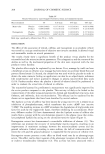
228 JOURNAL OF COSMETIC SCIENCE Table II Emulsion Formulations Used in This Study Emulsion 1 • Ingredients Quantity (% w/w) o•-TAc Diisopropyl adipate Mineral oil DEA-CP Water Carbomer Diazolidinyl urea Emulsion 2 b 5 7.5 7.5 2 77.4 0.3 0.3 Ingredients Quantity (% w/w) o•-TAc Isopropyl myristate Polysorbate 80 Sorbitol Water 5 10 12 30 43 Emulsion 3 • Ingredients Quantity (% w/w) o•-TAc 5 Benzyl alcohol 12.3 Water 42.7 Diethylene glycol monoethyl ether 15.9 Taurocholate sodium 1 Polysorbate 20 18.1 o/w macroemulsion. Microemulsions containing IPM or benzyl alcohol as oily phases. was used to prepare the buffer, and the solutions were adjusted to pH 7.4 with 10% w/v NaOH prior to use. ANIMAL TISSUE AND PREPARATION Fresh viable micro-Yucatan pig skin was obtained from Charles River Laboratories (Wilmington, MA). The pig skin was cut into squares of 10 x 10 cm 2 and placed in Tupperware © containers filled with DMPBS. The skin was then sent in cool packs and used for the metabolism experiments within one day of its arrival. Upon receipt, the fresh skin was gently washed with a 1% (w/w) mild soap and deionized water. A 250-300-pm-thick layer of the skin was cut from the surface with a Padgett Electro- dermatome TM instrument (Padgett Instrument, Kansas City, MO). The dermatomed skin was used the same day and was cut into 10-mm circular pieces with a brass punch and placed epidermis-side up in Bronaugh diffusion cells. DOSING Finite dosing was used to simulate actual use conditions in all the i, vitro permeation and

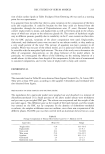
DELIVERY AND METABOLISM OF o•-TAc 229 metabolism experiments. The smallest volume of the formulation required, to obtain complete and uniform coverage of the diffusion cell surface area (0.636 cm2), was determined to be 5 pl, corresponding to a weight of about 4 mg. After application, the preparation was uniformly spread on the stratum corneum side of the skin with the help of a glass rod, and the tip of the rod was washed into a vial containing 2 ml ofacetonitrile in order to account for the material lost on spreading. With this technique, the exact amount of material applied on the skin surface was determined. STATISTICAL DESIGN OF THE EXPERIMENT As there were three important factors to be considered, viz., the formulations, interday variability, and replicates on both days, it was decided to set up an experimental design that could incorporate all the factors. A randomized complete block design was chosen as the statistical design for the experiment. The statistical model used is shown in Table III. Using this table, each formulation was applied in duplicate on each day, such that at the end of two days there were four replicates per formulation. IN VITRO SKIN PERMEATION/METABOLISM METHODOLOGY A flow-through system was used for conducting i, vitro permeation experiments. The total system consisted of a receptor fluid reservoir a variable flow rate peristaltic pump, Cassette © (Manostat, New York, NY) a circulating water bath, Lauda © (Brickman Instrument, Westbury, NY) two cell-holding blocks 14 Teflon © flow-through diffu- sion cells and a Retriever IV fraction collector (ISCO Inc., Lincoln, NE) to collect effluent fractions over the adjusted time period. Each diffusion cell had an inner diameter of 9 mm and a surface area of 0.636 cm 2 exposed to the receptor fluid. The receptor fluid was pumped at the flow rate of 1.5 ml/h from the reservoir to the diffusion cells placed Table III Statistical Randomized Complete Block Design for the Application of Formulations Formulation Day 1 a Day 2 IPM solution W1 b Y1 •l X1 • Z1 e Gel 1 W2 Y2 X2 Z2 Gel 2 W3 Y3 X3 Z3 Gel 3 W4 Y4 X4 Z4 Emulsion 1 W5 Y5 X5 Z5 Emulsion 2 W6 Y6 X6 Z6 Emulsion 3 W7 Y7 X7 Z7 a Two consecutive days, days 1 and 2. b,c Replicates on day 1 for the IPM solution. a,• Replicates on day 2 for the IPM solution.
Purchased for the exclusive use of nofirst nolast (unknown)
From: SCC Media Library & Resource Center (library.scconline.org)