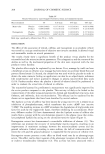
24O joURNAL OF cosMETIC scIENCE light source receNer I (root) ' hair (tip) Figure 5. Structure of the experimental device for changing the angle of hair. 4. One is a systena that has angle 0 of)5 ......
Figure obtaining two kinds of optical systenaS, as shown in degrees.twosourcesreceivingthesereceia•oflightandandL,•owhich is a y one light source and two receivers, with an incident • ,stem rhar has 0 degrees and 45 angles 4 ) of 0 degrees and 45 degrees. The other degrees exanained to and one receiver, with incident angles 0 of derernaine angle 4 ) of 45 degrees. These systems were sysrenaS showed more accuracy.
DE¾ICE coMPAtklsoN OF MEASUREMEwe20oerAssageasseinEXPEexperranginBYbyfemales55EYALUAevatuatiomales,sENSORY(29sensoryANDandsubiectsdevicenewjapanese AN Measurements by the an conapare& Eighty-four •_/•ceNer light source receNe light source • receNer light source ß • • hair hair (b) 2 lights, 1 receive (a) 1 light, 2 receivers Figure 4. Optical systems for the measuring device.

DEVICE TO MEASURE HAIR LUSTER 241 Figure 5. Range of measurement. to 50, were selected. Subjects with extremely bright hair (such as white or strongly bleached hair) were rejected. Measurement was performed in the order of (a) sensory evaluation, (b) measurement by the device, and (c) photography. The examination site of the sensory evaluation and device measurement was specified as the range from 5 to 10 cm of hair from the back of the head, as shown in Figure 5. After brushing, sensory evaluation based on the scoring method of the expert assessor was performed under ! incident light t9 i . cos • I cosO I ' irradiated face Figure 6. Correction of luminous intensity.
Purchased for the exclusive use of nofirst nolast (unknown)
From: SCC Media Library & Resource Center (library.scconline.org)