204 JOURNAL OF COSMETIC SCIENCE The studied parameters were: © Uf: maximum extensibility of the skin (or total deformation) © Ue: instant vertical extensibility (or elasticity) (Ue represents the instant deformation of the skin immediately after the application of the strain. This parameter reflects the elastic properties of the skin.) © Uv: viscoelasticity (or plasticity) extensibility (Uv represents the delayed deformation of the skin and corresponds to slower deforma- tion due to the intracutaneous movements of viscous type.) © Ur: immediate retraction (or elastic return) © Ua: total retraction © Ur/Uf: biological elasticity (Ur/Uf reflects the immediate recovering ability of the skin after the end of the strain.) © Uv/Ue: visoelasticity rate © Ua/Uf: recovery rate © R: residual deformation (R is the residual deformation observed at the end of the "off-time" period. R may be an indicator of the existence of a hysteresa phenomenon.) 4. Flowmetry of the skin perfusion: Laser Doppler flowmetry (8) Cutaneous blood flow was determined for each thigh by laser Doppler fiowmetry using the LISCA PIM II apparatus. Measurements were carried out according to the guidelines edited by the Standardization Group of the European Society of Contact Dermatitis. The measurements were conducted in an air-conditioned room (22+/-2øC, RH 50+/-10%) after 20 minutes of rest period. Skin perfusion was calculated from the image (square area of 6 cm x 6 cm) via the average value of the image's pixels. The homogeneity of the microcirculation of the skin was estimated by the standard deviation calculated from the whole laser Doppler image. ANALYSIS OF RESULTS One-way ANOVA and Student's t-test were used to determine the significance of the results the level of significance was set at p 0.05. The comparison between placebo and product was performed on the differences Tx - TO or on the means when there was no significant difference between the two thighs at TO. RESULTS MACRORELIEF OF THE SKIN With the product, the decrease of the skin macrorelief reached -53.1% at T84 days (versus -14% with the placebo). The improvement of the macrorelief was consistent throughout the study and is statistically significant at each time point. The results obtained are presented Table I.

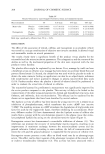
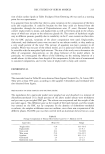
ANTI-CELLULITE ACTIVITY 205 Table I Results of the Profilometry Analysis of the Thigh Macrorelief at T28, T56, and T84 Days After the Beginning of the Application (Rz: ratio of effectiveness + standard deviation) TO T28 days T56 days T84 days Placebo 6.31 (2.41) 5.93 (2.27) 4.91 (1.21) 5.42 (1.86) Product 6.16 (2.47) 4.48 (1.61) 3.63 (1.46) 2.89 (1.31) Bold type: significantly different from TO (p 0.05). STRUCTURE OF THE DERMIS AND HYPODERMIS At T84, anomalies of adjustments of the ultrasound apparatus did not permit sequences of analyzable images. Indeed, the dynamics of gray had been regulated the least well and the structures were not sufficiently visible to enter the field of automated quantification. The results obtained (evolution of the placebo and the product between TO and T28 and between TO and T56 and comparison between placebo and product) for each of the seven parameters are presented in Table II. After 28 days of application of the product, the parameters of thickness, echogenicity, and texture of the dermis, and echogenicity and texture of the hypodermis, are signifi- cantly improved compared to TO. After 56 days of application, the parameters of texture of the dermis, echogenicity, and texture of the hypodermis are significantly improved compared to TO. As shown Table II, both active and placebo significantly improve the texture of the dermis and the structure of the hypodermis (echogenicity and texture). MECHANICAL CHARACTERISTICS OF THE SKIN The results presented in Table III show that the product and the placebo have a significant firming effect no significant differences could be found between product and placebo. LASER DOPPLER FLOWMETRY With the product, at T28 days after the beginning of the applications, an increase of the mean blood flow was observed, which showed a statistical trend at T56 days (38.5%). The increase of the parameter "homogeneity" persisted during the follow-up period, with the increase being statistically significant after one month of application. The increase in the mean blood flow was greater with the active than with the placebo. With the placebo, this increase was transient and not significant, with a maximum reached at T28 days. The product had a greater and more persistent effect upon the skin microcirculation of the thighs. The same evolution was also observed with the parameter homogeneity (standard deviation of the laser Doppler image). The increase observed with the active product persisted throughout the follow-up period. However, no sig- nificant difference was observed between product and placebo. The results are presented in Table IV.
Purchased for the exclusive use of nofirst nolast (unknown)
From: SCC Media Library & Resource Center (library.scconline.org)