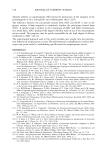
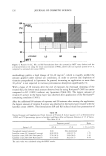
122 JOURNAL OF COSMETIC SCIENCE cally in whole skin biopsies. In determining the relevant part of the latter compound metabolism, the concentration of eicosanoids (ng PGE2/lag DNA) was measured in the skin (PGE 2 prostaglandin E2). The cell viability was assayed by the MTT assay (lag Formazan/lag DNA). (MTT methyl-thiazol-tetrazolium is a dye transformed by active mitochondria into a water non-soluble compound.) Details of the method concerning skin penetration and irritation are described elsewhere (9,10). APPLICATIONS For this investigation three independent udder studies were performed. The udders were perfused by an oxygenized and warmed-up Tyrode's solution. The skin surface tempera- ture was maintained at approximately 30øC. After maintaining the perfusion of the udder for a certain period in order to switch in an aerobic metabolism, the emulsions were applied topically with a surface density of 3-4 g/100 cm 2. The high dosage was intended to prevent any depletion of the vitamin concentration in the liposomal vesicles during the exposure period. Thirty minutes after starting the application, a dry paper towel carefully removed the residual cream. Whole skin punch biopsies with a diameter of D = 6 mm were taken 30 minutes after the end of the exposure to study the irritation potential of the creams applied. TAPE STRIPPING Adhesive tape stripping (Tesa R, 4204, BDF, Hamburg) was used to remove the outermost layers of the stratum corneum (SC) in sequence. Thirty and 90 minutes after the end of application, the adhesive tape strips for corneocyte layer removal were peeled off. Two parallel series of 15 successive strips (1.9 x 10 cm = 19 cm 2) were taken to analyze the vitamin E acetate content, either by the conventional HPLC method or UV spectroscopy. The chemical analysis for vitamin E acetate in either treated or untreated strips was performed in the Corporate Analytical Center of Henkel KGaA (D/_isseldorf, Germany). DETERMINATION OF VITAMIN E ACETATE BY HPLC For the determination of vitamin E acetate the adhesive tapes were extracted by means of acetonitrile. After solvent removal, the residue was dissolved in a well-defined volume of acetonitrile. This solution was injected in an HPLC system. The chromatographic investigation was performed using a reversed-phase HPLC column. Since vitamin E acetate shows fluorescence, this can be used for selective and highly sensitive detection. Application of an excitation wavelength of 276 nm and detection at 320 nm allows the quantification of vitamin E acetate as well as of underivatized vitamin E. The wave- lengths selected for excitation and detection do not induce fluorescence either of other ingredients of the cosmetic products or of skin constituents. The acquisition of a blank chromatogram is mandatory to ensure that any fluorescent components of the adhesive tapes are extracted. The limit of determination for standard injected samples is approxi- mately 5 ng.

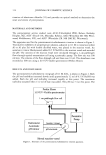
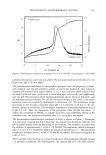
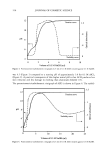
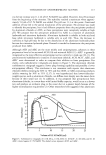
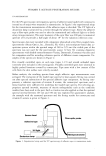
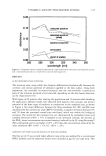
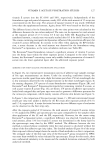
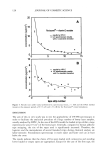
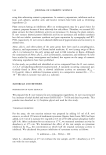
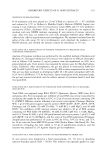
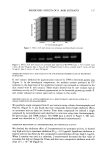
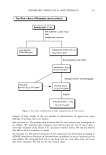
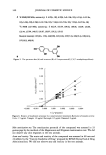
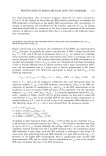
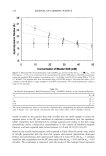
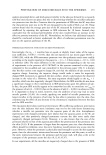
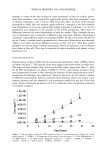
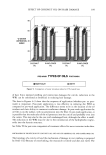
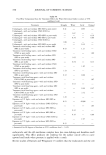
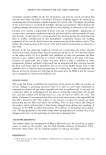
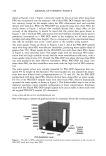
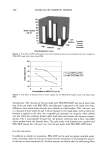
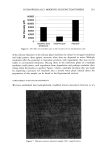
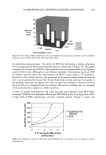
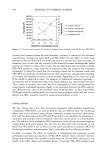
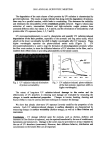
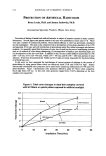
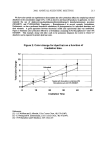
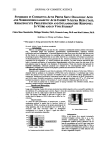
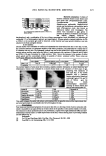
VITAMIN E ACETATE PENETRATION STUDIES 123 UV SPECTROSCOPY For the UV spectroscopic investigation, spectra of adhesive tapes loaded with corneocytes (second set of strips) were measured in transmission. In Figure 1 the experimental setup for the transmission measurements of the adhesive tapes is sketched. The UV light of a deuterium lamp is projected via a mirror through the adhesive tape. Above the adhesive tape a fiber-optic probe was used to take the transmitted and collected light to a diode array minispectrometer. The outer diameter of the optic fiber was 200 prn its numerical aperture of 0.22 provides a half angle of about 18 ø for the radiation collection cone. Spectroscopic data were recorded with a dispersive photodiode array fiber-coupled mini- spectrometer (Ocean Optics, Inc., Dunedin, FL) with a microcomputer-based data ac- quisition system within the spectral range of 260 to 525 nm (the visible part of the spectrum was not used for the spectrometric assay). A Cary 5G scanning dispersive spectrometer with double monochromator (Varian, Darmstadt, Germany) was also used for comparison and for recording reference spectra of different cream components. Ex- amples of the spectra are shown in Figure 2. Five visually controlled spots on each tape (tapes 1-15) and several unloaded tapes (controls) were included in the investigation. Visually controlled spots were identical to highly packed locations covered by corneocytes. Tape areas with a low content of fiat cells from the skin surface were strictly avoided. Before analysis, the resulting spectra from single adhesive tape measurements were averaged. The evaluation of the loaded tape spectra by least-squares fitting was carried out after spectral subtraction of the spectral adhesive tape component. As fitting com- ponents, a reference spectrum of vitamin E acetate, the corneocytes' spectrum, and a linear baseline were sufficient for modeling the loaded tape spectra. For selecting ap- propriate spectral intervals, measures of matrix orthogonality such as the condition number have been used in the past. Such a criterion was also applied so that the optimal spectral interval between 265 nm and 350 nm was exploited for quantitative analysis. An example with the measured spectrum and the fitting results for corneocytes and vitamin E acetate is given in Figure 3. Sensor head er-optic probe Adhesive tape I I•/•1• Deuterium lamp • • Minispectrometer Figure 1. Experimental setup used for UV spectroscopy of adhesive tapes in transmission mode.
Purchased for the exclusive use of nofirst nolast (unknown)
From: SCC Media Library & Resource Center (library.scconline.org)