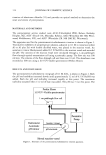
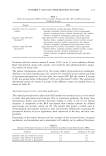
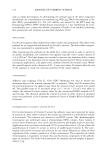
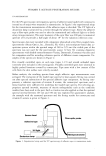
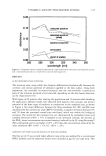
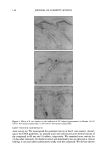
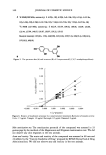
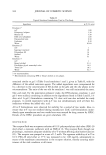
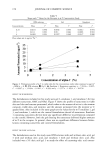
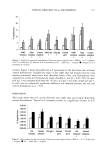
120 JOURNAL OF COSMETIC SCIENCE barrier properties of the stratum corneum. Well known is the importance of vitamins, such as vitamin E or D-panthenol, as bioactive substances in cosmetic formulations. However, the release of vitamins from cosmetics into the stratum corneum requires certain application conditions and exposure times (1,2). After application, the formu- lations undergo a dramatic change due to evaporation processes, which may influence the penetration of ingredients into the horny layer, to be demonstrated by analytical meth- ods. The use of liposome- and microparticle-based formulations as transport vehicles may also increase the bioavailability of the compounds within the surface skin layer as well as diminish the exposure period for penetrating the skin surface (3-5). Depth profiling for substances penetrated can be carried out by repeated adhesive tape stripping and subsequent tape analysis (3). Experimental dermatological in vivo studies for cosmetics on animals are prohibited nowadays due to ethical and legal restrictions. Therefore, the lateral follicular skin of the isolated perfused bovine udder skin (BUS model) was used here as a viable in vitro substitute for the penetration efficiency studies carried out (6). UV spectroscopy is well suited for fast quantitative determination of trace amounts of vitamin E acetate due to the strongly absorbing chromophore. Multivariate calibration models have come into wide use when implementing quantitative spectroscopic assays based on the Beer-Lambert law in the case of overlapping spectral bands from complex samples. Classical least-squares (CLS) modeling has been used for the quantitative analy- sis of spectra under the premises that the linear additive model is valid and all compo- nent spectra contributing to the sample spectrum are known (7). The applicability of such a model for vitamin E acetate-loaded adhesive tape strips was tested in this study. The results spectrometrically obtained are compared with those from a more complex and time-consuming HPLC method, which is mainly used for such dermatological studies. MATERIALS AND METHODS LIPOSOMES/MICROPARTICLES Liposomes and microparticles are vesicles composed of phospholipids, phophatidylcho- line in particular, surrounding an inner fluid compartment. The liposomes consist of an aqueous inner compartment, and therefore the lipophilic vitamin is found in the lipid bilayer, in contrast to the microparticles that have an oily compartment surrounded by only one layer of lipids. For this study, the tocopheryl acetate was dissolved in the natural oil phase. Liposomes and microparticles were prepared by dissolving all lipo- philic components in ethanol and than carefully adding the buffer while stirring. These crude carrier suspensions were then homogenized and extruded several times through a microporous filter of 0.2 pm diameter. The particles described in this study have a size of 150 nm, measured by laser light scattering. Both types of vesicles are used for cosmetics due to their ability to transport active ingredients into the skin and to stabilize sensitive active components (4). FORMULATIONS Several formulations (Table I) that include liposomes (Rovisome ©, RS) or microparticles (Roviparts ©, RP) (ROVI GmbH & Co., Kosmetische Rohstoffe KG, Schluechtern,

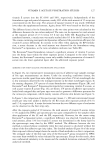
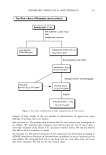
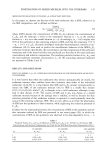
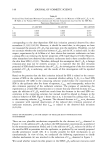
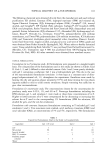
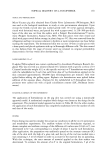
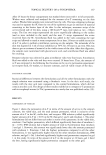
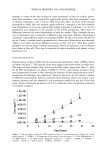
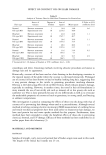
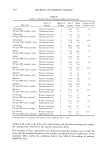
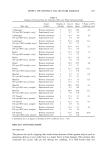
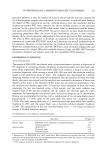
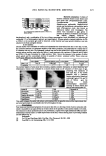
VITAMIN E ACETATE PENETRATION STUDIES 121 Table I Chemical Composition (INCI) of Three Cosmetic Formulations (LC, RP, and RS) Containing Vitamin E Acetate Product INCI LameIlar cream, LC (vitamin E acetate) Lameliar cream, RP (20% Roviparts ©) Lameliar cream, RS (20% Rovisome ©) Aqua, hexanediaol, cetearyl glucoside, Oenothera biennis, isopropyl is©stearate, behenyl alcohol, cetearyl isononanoate. glycerin, tocopheryl acetate, sotbit©l, dimethic©he, talc, sodium carhomer, tocopherol, hydrogenareal palm glycerides citrate Aqua, (Roviparts © E acetate), hexanediaol, cetearyl glucoside, Oenothera biennis, isopropyl is©stearate, behenyl alcohol, cetearyl isononanoate, glycerin, sotbit©l, dimethic©he, talc, sodium carhomer, tocopherol, hydrogenareal palm glycerides citrate Aqua, (Rovisome © E acetate), hexanediaol, cetearyl glucoside, Oenothera biennis, isopropyl is©stearate, behenyl alcohol, cetearyl isononanoate, glycerin, sotbit©l, dimethic©he, talc, sodium carhomer, tocopherol, hydrogenareal palm glycerides citrate Germany) and that contain vitamin E acetate (2.0%, in wt % active substance, Roche, Basel, Switzerland), along with controls, were tested for their pharmacokinetic proper- ties within the horny layer. The galenic formulations selected for this study exhibit physic©chemical similarities. The basic o/w cream (lameliar type, LC) contains 2% vitamin E acetate without any form of liposomes/microparticles. For the other two creams (RP, RS) the vitamin E acetate (1_0%) was packed either in Roviparts © (20%) or in Rovisome © (20%). The analytically determined content of vitamin E acrerate in the different creams was slightly lower, as shown in Table II. IRRITATION ASSAY IN THE IN VITRO SKIN MODEL (BUS) The isolated perfused bovine udder skin (BUS) model was introduced as an in vitro model to study skin penetration and irritation. Due to continuous perfusion, the horny layer demonstrates barrier and reservoir functions similar to those in the in vivo human situation. A comparison of the BUS and human skin stratum corneum by infrared spectroscopy was recently carried out (8). The natural skin model is widely used in dermat©logical and cosmetic research as well, and provides information concerning the penetration kinetics of active ingredients, their interaction in the skin, and skin com- patibility. Depending on the barrier function and the strength of the activant/irritant, increased arachidonic acid metabolism and a diminished cell viability can be analyzed biochemi- Table II Amount of Vitamin E Acetate (in wt%) in Different Lameliar Creams Determined by HPLC Products Analyzed in the product Analyzed on the strip Lamellar cream, LC (vitamin E acetate) Lameliar cream, RP (20 % Roviparts ©) Lameliar cream, RS (20 % Rovisome ©) 1.8 1.8 1.4 1.4 1.8 1.8
Purchased for the exclusive use of nofirst nolast (unknown)
From: SCC Media Library & Resource Center (library.scconline.org)