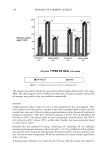
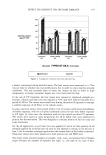
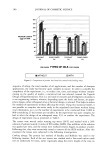
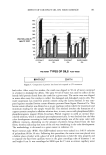
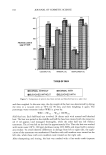
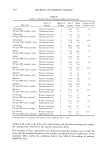
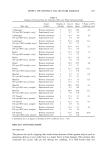
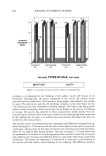
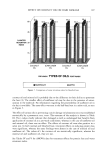
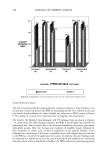
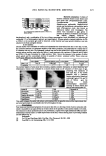
2002 ANNUAL SCIENTIFIC MEETING 227 Whether cosmetics are wholely or partially causative of adult acne is unclear. At one time it was believed that cosmetic use could explain 95% of the cases of adult women presenting with a mild acneiform condition for which Kligman coined the term "acne cosmetica". 8 One study reported an increase in acneiform eruptions after a beauty treatment consisting of a facial massage of cream, steaming, application of a face pack. In this case, the most common ache lesions were nodules with infrequent occurrence of closed comedories. 9 Certain cosmetic ingredients are comedogenic in both human and animal and such substances include lanolins and certain vegetable oils. However, Curtlille reported finding no correlation between the amount of time over which cosmetics were used and the severity of the ache. Iø Stopping the use of the suspected cosmetic did not produce an improvement. Nowadays, many cosmetics are thoroughly assessed for comedogenicity and acnegenicity, perhaps some cosmetics may not be the cause of adult ache, but may exacerbate or aggravate ache prone follicles or low grade ache. Ii One line of investigation which has not been thoroughly explored, is whether the use of cosmetics can actually help to reduce ache. One could speculate that daily cleansing and moisturization maybe beneficial in ache and may underlie the placebo response observed in many ache studies. One study I: examined the effects of a regime consisting of 6 formulations of low predicted acnegenic potential in 10 young women. No increase in ache was noted, on the contrary there was an improvement (i.e. decrease) in the total number of comedones and papules. In our group, we have assessed different moisturizers and cleansers to evaluate whether they were beneficial for adult ache. A mild bar cleanser was tested on 32 female subjects between the ages of 18-45 with mild - moderate ache. A twice daily wash of 45 seconds was followed for 12 weeks. A small, but significant decrease in non-inflamed lesions (27.7%) and inflamed lesions (15.5%) was observed by week 12 compared to baseline and in addition this effect was perceived by subjects. In a comedolytic study on the back, a cleanser formulation was shown to reduce the number of follicular impactions following 8 weeks of twice daily washing. A moisturizer was tested and compared with 2% salicylic acid for antiache efficacy. After 4 weeks, both treatments produced a significant decrease from baseline in total non- inflamed lesions. By week 12, moisturizer produced a 28% decrease in non-inflamed lesions and 2% salicylic acid produced a 33% decrease: these changes were not significantly different from each other. For inflamed lesions, both treatments produced a significant decrease from baseline by week 2 reaching a maximum decrease of about 36% by week 4-8. At week 12, though, total inflamed lesions returned to baseline for moisturizer treatment. At all time points, neither product was significantly different from each other. Treatments for female adult acne are similar to those used for adolescent acne. For example, topical treatments for mild cases (benzoyl peroxide, salicylic acid) with antibiotics for inflammatory acne and retinoids for comedonal or more severe forms of the disease. Newly developed cosmetics such as foundations and blushes have included actives designed to ameliorate acne and improve overall skin condition. In conclusion. there is now good evidence that acne can continue well into adulthood and there is some indication that unlike teenage acne were males tend to show the most severe forms of the disease, adult acne mainly affects females. The role of cosmetics is debated in the literature, but new data supports the role of some cosmetics in reducing the appearance of acne. References l. Cohen EL. Br.lDerrnato157, 10-14, (1945). 2. Epstein E. Dertnatology Digest 49-58 (1968). 3. O'Loughlin M. Aust.lDerrnato!7, 218-222 (1964) 4. Goulden V, Clark SM, Cunliffe WJ. Br.lDerrnatol 136:66-70 (1997). 5. Goulden V, Stables GI, Cunliffe WJ..IArn AcadDertnatol, 41:577-580 (1999). 6. Sharer T, Nienhaus A, VielufD et al. Br.lDerrnatol 145:100-104 (2001). 7. McGeown ell, Goulden V, Holland DB et al..I Invest Dertnatol 108:386 (1997) 8. Kligman AM, Mills OH. Arch Dertnatol l I l: 65-68 (1975). 9. KhannaN, Gupta SD. Intl.lournalDerrnato138:196-199 (1999). 10. Cunliffe WJ. In: Ache. (Marks R, ed) London: Martin Dunitz, 1989:59 I I. Kligman AM..ICutan Aging andCostn Dertnatol, 1:109-114 0988). 12. Epinette WW, Greist MC, Ozols II. Curls, 29:500-514 0982).
Purchased for the exclusive use of nofirst nolast (unknown)
From: SCC Media Library & Resource Center (library.scconline.org)