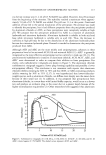
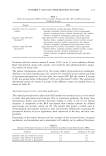
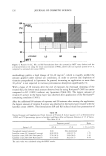
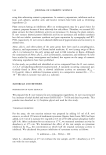
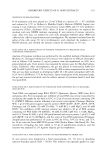
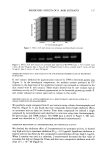
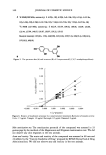
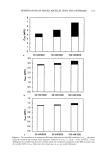
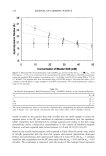
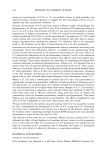
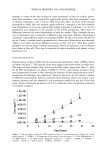
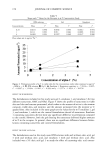
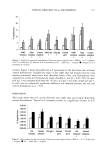
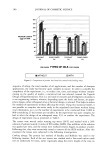
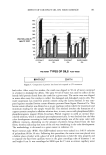
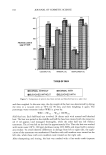
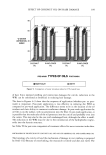
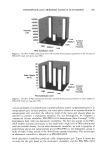
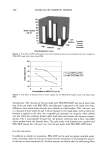
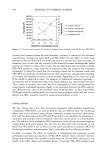
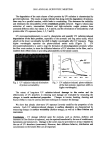
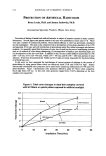
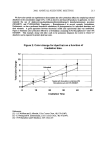
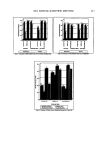
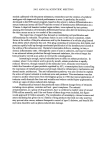
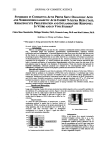
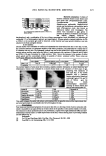
2002 ANNUAL SCIENTIFIC MEETING 225 cosmetics industry. In conclusion, FSC could become an alternate for Forskolin and could be used in creams and body lotions as well as in weight loss management. References: 1. Metzget, R. H. and Lindner, E. Drug Res. 31:1248-1250 (1981) 2. Kenneth, B. S. Ann. Reports in Med Chem. 19:293-302 (1984) 3. Yajima, H. Diabetes, 48:1006-1012 (1999) 4. Majeed, M Badmacy, V and Rajendran, R. Patent number US 5804596 (1998) 5. Subbiah, V. Patent number US 6,150,381 (2000) ß 6. Subblab, V. Patent number and US 6,331,551 BI (2001) 7. Maes, D Anderson, J Marenus, K. D Mammone, T and Ethenakis, C. G. Patent number WO 01/74327 AI (200•) 8. Braquet, P and Zigg, D. Patent number WO 96/20704 (1996) Figure 1. Effects of FSC on human nAChR functions % • Sclareolide ] i • I Forskolln i. ,4, \ (Diterpene), (uM) Figure 2. Other cosmeceutical properties of FSC

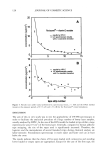
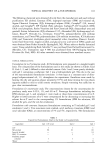
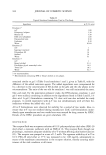
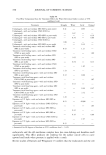
226 JOURNAL OF COSMETIC SCIENCE POST ADOLESCENT ANCE: COSMETIC RELEVANCE Helen Knaggs 1, Ph.D., Ying Ye 1, Ph.D. and Ronald L. Rizer 2, Ph.D. •Unilever Research, Edgewater, New Jersey 2Stephens and Associates, Colorado Springs, CO Acne has traditionally been viewed as predominantly affecting adolescents but in fact the age range goes up to and sometimes beyond 45 years, particularly in women. This presentation summarises recent literature challenging the belief that ache is primarily an adolescent problem, and discusses the importance of cosmetics in either exacerbating or improving ache. There is much information describing the clinical picture and incidence of teenage acne, but relatively few reports on post adolescent ache. This might be because concern over adult ache has only grown in recent years. Nevertheless a 1945 study of 500 adult women aged 17-40 showed that 69% had ache ranging from slight to clinical •. In 121 men with clinical ache 25% were over 25 years and 9% were over 30 years. Epstein in 19682 examined the faces of 778 new patients over 1 year and reported that both males and females over 25 presented with clinical ache with the females showing the higher incidence. O'Loughlin 3 proposed that 2 subgroups existed based on his examination of clinical ache in 53 females aged 24 years and over. There now seems to be general agreement that there are individuals with ache continuing from their teenage years ('persistent ache'), whilst for other the phenomenon is new ('late onset ache') first occurring after age 25 years. Premenstrual ache flares seem to occur in either group. More recent studies provide insights into the occurrence of adult acne: two were large scale community- based studies n'5 and the third study describes findings from an ache clinic 6. Both community-based studies emphasize the fact that ache continues well into adulthood for both males and females. In one study, a total of 749 subjects over 25 years were examined for facial ache. The prevalence of ache remained constant between 24 and 44 years in both males and females, and did not decrease significantly until after the age of 44 years. Facial ache was reported in 231 (54%) women and 130 (40%) men. The ache observed was mainly very mild which the authors refer to as physiological ache. Higher grade clinical facial ache was recorded in 3% of subjects and was worse in females. Persistent ache was the most common (82% of patients) compared with late onset ache. In the second community based study 5 ache was present in all age groups investigated up to 87 years and was detectable in 13% of people above 59 years. In the 20-29 year group, 64% have ache and 43% still had ache between the ages of 30-39 years. In an ache clinic the mean age of patients attending increased from 20.5 years in 1984 to 26.5 years in 1994. 6 The trunk area was most affected in males whilst the face was mainly affected in women. This may explain why more females are seen in clinic compared to males, despite the fact that women had a lower mean grade. Most of these patients had ache that had persisted from the teenage years. Ache appearing for the first time after age 25 years was reported by 18.4% of women and 8.4% of men. The causes of adult ache are not clear. Persistent ache could be explained as a continuation of teenage ache and could therefore share similar pathogenic features: increased sebum production, ducta! hypercornification, inflammation and increased bacterial activity. There is a significantly higher sebum excretion rate among adult women with persistent ache, compared to non-ache female adults, suggesting that at least in persistent ache there may be an underlying increase in sebogenesis. 7 It is more difficult to explain late onset ache which starts well after the hormonal changes accompanying puberty. Factors put forward to explain adult ache include the use of cosmetics, stress, resistant bacteria, smoking, oral contraceptive usage and underlying hormone levels. One study investigating the causes of adult ache found that 37% of the women had additional clinical features of hyperandrogenicity 82% had failed to respond to multiple courses of antibiotics, and 32% had relapsed after treatment with one or more courses of isotretinoin. 6 In this study, cosmetic use and occupation did not seem to be significant contributing factors. Clinical signs of ache occur at puberty concomitant with an increase in circulating adrenal and gonadal androgens. Androgens play a role in stimulating the sebaceous glands to enlarge and produce sebum but the role of hormones in adult ache is debated. In addition, the increased use of oral contraceptives, particularly those containing androgenic progesterone may play a role in the persistence of ache in women.
Purchased for the exclusive use of nofirst nolast (unknown)
From: SCC Media Library & Resource Center (library.scconline.org)