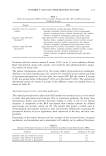
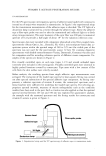
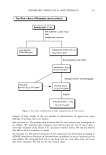
PENETRATION OF MIXED MICELLES INTO THE EPIDERMIS 145 surfactants could also reduce the penetration of the miceIlar surfactant into the skin in addition to reducing the surfactant monomer penetration. In this respect, it also became important to determine the relative contributions of the monomeric and the miceliar surfactant fractions to surfactant penetration into the skin, including quantifying which one is reduced the most by mixing surfactants. With this in mind, we measured the amount of SDS that penetrates into the epidermis from aqueous mixtures of SDS and the nonionic surfactant dodecyl hexa(ethylene oxide) (C12E6) after five hours of exposure. We found that SDS in SDS/C12E 6 mixed micelies is less able to penetrate into the epidermis than SDS in pure SDS micelies. We also found that the majority of SDS penetrating into the skin from SDS/C•2E 6 mixtures results from the monomeric fraction. Dynamic light scattering (DLS) measurements indicated that mixing SDS with C•2E 6 leads to an increase in the micelie size. We propose that it is the increased micelie size that reduces, or prevents, the penetration of the SDS/ C•2E 6 mixed micelies into the epidermis. Furthermore, we propose that, in general, surfactant mixtures that obey the monomer penetration model contain mixed micelies that are too large to be able to penetrate into the epidermis. EXPERIMENTAL MATERIALS Sodium dodecyl sulfate (SDS) and sodium chloride (NaCI) were purchased from Sigma Chemicals (St. Louis, MO) and were used as received. Dodecyl hexa(ethylene oxide) (C12E6) was purchased from Nikko Chemicals (Tokyo, Japan) and was used as received. Water was produced using a Millipore Academic water filter. •4C-radiolabeled SDS was purchased from American Radiolabeled Chemicals (St. Louis, MO) and was used as received. Phosphate-buffered saline (PBS) was prepared using PBS tablets from Sigma Chemicals and Millipore filtered water. PREPARATION OF SKIN SAMPLES Female Yorkshire pigs (40-45 kg) were purchased from local farms. Skin from the back of the pig was harvested within one hour of sacrificing the animal. The subcutaneous fat was trimmed off using a razor blade, and the full-thickness pig skin was cut into 2-cm x 2-cm pieces and stored in a -80 øC freezer until used. EXPERIMENTAL PROTOCOL After allowing the skin to thaw for a half hour at room temperature, the pig skin was mounted in a vertical Franz diffusion cell (Permegear Inc., Riegelsville, PA), with the SC facing the donor compartment. The donor and the receiver compartments of the diffusion cell were filled with phosphate-buffered saline (PBS phosphate concentration of 10 mM NaCI concentration of 137 mM Sigma Chemical Company), and the skin was left to hydrate for one hour. The PBS in the donor compartment was removed, and 1.5 ml of surfactant solution was added to the donor compartment. The solution in the donor compartment, referred to hereafter as the contacting solution, contained mixtures of

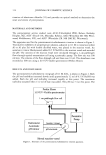
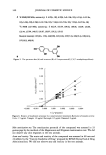
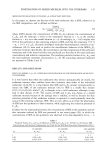
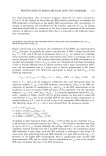
146 JOURNAL OF COSMETIC SCIENCE SDS and C12E6, each with about 0.5 iaCi/ml of •4C-radiolabeled SDS and 100 mM NaC1. We verified that the concentration of radiolabeled SDS in the contacting solution did not change appreciably during the five-hour exposure to the skin. A five-hour exposure was chosen because this time was sufficient to enable significant penetration of SDS into the skin, but short enough to prevent the saturation of the skin with SDS. The tem- perature of the diffusion cell was ambient, that is, 20 ø + 1 øC. After five hours of exposure, the contacting solution was removed, and the donor compartment was rinsed four times with 2 ml of PBS to remove any SDS that was not bound to the skin. The skin was subsequently heat-stripped by soaking it in a bath of water at 60 øC for two minutes, and the epidermis (SC and viable epidermis) was separated from the dermis. The exposed epidermis was then dried in a fume hood for two days and weighed. The dried epidermis was dissolved in 1.5 ml of Soluene-350 (Packard, Meriden, CT). Ten milliliters of Hionic Fluor scintillation cocktail (Packard) was added to the Soluene-350 after the epidermis was dissolved, and the concentration of radiola- beled SDS was determined using a Packard Tri-Carb 4350 scintillation counter. Know- ing the concentration of SDS in the contacting solution, Csos, the radioactivity of the contacting solution, Crad, do .... the dry weight of the epidermis, m, and the radioactivity of the epidermis, Crad, Jkin it was possible to determine the concentration of SDS in the dried epidermis, CsoS, skin using the following equation: Crad, skin ' CSDS Cszs, ,kin = C•, •on•' m (1) DYNAMIC LIGHT SCATTERING The SDS and the SDS/C•2E 6 solutions were prepared in Millipore filtered water with 100 mM NaC1. The 100 mM NaC1 was added to the surfactant solution to screen electrostatic intermicellar interactions in the DLS measurements (32-35). To prevent dust from interfering with the light-scattering measurements, the surfactant solutions were filtered through a 0.02-lam Anotop 10 syringe filter (Whatman International, Maidstone, England) directly into a cylindrical-scattering cell, and sealed until use. DLS was performed at 25 øC and a 90 ø scattering angle on a Brookhaven BI-200SM system (Brookhaven, Holtsville, NY) using a 2017 Stabilite argon-ion laser (Spectra Physics) at 488 nm. The autocorrelation function was analyzed using the CONTIN program pro- vided by the BIC dynamic light scattering software (Brookhaven, Holtsville, NY), which determined the effective hydrodynamic radius, Rh, using the Stokes-Einstein relation (36): kBT -- Rh - 6 •r•l• (2) where k•3 is the Boltzma__nn constant, T is the absolute temperature, x I is the viscosity of the salt solution, and D is the mean diffusion coefficient of the scattering species. In order to eliminate the effects of intermicellar interactions when measuring the hydro- dynamic radii of the micelies, the effective hydrodynamic radii were determined at several different total surfactant concentrations having a fixed solution composition, and the average effective hydrodynamic radii were extrapolated to a zero micelie concentra- tion (32-35,37).
Purchased for the exclusive use of nofirst nolast (unknown)
From: SCC Media Library & Resource Center (library.scconline.org)