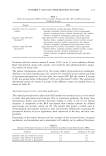
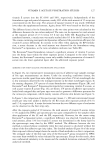
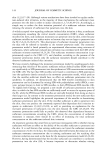
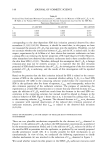
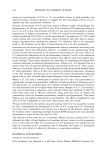
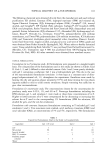
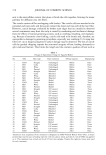
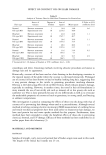
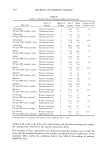
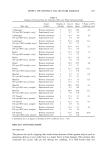
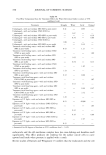
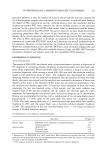
PENETRATION OF MIXED MICELLES INTO THE EPIDERMIS 147 MICELLIZATION BEHAVIOR OF THE SDS/Ct2E 6 SURFACTANT MIXTURES In this paper, o• x denotes the fraction of the total surfactant that is SDS, referred to as the SDS composition, and is defined as follows: Otx = ismSix q_ [C12E6]x (3) where [SDS] denotes the concentration of SDS, [C•2E6] denotes the concentration of C12E6, and the subscript x refers to the monomeric fraction (x = 1), to the miceliar fraction (x = m), or to the overall solution (x = s). Accordingly, % -- 0.83 implies that 83% of the surfactant in the contacting solution is SDS, and that the remaining 17% (1 - % = 0.17) is C12E 6. Recently developed molecular-thermodynamic theories of mi- cellization (30,31) were used to predict the micellization behavior of the SDS/C12E6 surfactant mixtures. Specifically, the concentration and the composition of the surfactant monomers and of the mixed micelles were predicted as a function of the total surfactant concentration and solution composition. The resulting predicted values of oq, O•m, and the total surfactant monomer concentration, C•, for the contacting solutions examined are reported in Tables I and II. RESULTS AND DISCUSSION EFFECT OF ADDING Ci2E6 AT A FIXED SDS CONCENTRATION ON THE PENETRATION OF SDS INTO THE EPIDERMIS It is well known that when two surfactants that interact synergistically are mixed, the surfactant mixture often exhibits lower skin irritation than either of the individual surfactants (6,24,26). It is also known that SDS and C12E 6 interact synergistically to reduce the CMC of the surfactant mixture (30,31). SDS is a model skin irritant (10,13,15,16,26,38), while Cx2E 6 is thought to be a mild surfactant, although it may lead to skin dryness (3,39). The system of SDS and C12E 6 was chosen as a model surfactant mixture because of the synergy that it exhibits, as well as because the skin irritation potential of this surfactant mixture is expected to result primarily from the action of the irritating surfactant, SDS. This, in turn, allows us to relate the penetration of SDS into the epidermis to skin irritation, while neglecting the irritation potential of C•2E 6. Evidence for the relationship between the concentration of SDS in the epidermis and the skin irritation induced by SDS was presented in our recent paper (28), in which the concentration of SDS in the epidermis was observed to be dose-dependent for % = 1, Table I Predicted Values of oq and o• m for Mixtures of SDS and C12E 6 in 0.1 M NaC1 at the Various SDS Concentrations and Solution Compositions (O•s) Used for the SDS Skin Penetration Experiments (30,31) 25 mM SDS 50 mM SDS 100 mM SDS O• s 0•1• O• m 0•1, O• m 0•1• O•rn 1 1,1 1,1 1,1 0.83 0.96, 0.83 0.96, 0.83 0.96, 0.83 0.50 0.925, 0.50 0.925, 0.50 0.925, 0.50

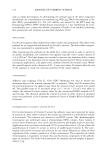
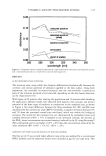
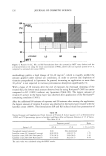
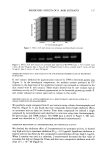
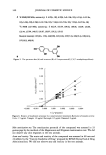
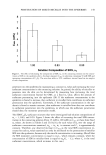
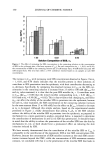
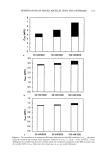
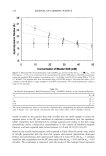
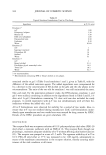
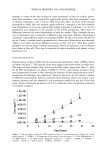
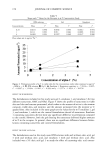
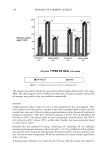
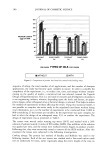
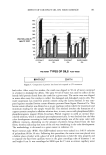
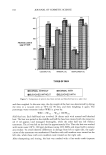
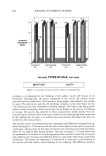
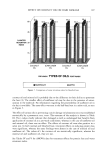
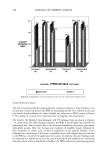
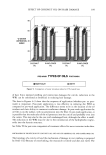
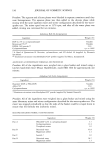
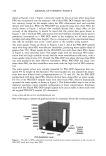
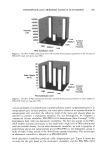
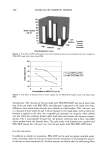
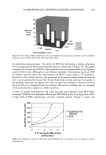
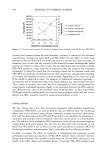
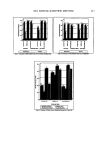
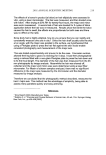
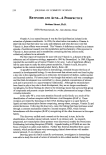
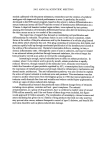
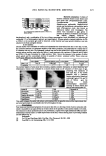
148 JOURNAL OF COSMETIC SCIENCE Table II Predicted Total Surfactant Monomer Concentration, C• (mM), for the Mixtures of SDS and C12E6 in 0.1 M NaC! at the Various SDS Concentrations and Solution Compositions (%) Used for the SDS Skin Penetration Experiments (30,31) % 25 mM SDS 50 mM SDS 100 mM SDS 1 0.850 0.864 0.877 0.83 0.683 0.695 0.707 0.50 0.266 0.270 0.276 corresponding to the dose-dependent SDS skin irritation potential observed by other researchers (2,3,8,13,16,18). However, it should be noted that, in this paper, we have not measured the amount of C12E 6 that penetrates into the epidermis. Therefore, we did not ascertain whether the interaction between CliE 6 and the SC is indeed mild. In this respect, experiments by de la Maza et al. have shown that nonionic surfactants can have a strong effect on reducing the barrier properties of SC lipid bilayers (19,40). However, other researchers have observed that nonionic surfactants tend to have a smaller effect on the skin than SDS (3,39,41). Therefore, although the assumption that C12E 6 is benign irritation-wise may not be entirely accurate, it is expected that the skin irritation potential of SDS should overwhelm that of C12E 6. An investigation of the skin irritation potential of C•2E 6 is underway, and the results of this investigation will be reported elsewhere. Based on the premise that the skin irritation induced by SDS is related to the concen- tration of SDS in the epidermis, we measured whether adding C12E6 to a fixed SDS concentration (50 mM) in the contacting solution would reduce the concentration of SDS in the epidermis after five hours of exposure, C•ki,, and consequently, reduce the skin irritation potential of the surfactant solution. The purpose of conducting the experiments at a fixed SDS concentration is to ensure that any observed decrease in Cski, upon the addition of C•2E 6 would not result from the decrease in the total SDS con- centration in the contacting solution, but instead would be related to changes in the solution behavior of SDS. Figure 1 shows that as o• s is decreased by adding more C12E6 to the contacting solution, C•i, decreases. The observed decrease in C,•, as o•s decreases is consistent with reported observations of the reduced skin irritation potential of surfactant mixtures, provided that Cs•, is related to the observed skin irritation (6,24,26). EFFECT OF INCREASING % ON THE ABILITY OF MICELLAR SDS TO PENETRATE INTO THE EPIDERMIS There are two plausible mechanisms responsible for the decrease in C,•i, observed in Figure 1: (i) the addition of C12E6 reduces the SDS monomer concentration, as predicted by the monomer penetration model, and (ii) the addition of C12E6 reduces the ability of the miceliar SDS to penetrate into the epidermis, as predicted by our recently proposed micelie penetration model (28). It is entirely possible for both mechanisms to act simultaneously. In view of that, we conducted the following experiments to clarify whether mechanism (ii) was involved in the reduction of C•k•, observed in Figure 1. We tested whether mixed micelles present in the SDS/C•2E 6 surfactant mixtures could
Purchased for the exclusive use of nofirst nolast (unknown)
From: SCC Media Library & Resource Center (library.scconline.org)