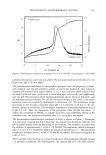
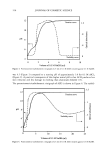
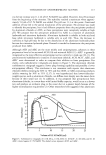
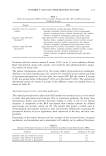
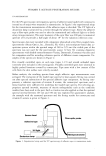
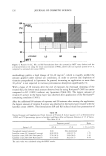
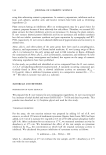
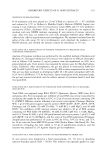
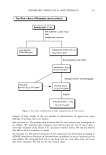
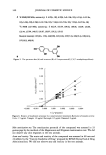
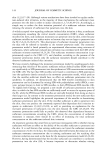
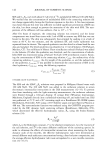
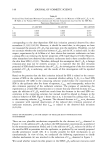
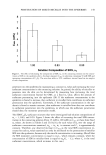
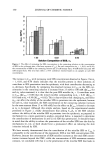
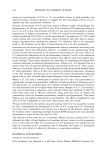
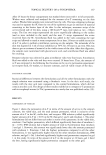
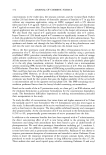
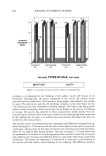
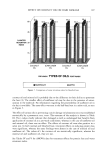
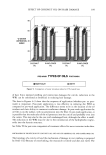
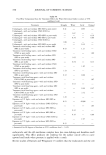
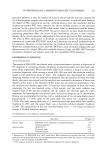
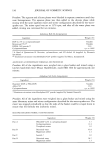
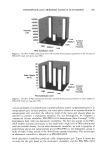
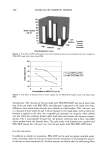
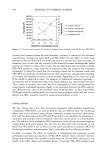
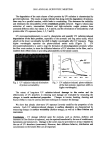
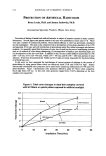
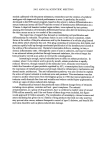
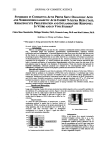
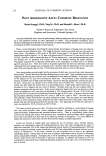
116 JOURNAL OF COSMETIC SCIENCE 12 10 pH 8 6 Turbidity curve 0 2 4 6 8 10 Volume ofO.5 M NaOH (ml) 1.2 Figure 3. Potentiometric/turbidometric titrigraph of 25 ml of 0.1 M ACH titrated against 0.5 N NaOH. was 4.5 (Figure 3) compared to a starting pH of approximately 3.0 for 0.1 M AICI 3 (Figure 2). A practical consequence of this higher initial pH is that ACH produces less skin irritation and less damage to clothing than aluminum chloride (15). The potentiometric/turbidometric titrigraph of AZG is shown in Figure 4. The turbid- pH 8 12- 10' Titration curve % % % Turbidity curve 0 5 10 15 0 25 - 1.5 1 Volume of 0.5 M NaOH (ml) Figure 4. Potentiometric/turbidornetric titrigraph of 25 ml of 0.1 M AZG titrated against 0.5 N NaOH.

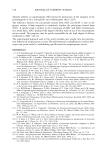
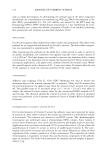
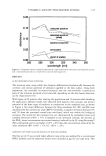
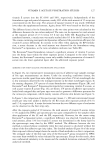
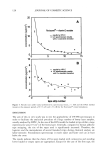
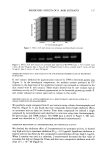
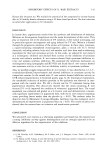
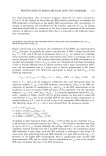
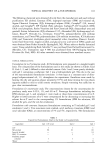
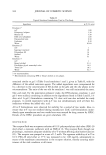
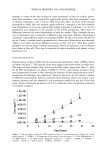
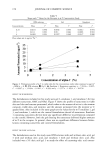
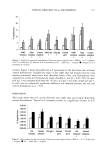
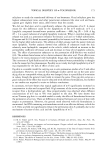
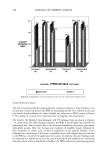
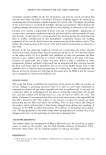
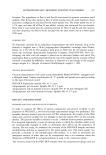
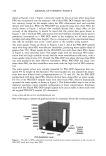
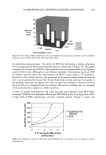
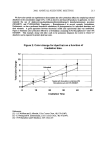
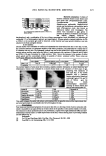
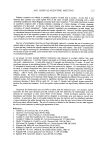
TITRATION OF ANTIPERSPIRANT ACTIVES 117 ity did not increase until 1.4 ml ooe 0.5 N NaOH was added. However, the pH increased from the beginning ooe the titration. The turbidity reached a maximum when approxi- mately 5.0 ml ooe 0.5 N NaOH was added. The pH was 11.3 at this point. Continued addition ooe base led to the partial dissolution ooe the precipitate. No attempt was made to identify the precipitate, but it had different properties From the precipitates produced by aluminum chloride or ACH, as these precipitates were completely soluble at high pH. We propose that the precipitate produced by AZG- is a mixture ooe aluminum hydroxide and zirconium hydroxide. Aluminum hydroxide is soluble in both acid and base while zirconium hydroxide is soluble only in acid (16). Thus, the decrease in turbidity at high pH may be due to the dissolution ooe the aluminum hydroxide phase but not the zirconium hydroxide phase. Research is needed to characterize the precipitate produced From AZG-. Although ACH and AZG- are the most widely used antiperspirants, advances in their preparation have led to activated ACH (10) and activated AZG- (11). AZG-' is generally recognized as the most effective antiperspirant active currently in wide use (10,11). The potentiometric/turbidometric titrations ooe aluminum chloride, ACH, ACH ', AZG-, and AZG -• were determined in order to compare their abilities to oeorm precipitates. For clarity, only turbidometric titrigraphs are shown in Figure 5. The aluminum chloride turbidometric titrigraph suggests a lower plug-forming capability and possibly a lower antiperspirant efficacy. This conclusion is not consistent with reports that aluminum chloride inhibits sweating by 60% to 70% and that ACH- or AZG--containing products inhibit sweating by 30% to 55% (2,17). It was hypothesized that lower-molecular- weight species, such as aluminum chloride, can diffuse more deeply into the sweat ducts because ooe their small size (2). In addition, it was proposed that precipitation from aluminum chloride, in a sweat duct with limited buffer capacity, would occur at a slower rate and produce an occlusive plug in the sweat duct at a greater depth because ooe the higher neutralization requirement (2). Other researchers have suggested that aluminum 1 • ACH .8 .6 .4 .2 0 AICI 3 0 5 10 15 20 25 Volume of 0.5 M NaOH (ml) Figure 5. Turbidometric titrigraphs of 0.1 M A1C13, 0.1 M ACH, 0.1 M ACH', 0.1 M AZG, and 0.1 M AZG' titrated against 0.5 N NaOH. The dashed curves represent ACH' and AZG'.
Purchased for the exclusive use of nofirst nolast (unknown)
From: SCC Media Library & Resource Center (library.scconline.org)