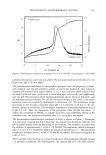
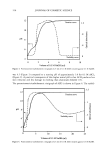
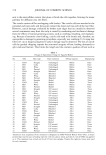
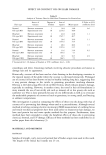
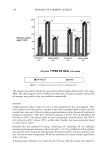
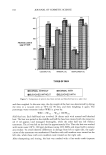
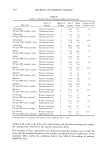
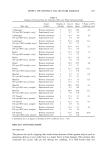
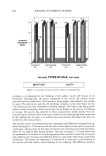
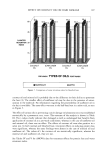
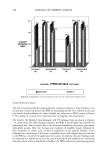
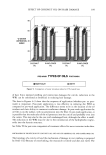
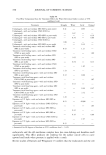
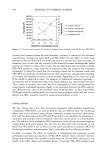
118 JOURNAL OF COSMETIC SCIENCE chloride achieves its antiperspirant effectiveness by destruction of the integrity of the acrosyringium or by a non-specific anti-inflammatory effect (2,18). The difference between the precipitates formed from ACH and ACH' is seen in the greater volume of base required to completely dissolve the precipitate formed from ACH'. A similar trend is evident in the comparison of AZG' and AZG. Furthermore, on a molar basis, AZG' produced the largest turbidity value of any of the antiperspirant actives tested. This property may be partly responsible for the high degree of efficacy attributed to AZG' (10,11). The experimental approach used in this study provides new insight into the precipita- tion behavior of antiperspirant actives. The potentiometric/turbidometric titration tech- nique may prove useful in establishing specifications for antiperspirant actives. REFERENCES (1) A. H. Rosenberg and J. J. Fitzgerald, "Chemistry of Aluminum-Zirconium-Glycine (AZG)Complexes," in Antiperspirants and Deodorants, 2nd ed., K. Laden, Ed. (Marcel Dekker, New York, 1999), p. 138. (2) H. H. Relier and W. L. Leudders, "Pharmacologic and Toxicologic Effects of Topically Applied Agents on the Eccrine Sweat Glands," in Advances in Modern Toxicology, Vol. 4, F. N. Marzulli and H. I. Maibach, Eds. (Wiley, New York, 1977), pp. 1-54. (3) R. P. Quatrale, A. H. Waldman, J. G. Rogers, and C. B. Felger, The mechanism of antiperspirant action by aluminum salts. I. The effect of cellophane tape stripping on aluminum salt-inhibited eccrine sweat glands,J. Soc. Cosmet. Chem., 32, 67-73 (1981). (4) R. P. Quatrale, D. W. Coble, K. L. Stoner, and C. B. Felger, The mechanism of antiperspirant action by aluminum salts. II. Histological observations of human eccrine sweat glands inhibited by alumi- num chlorohydrate, J. Soc. Cosmet. Chem., 32, 107-136 (1981). (5) R. P. Quatrale, D. W. Coble, K. L. Stoner, and C. B. Felger, The mechanism of antiperspirant action of aluminum salts. III. Histological observations of human eccrine sweat glands inhibited by alumi- num zirconium chlorohydrate glycine complex, J. Soc. Cosmet. Chem., 32, 195-221 (1981). (6) R. P. Quatrale, E. L. Thomas, and J. E. Birnbaum, The site ofantiperspirant action by aluminum salts in the eccrine sweat glands of the axilla, J. Soc. Cosmet. Chem., 36, 435-440 (1985). (7) S.A. McWilliams, I. Montgomery, D. McE. Jenkinson, H.Y. Elder, S. M. Wilson, and A.M. Sutton, Effects of topically-applied antiperspirant on sweat gland function, Br. J. Dermatol., 117, 617-626 (1987). (8) D. L. Teagarden, J. L. White, and S. L. Hem, Aluminum chlorohydrate III: Conversion to aluminum hydroxide, J. Pharm. Sci., 70, 808-810 (1981). (9) The United State Pharmacopoeia (United States Pharmacopeial Convention, Rockville, MD, 2000), pp. 83-87, 89-91, 92-103. (10) J.J. Fitzgerald and A. H. Rosenberg, "Chemistry of Aluminum Chlorohydrate and Activated Alumi- num Chlorohydrates," in Antiperspirants and Deodorants, 2nd ed., K. Laden, Ed. (Marcel Dekker, New York, 1999), pp. 83-136. (11) A.H. Rosenberg and J.J. Fitzgerald, "Chemistry of Aluminum-Zirconium-Glycine (AZG) Com- plexes," in Antiper•J)irants and Deodorants, 2nd ed., K. Laden, Ed. (Marcel Dekker, New York, 1999), pp. 137-168. (12) M. K. Wang, J. L. White, and S. L. Hem, Influence of acetate, oxalate, and citrate anions on precipi- tation of aluminum hydroxide, Clays Clay Miner, 31, 65-68 (1983). (13) C.J. Serna, J. L. White, and S. L. Hem, Factors affecting homogeneous precipitation of aluminum hydroxide gel, J. Pharm. Sci., 67, 1179-1181 (1978). (14) J. D. Hem and C.E. Roberson, Form and stability of aluminum hydroxide complexes in dilute solution. Geological S•rvey Water-Supply Paper 1827-A, A47 (1967). (15) K. Laden, "Antiperspirants and Deodorants: History of Major HBA Market," in Antiperspirants and Deodorants, 2nd ed., K. Laden, Ed. (Marcel Dekker, New York, 1999), pp. 3-6. (16) The Merck Index (Merck Research Laboratories, Whitehouse Station, NJ, 1996), pp. 61, 1738. (17) K. Laden, "Antiperspirants and Deodorants: History of Major HBA Market", in Antiperspirants and Deodorants, 2nd ed., K. Laden, Ed. (Marcel Dekker, New York, 1999), p. 2. (18) E. L. Opie, On the relation of necrosis and inflammation to denaturation of proteins,J. Exp. Med., 115, 597-608 (1962).

j. Cosmet. Sci., 54, 119-131 (March/April 2003) Penetration studies of vitamin E acetate applied from cosmetic formulations to the stratum corneum of an in vitro model using quantification by tape stripping, UV spectroscopy, and HPLC P. LAMPEN, W. PITTERMANN, H. M. HEISE, M. SCHMITT, H. JUNGMANN, and M. KIETZMANN, Institute of Spectrochemistry and Applied Spectroscopy, D-44013 Dortmund (P.L., H.M.H.), Henkel KGaA, D-40191 Diisseldorf (W.P., M.S.), MBR Messtechnik GmbH, D-45896 Gehenkirchen (H.J.), and Institute for Pharmacology, Toxicology and Pharmacy, Veterinary School Hannover, D-30559 Hannover (M.K.), Germany. Accepted for publication September 6, 2002. Presented in part at the ConjSrence on Stratum Corneum III, Basel, Switzerland, September 12-14, 2001, and in Proceedings of the Conference Stratum Corneum, R. Marks, J.-C. Lgvb'que, and R. Voegeli, Eds. (Martin Dunitz Ltd., London, 2002). Synopsis The skin activation and penetration capability of vitamin E acetate as an ingredient in a basic o/w cream (lameliar type), in liposomes (Rovisome ©) and microparticles (Roviparts©), was investigated under in vitro conditions (BUS model) by the adhesive stripping method. The aim of the study was to compare the analytical results obtained by UV spectroscopy (transmission) and the conventional HPLC method. For the quantitative spectrometric assay, a classical least-squares evaluation of the spectra between 265 and 350 nm, based on the constituent spectra, was used. UV spectroscopy is an economic analytical method for evaluating a large population of samples of the horny layer taken by the adhesive tape stripping method, which is an established tool for depth profiling of substances within the stratum corneum. With regard to the irritation test, no cytotoxicity was recorded for all formulations tested. However, the Roviparts © and Rovisome © cream formulations induced a considerable activation of the epidermal cells that may contribute to the penetration efficiency of Rovisome©-formulated vitamin E acetate. The Rovisome ©- formulated cream delivered a maximum amount of vitamin E acetate into the horny layer compared to the other formulations tested. The difference can be explained by an alteration of the plasticity of the horny layer inducing a strong reservoir capacity and an activation of upper epidermal cells. Moreover, the opening of the potential pathway for a follicular penetration may be part of the increased reservoir capacity. INTRODUCTION Today's cosmetic emulsions usually contain several ingredients whose function is to ameliorate the condition of the skin with respect, for example, to skin hydration or Address all correspondence to W. Pittermann. 119
Purchased for the exclusive use of nofirst nolast (unknown)
From: SCC Media Library & Resource Center (library.scconline.org)