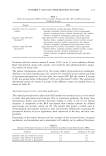
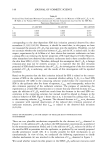
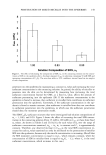
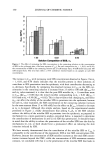
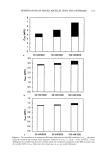
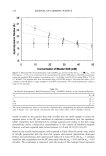
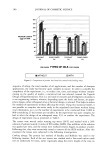
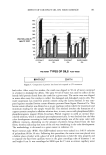
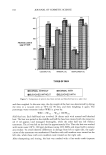
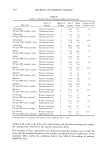
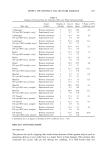
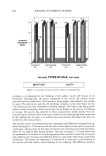
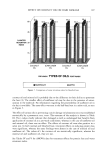
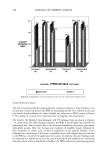
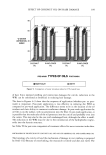
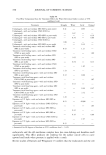
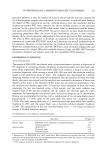
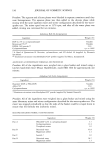
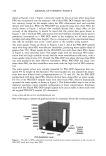
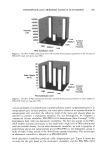
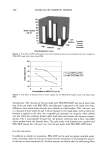
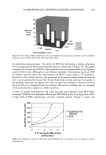
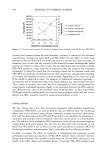
172 JOURNAL OF COSMETIC SCIENCE concentrations in the viable skin, the stratum corneum, and the receptor fluid. Earlier studies (24) had shown the absence of detectable amounts of baseline ot-T in pig skin without any exogenous application, using an HPLC equipped with a UV detector (detection limit 0.25 lag/ml). Traber et al. (25) studied the penetration and distribution of ot-T applied on mouse skin. They found that the largest fraction of skin ot-T following topical application was not found on the surface but in the deeper subcutaneous layers. We also found that topical ot-T application markedly increased skin ot-T content. Lopez-Torres et al. (26) found topical ot-T treatment to significantly increase ot-T levels in both the epidermis (62-fold) and the dermis (22-fold) 24 h after administration. Two routes of skin absorption of ot-T have been suggested: from the stratum corneum into the epidermis and dermis and through the hair follicles by way of the pilosebaceous canal and into the outer root sheaths and eventually into the dermal tissue (27). This is the first systematic study delineating the effect of formulation factors on the permeation of ot-T. All our formulations were studied for stability using a previously established HPLC procedure immediately after formulation and two weeks of storage under ambient conditions (24). The formulations were also found to be visually stable. All the systems that we used had the ot-T in solution either in the alcoholic phase (gels) or in the oily phase (emulsions, solution). Emulsion 2, which was a microemulsion system containing IPM, showed the highest total permeation of ot-T. This was followed by IPM solution. There have been reports of IPM being a possible penetration enhancer. That could have been one of the possible reasons for better skin delivery by formulations containing IPM. However, we do not have sufficient evidence at this point to make a definite conclusion. The highest permeability of felodipine from benzyl alcohol micro- emulsions was found for that system that gave the highest solubility of the active both in microemulsion and in the apparent external phase (28). The IPM-containing micro- emulsion performed better than the benzyl alcohol-containing microemulsion. Based on the results of the ot-T permeation study, we chose gel 3, an IPM solution, and the emulsion formulation as prototype formulations for the concentration dependency study. The formulation difficulties experienced in making microemulsions precluded their incorporation in the study. To study the effect of concentration, four times lower and higher amounts of ot-T than the normally used 1% were formulated. The 1% formulations were also tested again in this study. A detectable amount of the active was found even at 0.25% concentration as early as four hours in the receptor. The skin profiles exhibited linearity and consequent dose proportionality. As the concentration of ot-T was increased in the formulations from 0.25% to 4%, proportionally greater amounts of active permeated into the skin. In addition to the numerous benefits that have been reported with ot-T administration, the direct sunscreening effect of ot-T is now being added to the growing list (29). Sunscreens used along with antioxidants have been found to give an added benefit of photoprotection. We used three prototypic formulations including gel 3, emulsion 1, emulsion 3, and two different sunscreens, OMC and octyl salicylate. Also, some sun- screens have been used as penetration enhancers themselves. Padimate O was shown to improve percutaneous absorption of testosterone and estradiol in swine. Padimate O was shown to lower the transition temperature of the stratum corneum lipids, which was postulated to result in significant increases in drug diffusivity across the skin (17,18). These authors also used novel topical spray vehicles containing Padimate O and octyl

TOPICAL DELIVERY OF ot-TOCOPHEROL 173 salicylate to study the transdermal delivery of sex hormones. Octyl salicylate gave the highest enhancement ratio, and other penetration enhancers like oleic acid and lauro- capram gave slightly lower ratios, albeit better than the control. We did not find oleic acid to significantly enhance the permeation of ot-T. A major reason for this difference could be the lipophilicty of the ot-T molecule. ot-T is a lipophilic compound (octanol/water partition coefficient = 480), log (P) = 2.68. A log (P) 2 is a good indicator of a highly lipophilic molecule. When 1-menthol along with ethanol was used as a penetration enhancer for benzoic acid and its 4-alkyl substituents, Kitagawa and Li (16) found increased permeability for benzoic acid but decreased values for the higher alkyl substituents. The addition of alkyl groups made the parent molecule more lipophilic. Further analysis showed that addition of enhancers made the skin relatively more hydrophilic compared to the vehicle, which induced an increase in the permeability coefficient of benzoic acid and decreases in those of its lipophilic substitu- ents. The effect of penetration enhancers on the permeation of [3-blockers was studied (30). The authors found azone to be a better enhancer than oleic acid. Their effects were found to be more pronounced with hydrophilic drugs than with lipophilic [3-blockers. The increment of lipid fluidity and the resulting enhanced water permeability is thought to be the reason for this phenomenon. Possibly in our study the high lipophilicity of ot-T was responsible for the lack of effect of oleic acid. Pig skin is a suitable model for carrying out in vitro permeation studies of ot-T and other antioxidants. However, we noticed that although studies carried out on the same piece of pig skin are comparable when pig skin was changed, there is a possibility of a variation in values, though the general trend tends to remain the same. Thus pig skin serves as a good indicator of the effect that may be obtained with different formulations, but further in vivo studies are required to arrive at definite conclusions. In summary, we have shown that topical application of ot-T significantly increased its concentration in skin and receptor fluid. High amounts of the active permeated in the receptor from a hydroalcoholic gel. Dose proportionality was observed when different concentrations of ot-T (up to 4%) were applied to the skin. We have shown that micro-Yucatan pig skin is a suitable model to study the effect of formulation factors on the permeation of actives. There are differences obtained between each piece of skin with respect to permeation. However, the general trend observed with the formulations is maintained. An IPM-containing microemulsion served as an effective delivery vehicle for ot-T. Oleic acid did not significantly enhance the permeation of or-T, probably due to the mechanism of action of oleic acid and the lipophilicity of ot-T. REFERENCES (1) M.G. Traber and H. Sies, Vitamin E in humans--Demand and delivery, Annu. Rev. Nutr., 16, 321-347 (1996). (2) B.N. Ames, Dietary carcinogens and anticarcinogens: Oxygen radicals and degenerative diseases, Science, 221, 1256-1264 (1983). (3) H. L. Gensler, M. Aicken, Y-M. Peng, and M. Xu, Importance of the form of topical vitamin E for prevention of photocarcinogenesis, Nutr. Cancer., 26, 183-191 (1996). (4) D. L. Bissett, G. G. Hillerbrand, and D. P. Hannon, The hairless mouse as a model of skin photoaging: Its use to evaluate photoprotective materials, Photodermatology, 6, 228-233 (1989). (5) P. Mayer, The effects of vitamin E on the skin, Cosmet. Toiletr., 108, 99-109, (1993). (6) K. Furuse, Vitamin E: Biological and clinical aspects of topical treatment, Cosmet. Toiletr., 102, 99-116 (1987).
Purchased for the exclusive use of nofirst nolast (unknown)
From: SCC Media Library & Resource Center (library.scconline.org)