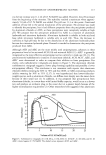
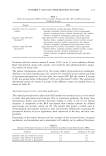
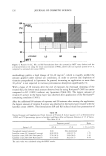
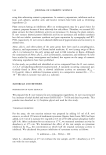
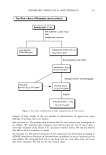
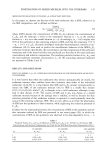
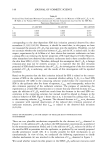
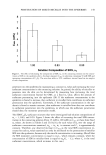
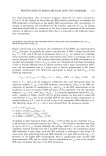
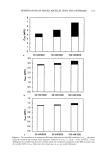
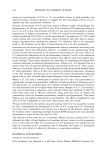
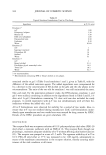
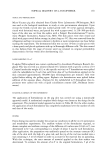
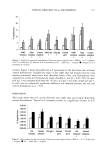
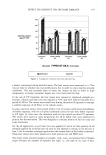
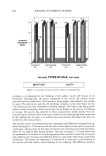
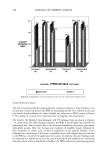
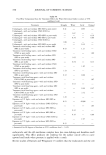
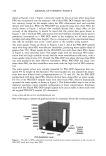
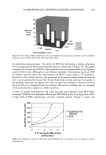
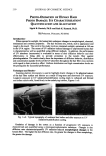
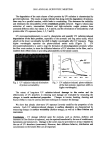
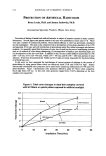
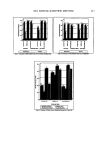
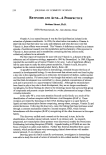
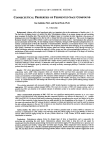
180 JOURNAL OF COSMETIC SCIENCE PROTEIN LOSS IN ug/g OF HAIR 360 - 320 - 280- 240 - 200 - 160 - 120 - 80- 306 40- 0 • COCONUT OIL I I I I I I SUNFLOWER COCONUT SUNFLOWER OIL OIL OIL PRE-WASH TYPES OF OILS POST-WASH l [] WITHOUT [] WITH Figure 3. Comparison of protein loss from hair treated with boiling water. sequence of oiling, the total number of oil applications, and the number of shampoo applications, the study had become quite complex in nature. In order to simplify the complexity of the experiment, i.e., to reduce cost, time, and energy without compro- mising on the quality of results, a statistical tool was selected, termed the Taguchi Design of Experimentation. This is a tool used in research and development of products in an engineering industry wherein, depending upon the levels and factors, an appro- priate design, either orthogonal array or factorial design, is selected. This helps to reduce the number of experiments without affecting the result. Using this statistical model, it was possible to complete the entire study in the stipulated time frame without losing vital information, as it cut the number of experiments to be conducted from 14400 to 800 (considering 25 hair tresses per variable). As the experiment was quite complex, we had to select the design of an orthogonal array, L32, to conduct the experiment. The design of experiment was as presented in Table I. The tresses were wetted under running tap water (28øC) and washed with a 20% solution of sodium laureth (3 moles of EO) sulfate (SLES). One milliliter of the solution was applied per tress, and the tresses were worked between fingers to produce a lather. Following this, they were extensively rinsed to remove all the SLES residues. After this treatment the tresses were subjected to the following investigations. Combing damage. The protein loss method of Sandhu and Robbins was used in the following manner. Each of the wet tresses was combed with a fine-tooth nylon comb (20-22 teeth/inch) 50 times, rather vigorously along the entire length of the tress on

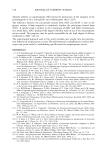
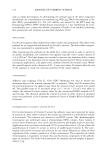
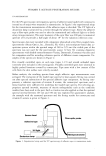
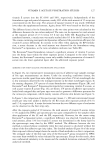
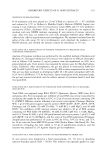
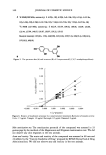
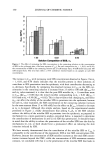
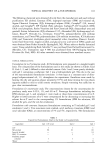
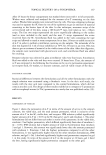
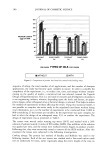
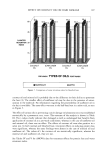
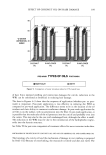
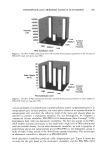
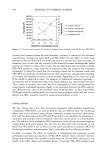
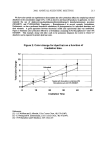
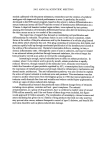
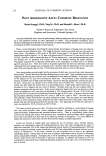
EFFECT OF COCONUT OIL ON HAIR DAMAGE 181 PROTEIN LOSS IN ug/g OF HAIR 440- 253 i 400 36O 32O 280 240 200 160 120 80 40- 0 COCONUT OIL SUNFLOWER COCONUT SUNFLOWER OIL OIL OIL PRE-WASH TYPES OF OILS POST-WASH [] WITHOUT [] WITH Figure 4. Comparison of protein loss from hair exposed to UV treatment. both sides. After every five strokes, the comb was dipped in 50 ml of water contained in a beaker to dislodge the debris. The same 50 ml of water was used to collect all the loosely held protein eluted from the comb for a given tress. The entire tress was dipped in water after every five strokes to collect the damaged and dislodged cuticle cells. The water suspension was tested for protein content using the Lowry method. It was com- pared against standard bovine serum albumin procured from Sigma Chemical Co. This bovine serum albumin was diluted so as to get readings within which the maximum and minimum reading for the sample would fall. The method involves the formation of a copper-protein complex in alkaline solution that, in turn, reacts with phosphomolybdic- phosphotungstate reagent (Folin-Ciocaltaeu Phenol reagent) to yield an intense blue- colored solution, which is analyzed spectrophotometrically. It was checked that the blue color development occurring in both standard and sample was of the same color with different intensity, depending on the amount of protein being eluted from the hair fibers, thereby indicating that none of the oils was interfering in the color development. The methodology is discussed to a great extent in reference (2). Water fete,rio, i,dex (WRI). The SLES-washed tresses were soaked in a 0.01% solution of polysorbate 80 for 30 min. Following this procedure, the entire tress was placed over a hollow glass cylinder with a glass lid with perforations to hold the tress properly and to separate the hair from capillary water in the glass centrifuge tube of diameter 3 cm and height 8 cm. It was centrifuged at 8000 rpm for 15 min to remove capillary water
Purchased for the exclusive use of nofirst nolast (unknown)
From: SCC Media Library & Resource Center (library.scconline.org)