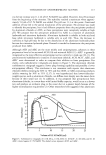
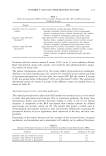
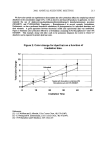
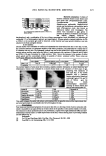
2002 ANNUAL SCIENTIFIC MEETING 209 From a toxicological standpoint, such low penetration values generally support relatively large safety margins for hair dyes, even for those dyes with no-observed-adverse effect levels (NOAELs) from toxicology studies as low as 10 mg/kg/day. Consideration of the temporal aspects of hair dye use on a discontinuous basis (e.g., once every 4-6 weeks) serves to further reduce estimated body burdens. As the denominator in the calculation of safety margins, where the numerator (NOAEL) reflects the results of extensive and expensive toxicological evaluations, reliable estimates of the extent of percutaneous penetration are of critical importance in the risk assessment process.

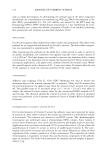
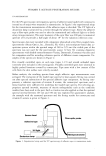
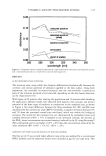
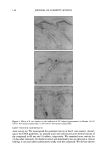
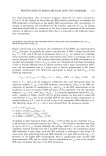
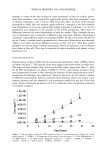
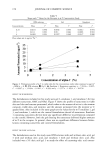
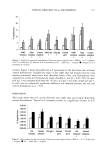
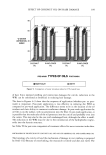
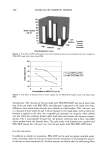
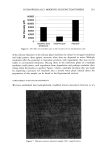
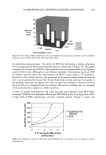
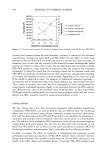
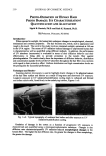
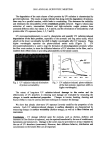
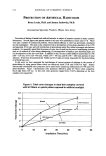
210 JOURNAL OF COSMETIC SCIENCE PHOTO-OXIDATION OF HUMAN HAIR PHOTO DAMAGE: ITS CHARACTERIZATION/ QUANTIFICATION AND ALLEVIATION Sigrid B. Ruetsch, Ph.D. and Yash K. Kamath, Ph.D. TRI/Princeton, Princeton, NJ 08542 Introduction - When exposed to sunlight, the human hair undergoes changes in morphological, chemical, mechanical and cosmetic properties. The hair becomes dry, brittle, dull in appearance and rough to the touch. The work in this study involves simulated sunlight, optimized at 340 nm in the UVA region. The extent of UV radiation-induced damage to unprotected human hair is characterized as well as quantified using different methods. In addition, the performance of UV absorbers (sunscreens) is evaluated in terms of their diffusion behavior and their effectiveness in being able to provide protection to the keratin fiber against photodegradation. The results clearly show the importance of diffusion behavior, distribution and concentration (uptake levels) of the UV absorbers throughout the hair fiber cross sections with regard to their protective effect. Uniform distribution and high concentration levels are the prerequisite for successful performance. Techniques and Results - Scanning electron microscopy is used to highlight drastic changes in the physical nature of the hair fiber surface and interior as a result of long-term and short-term UV exposure. Longterm exposure to UV radiation/humidification cycling leads to collapsed and thinned out surface cuticle cells, fused firmly to the underlying cuticles, Figures 1 a-b. 33 'IK 4.3 30503S 5. 0 kV x4. 0•k'' •: Fig. 1 a-b Typical topography of unaltered hair before and after exposure to UV radiation/humidification cycling. Gradation of damage in the cortex as a function of progressive UV exposure is characterized and quantified using a microspectrophotometric technique. Changes in dye diffusion rates characterize/quantify UV radiation-induced morphological changes in the keratin fiber. The higher the dye diffusion rate, the greater the changes in fiber morphology, the greater the damage.
Purchased for the exclusive use of nofirst nolast (unknown)
From: SCC Media Library & Resource Center (library.scconline.org)