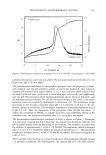
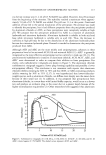
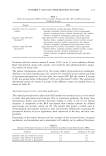
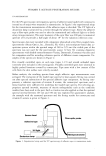
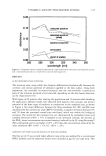
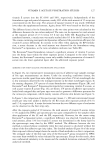
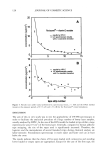
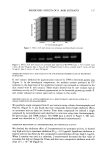
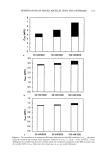
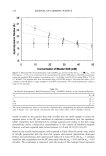
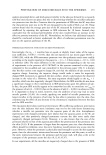
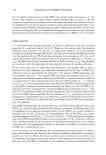
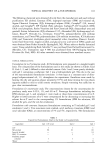
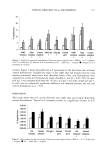
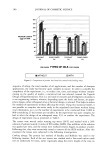
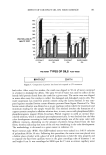
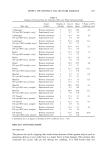
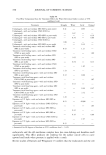
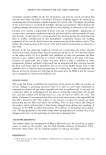
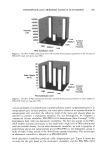
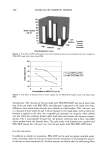
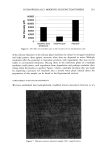
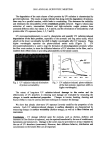
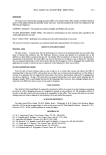
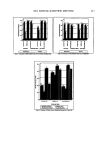
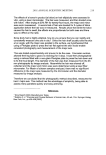
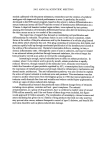
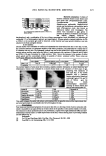
2002 ANNUAL SCIENTIFIC MEETING 211 The degradation of the main classes of hair proteins by UV radiation is characterized by gel electrophoresis. The results strongly indicate that along with the degradation of proteins, there may be a parallel reaction, which leads to crosslinking. This decreases the solubility and eliminates the extractability of the crosslinked protein network. Figure 2 shows easy extraction of matrix, intermediate filament and high-molecular weight proteins from untreated different ethnic hair (lanes 2, 4, 6 and 8), and the elimination of extractability of all proteins after UV exposure (lanes, 3, 5, 7 and 9). UV microspectrophotometry is used to characterize and quantify UV radiation-induced degradation of the hair proteins, especially of the aromatic and ring amino acids, which absorb at the lower wavelengths but shift to higher wavelengths after UV exposure. These higher wavelengths represent the photo-oxidized amino acids (Figure 3). UV microspectrophotometry is used to map the formation of photodegradation products within the fiber cross section, to trace the diffusion behavior of UV absorbers in the fiber, and to establish their effectiveness in providing photostability to the keratin system. Fig. 2 UV radiation-induced elimination Fig. 3 UV radiation-induced photo-oxidation of protein extractability. of the hair proteins (spectrum shifts to higher wavelengths). The extent of long-term UV radiation-induced damage to the cortex and the effectiveness of UV absorbers in reducing such damage are evaluated by measuring the changes in tensile mechanical properties. Changes in torsion, bending, shearing and fracture behavior may be used as alternate techniques to measure the damage. We show that already short-term UV exposure severely modifies the properties of the cuticula. Such UV radiation-induced changes in surface chemistry are characterized by measuring changes in surface wettability (surface energy), as well as in fiber friction and coarseness. Conclusions - UV damage inflicted upon the cuticula, such as dryness, dullness and increases in fiber friction (roughness), may be repaired/remediated by the use of conditioners, humectants and moisturizers. Damage to the cortex may be prevented or at least retarded by the use of UV absorbers (sunscreens). However, their diffusion behavior, distribution and concentration in the keratin fiber are all important.

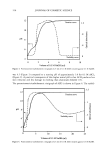
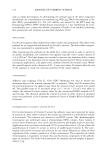
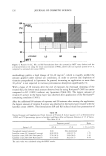
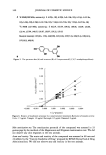
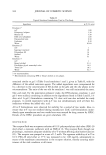
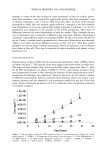
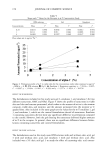
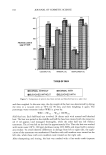
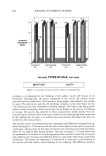
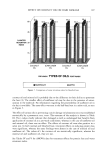
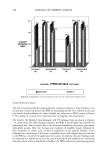
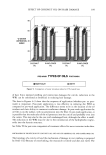
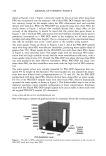
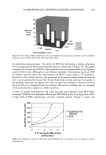
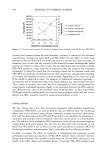
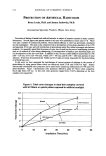
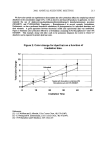
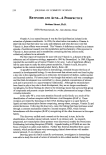
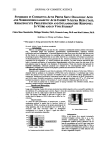
212 JOURNAL OF COSMETIC SCIENCE PROTECTION OF ARTIFICIAL HAIRCOLOR Bruce Locke, Ph.D. and Janusz Jachowicz, Ph.D. International Specialty Products, Wayne, New Jersey Prevention of fading of natural and artificial haircolor is subject of intensive research in many cosmetic laboratories. Several papers and patents related to this area were published in recent years [1-3]. There were also a number of commercial products, which claimed efficacy in color loss prevention, introduced into the marketplace. This area is also connected with a development of new photo-absorbers of the UVB and especially UVA type, and with introduction of antioxidants and/or free radical scavengers into haircare products. It is generally agreed that the process of color loss of dyed hair has several contributing elements such as (1) removal of a dye during shampooing, (2) decomposition of hairdye upon absorbing light, and (3) decomposition of the dye in the dark. In addition to this, the dyes exhibit different sensitivities to UVB (280 - 320 nm), UVA (320 -400 nm), Visible (370 - 780 nm), and IR (750 - 2800 nm) portions of solar radiation. It has been demonstrated •.at Visible and UVA light are mostly responsible for the photo-fading of artificial hair-color. In this work, we have reassessed the contributions of various portions of radiation to the process of photo-fading by using special filters which can effectively block UVB and UVB/UVA light. Results indicate •.at considerable color protection can be achieved by employing combinations of UVB and UVA photo-absorbers. Figure I demonstrates color protection offered by glass UV filters which completely block light below 400 nm. In this work color protection ranged from 27-63% depending on the time samples were exposed for. 12 Figure 1' Total color changes in dyed hair samples covered with UV filters or quartz plates exposed to artificial sunlight. 10 Quartz 2 • UV Filter • i 0 10 20 30 40 27% Protection Irradiation Time {Hrs} 6O
Purchased for the exclusive use of nofirst nolast (unknown)
From: SCC Media Library & Resource Center (library.scconline.org)