ETHICS OF HUMAN TESTING: IMPLEMENTATION 231 CONCLUSION While proposals for biomedical research programs have been subject to ethical review for many years, regulation of non-medical human studies has tended not to provide an ethics focus. Nevertheless, there are moral and business reasons to seek independent ethics review of all healthy volunteer studies irrespective of the nature of the test protocol and product area. Sufficient codes and guidance exist to enable the basic principles to be identified and applied in a pragmatic manner, thereby assuring the safety and well-being of trial volunteers. By proper planning and professional project management, the process of seeking ethical review need not cause delays in the development program. REFERENCES (1) P.A. Carson and J. Holt, Ethics of studies involving human volunteers: I. Historical background,]. Cosmet. Sci., 57, 215-221 (2006). (2) Guidelines on the Practice of Ethics Committees in Medical Research Involving Human Subjects (Royal College of Physicians, London, 1990). (3) Working Party on Research on Healthy Volunteers,]. Royal Coll. Phys. 20(4), 1 (1986). (4) Professional Brief Guidance for Members Involved with "Healthy Human Volunteer Experiments" (The Royal Society of Chemistry, London, 1994). (5) Code of Conduct, The Market Research Society/Industrial Marketing Research Association. (6) J. H. Steadman, Ethical review of human experimentation in the consumer produces industry, Neth.]. Med., 52, 138-141 (1998). (7) European Commission, The Rules Governing Cosmetic Products in the European Union, Volume 3: Guidelines (Cosmetic Products) (Annex 11 and 12, 1999). (8) The Human Tissue Act, 2004, Chapter 30 (HMSO, London, 2004). (9) P.A.Carson,J. Holt, and M. McGrady, The ethical impact of the UK Human Tissue Act for the foods, cosmetics, toiletries and detergents industries, Res. Ethics Rev., 2(1), 10-14 (2006).

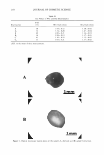
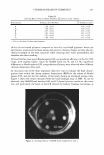
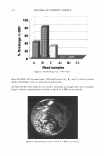
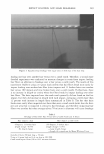
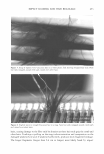
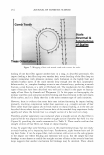
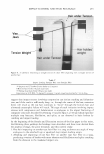
]. Cosmet. Sci., 57, 233-243 (May/June 2006) Hair breakage during combing. I. Pathways of breakage CLARENCE ROBBINS, 12425 Lake Ridge Circle, Clermont, FL 34711. Accepted for publication January 4, 2006. Synopsis Hair breakage during combing was evaluated by combing tresses and examining photographs of snags of hair fibers in combs. The resultant hair fiber arrangements suggest that breakage likely involves hair-on-hair interactions, and broken fragment size suggests that breakage occurs primarily at or near the hair-comb interface. Compression forces during combing were also measured, and impact loading of a hair fiber over another hair versus a hair fiber over a comb tooth shows that compression and abrasion are important to breakage during combing and that impact loading of one hair fiber over another during snagging is a probable and important pathway for hair breakage. INTRODUCTION There are several important papers in the scientific literature on the fracturing and breakage of human hair fibers (1-5). However, there is also literature that raises ques tions as to how relevant tensile test conditions are for simulating or even for predicting hair breakage on live heads (3-6) or from combing tresses in the laboratory. About 50 years ago, Hamburger et al. ( 6) conducted an interesting experiment in which they determined the load required to pull hair fibers out of the scalp. They found that this load at 65% RH is approximately equal to the Hookean limit and considerably lower than the breaking load for human hair fibers. Therefore, one of their conclusions was that hair fibers will not break on the scalp due to tensile forces alone, but will pull out of the scalp before breaking. However, we know from studies that examined the ends of hairs removed by combing on live heads (7 ,8) that hair fibers do actually break on live heads during combing. Unbroken hairs that are simply pulled out of the scalp contain a bulb on the other hand, those that are broken off do not contain a bulb, but a fractured end. In this type of study, even on chemically untreated hair, some of the hairs examined are found to be broken (7 ,8), more so for African hair (7) (average of 66% of total hairs from two persons) than from Caucasian or Asian hair (7) (from 3% to 24% among four panelists). Therefore, we are left with the conclusion that all of the hair fibers that break during combing on live heads are either damaged until their breaking force is below that of the Hookean limit of undamaged hair, or a more likely scenario, breakage of hair fibers during combing 233
Purchased for the exclusive use of nofirst nolast (unknown)
From: SCC Media Library & Resource Center (library.scconline.org)