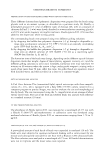
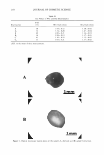
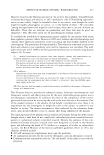
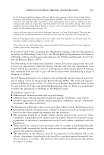
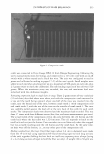
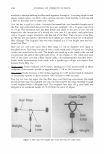
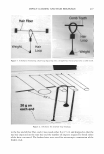
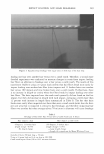
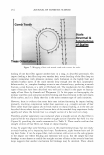
234 JOURNAL OF COSMETIC SCIENCE "hair on the head is more complex than simple tensile fracture of single hairs," a reasonable conclusion offered by Brown and Swift (3) about 30 years ago. In this current work, hair snags were studied to determine the important hair-on-hair versus hair-on-comb arrangements and interactions during combing. Compression forces were also measured by combing tresses with a comb containing a compression cell, and impact loading was explored to try to determine hair breakage under conditions that more closely simulate actual breakage during combing hair on live heads. EXPERIMENTAL The hair used in these experiments was purchased as 12-inch dark-brown virgin hair from Caucasians and reported to be undamaged. It was purchased from DeMeo Brothers of New York City. This hair actually measured 14 inches. In some of the snagging experiments, small tresses of highly coiled steam-set 12-inch hair, purchased from DeMeo Brothers, was also used. All experiments were conducted at 41 ± 2% RH and room temperature. TRESS COMBING AND COLLECTING BROKEN FRAGMENTS Eight-gram hair tresses from the above-mentioned 14-inch European hair were made: three were cross-cut two inches from the bottom, and three were angle-cut, two inches from the bottom to the tip, providing a tapered cut. All tresses were washed with a cleaning shampoo, gently detangled and combed out, and allowed to air dry overnight. Each tress was then gently combed about ten strokes to detangle the hair prior to testing. Each tress was clamped at the top into a fixed position and then combed 100 strokes. Each comb stroke started at a line behind the tress at 1 7 .8 cm from the bottom of the tress so that each comb stroke was 1 7 .8 cm. The broken-off hair fragments were collected on a large piece of white plastic, 7 6 x 84 cm, and separated by size into five different groups of 17.8 plus cm, 12.7 to 17.8 cm, 6.4 to 12.7 cm, 1.27 to 6.4 cm, and smaller than 1.27 cm. The fragments in each group were counted. This experiment was con ducted at 41 % RH and 70 ° F. COMPRESSION COMB AND MEASUREMENTS Making a compression comb. At the large-tooth end of an ACE hard-rubber comb (62746 part#), the second tooth from the end was cut off at the back and a small slot was made in the side of the comb back (about 0.05 to 0.1 inches). The cut areas were made smooth using a miniature file. The compression cell (sub-miniature compression load cell LCMKD-1 ON from Omega Engineering, a 10 Newton or 1 Kg cell) was glued in place at the base of the comb, adjacent to the large end tooth of the comb, with the sensor of the cell pointing inward toward the next tooth, leaving a distance of 0.062 inches or 0.15 7 cm between the sensor of the cell and the adjacent comb tooth (Figure 1). The removed tooth was cut (to shorten it) and glued on the inside of the large end tooth and on top of the edge of the compression cell (Figure 1). The compression cell on the

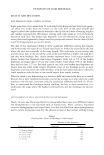
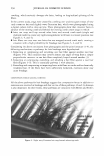
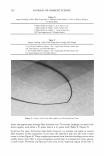
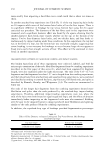
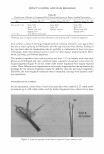
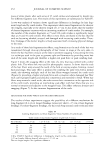
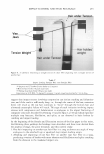
PATHWAYS OF HAIR BREAKAGE 235 Figure 1. Compression comb. comb was connected to Force Gauge DPiS 32 from Omega Engineering, following the user's manual instructions for wiring, and connected to a 115-volt cord with an on-off switch with a white neutral and a black hot wire. The unit was configured to read in grams and calibrated according to pages 17-23 of the user's guide. Small weights were added to each end of an attaching wire up to a maximum of 500 grams on each side, plus 2.5 grams (wire) to check the calibration. The safe-loading capacity of the cell was 1520 grams. When the maximum stress was exceeded, the zero and maximum load were rechecked with the calibration weights. Estimating compression loads on single hairs in snags. Three 2-gram tresses of very curly hair (12-inch hair) described above were taken, and with the compression comb mounted in a vise and the teeth facing upward, about one-half of the tress was inserted into the comb, near the bound end of the tress, between comb tooth 1 (with compression cell) and comb tooth 2, with the rest of the tress on the outside of comb tooth 1. The tress was carefully pulled against the load cell at the very back of the comb for each comb stroke. The compression loads were observed and the maximum load recorded. This was done 17 times with three different tresses (five, five, and seven measurements per tress). The actual width of the compression cell in this area (between the cell button and the comb back where the hair rubs) was 1,524 microns. The cell responds to loads on the total back and not just the button. Care was taken to record data only when the snagged hair was actually touching only the cell button and the comb back. At the same time, no hairs were off the button, i.e., on any other part of the compression cell. Making weighted hair fiber loops. Hair fiber loops (about 6.4 cm in diameter) were made from the 14-inch hair using tape (Scotch® brand mending tape) to bind long sections of the ends together (folding the hair back on itself over separate pieces of tape [using 4 x 4-cm-long sections of tape] to hold the fiber securely). A weight (10 to 50 gm) was
Purchased for the exclusive use of nofirst nolast (unknown)
From: SCC Media Library & Resource Center (library.scconline.org)