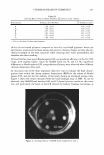
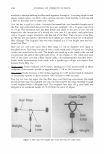
208 JOURNAL OF COSMETIC SCIENCE SWELLING RATIO MEASUREMENTS The swelling ratio or water uptake was determined gravimetrically. The weight of the completely dried bead samples was measured directly (W 0). The beads were then in troduced in bottles containing 50 ml of the swelling medium (0.9% NaCl) and stirred at 50 rpm at 37 ° C. At predetermined times (30, 60, and 120 min), the beads were removed from the medium, blotted to remove excess water, and immediately weighed. This procedure was repeated until the beads reached a constant weight (W t ) (equilib rium water uptake). The swelling ratio of the bead samples was calculated according to the following equa tion: Swelling ratio = W /W 0 where W0 and W t are the weights of the dry and swollen beads, respectively, measured at time t with constant weight. All determinations were run in triplicate and the obtained mean values were reported. BEAD ST ABILITY IN BBF A predetermined amount of each bead sample ( ~ l 0) was introduced in bottles contain ing 50 ml of BBF. The amount of unchanged beads was visually assessed at predeter mined times (five days for the first month and then every month) up to six months at room temperature. A temperature stability assay (9) was performed: A predetermined amount of each bead sample (~ 10), in 50 ml of BBF, was treated in freeze-thaw cycle cabinets (-10°C to +42°C, two cycles every 24 hours) for two weeks. Daily checks were performed to visually assess the amount of unchanged beads. All determinations were run in triplicate. BEAD BREAKAGE ASSAY IN BBF A predetermined amount of each bead sample ( ~ 10) was introduced in bottles contain ing 20 ml of BBF and 5 ml of distilled water. The next step was to submit this blend to a five-second vigorous mechanical shaking in a vortex mixer three times. Each time the number of the broken beads were assessed. The percent of broken beads was defined as: Number of broken beads ---------x100 Given number of beads All determinations were run in triplicate and the mean values were reported. RES UL TS AND DISCUSSION In this work six chitosan bead samples with different molecular weights were produced. Thanks to the presence of cationic and free hydroxide groups (10) in chitosan, it is possible to obtain polymeric systems capable of loading different types of molecules of pharmaceutical and cosmetic interest (11, 12).

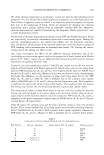
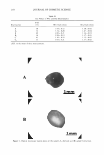
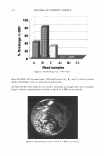
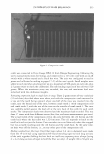
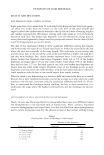
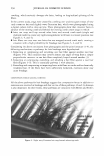
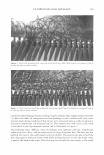
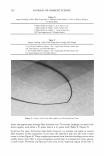
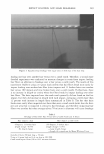
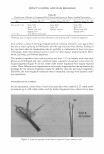
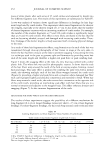
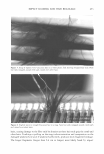
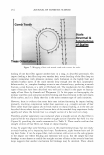
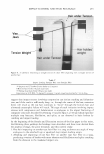
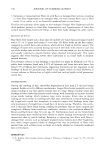
CHITOSAN BEADS IN COSMETICS 209 We chose chitosan dispersions as a polymeric system not only for their pharmaceutical properties (13), but also for their chemical-physical properties, as studied previously (8). One of these is apparent viscosity, which is an important physical property during the first step in the production of beads, which are obtained by dripping the chitosan dispersions into a gelling solution with an adjustable constant flow rate. Moreover, chitosan dispersions are capable of emulsifying the lipophilic Mentha piperita E.O. into a stable homogeneous blend. Gelification of chitosan dispersions was obtained with TPP and NaOH solutions, which are, respectively, an ionically crosslinking agent and a coacervating agent. During the ionically crosslinking process, the counter-ions diffuse into the polymeric structure thus, the positive amino groups in the chitosan chains react with the negative groups of TPP, forming either intermolecular or intramolecular bonds ( 14). During the coacer vating process the salting-out effect occurs. This study investigates the effects of the different chitosan dispersions and of the crosslinking or coacervating agents used on the properties of beads loaded with Mentha piperita E.O. Table I reports the six different bead batches obtained from the chitosan dispersions and gelling solutions used. A particle size and morphology analysis (Table II) was carried out on the wet and dry samples of beads loaded with Mentha piperita E.O. Statistically, particle size values show that wet TPP-bead batches (A 1 , B 1 , and C1 ) were slightly smaller than wet NaOH-bead batches (A, B, and C), while this difference in size was not observed in the corresponding dry beads, this difference, on the contrary, in some cases being larger for the dry TPP beads (A 1, B 1, and C1) (Table II). This is probably due to the a greater water uptake ability of NaOH beads (A, B, and C) during the bead formation step. This hypothesis is confirmed by bead yield, which is about 60% higher. The resulting water loss during the drying step reduces the size of all bead batches to practically similar values. The characteristic spherical shape of the beads in the wet state was usually lost after the drying step and developed in an uneven shape with decreased volume. Optical micro scope analyses of the dry beads showed a mat dense mass for TPP beads (A 1 , B 1 , and C 1 ) compared to the more transparent brighter mass of NaOH beads (A, B, and C) (Figure lA and Figure lB respectively). Table III reports the swelling ratio and the mean diameter values at time t for all bead batches. These values confirm that the gelling agents used also affect swelling behavior. In fact, NaOH beads (A, B, and C) show a greater water uptake capability compared to TPP beads (A 1 , B 1 , and C 1 ) (Figure 2). This is probably due to a greater water perme- Table I Composition of Chitosan Beads Obtained with Two Gelling Solutions Bead batches Chitosan dispersions Menhta piperita E.O. (% weight) Gelling solutions A he 0.3 NaOH A 1 he 0.3 TPP B me 0.3 NaOH B l me 0.3 TPP C hc/mc(l:1) 0.3 NaOH C l he/me (1:1) 0.3 TPP
Purchased for the exclusive use of nofirst nolast (unknown)
From: SCC Media Library & Resource Center (library.scconline.org)