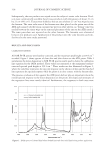
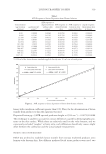
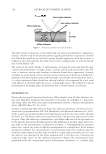
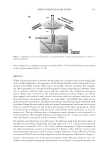
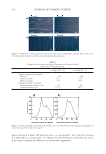
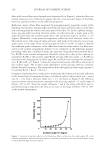
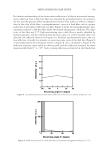
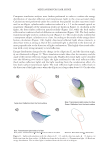
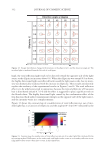
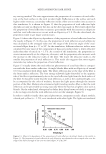
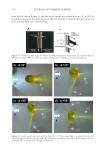
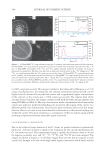
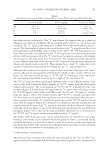
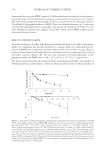
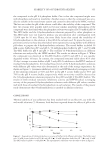
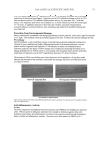
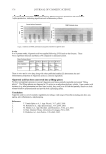
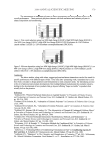
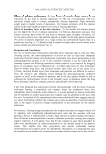
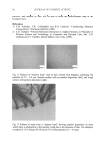
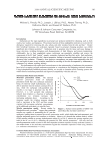
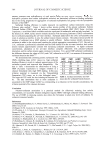
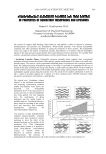
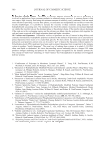
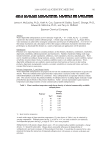
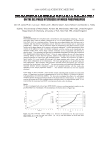
JOURNAL OF COSMETIC SCIENCE 326 fi ber in Group A is about 580 (arbitrary unit, a.u.) at around θ = 80°, and that in Group B is about 80 (a.u.) at around θ = 25° (Figure 5b). The difference in the refl ection inten- sities seems to explain the difference in the hair fi ber appearance. Figure 3. Difference in fi ber appearance due to the direction of sample fi bers. Sample fi bers were set (a) vertically and (b) parallel to the direction of incident light irradiation. Figure 4. Typical examples of the refl ection intensity curve of a blonde fi ber in the coplanar arrangement: (a) a hair of Group A (b) a hair of Group B. Table I Comparison of Structure and Optical Parameters of Groups A and B Measured by Goniophotometry Group A (N = 9) Group B (N = 7) Structure parameters (averaged) Elliticity 0.61 0.84 Major axis (μm) 93.1 63.4 Minor axis (μm) 52.0 45.5 Optical parameters (averaged) Maximum peak intensity (a.u.) 227 203 Integral intensity (a.u.) 17212 18677

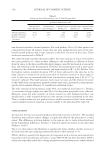
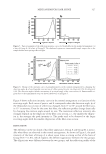
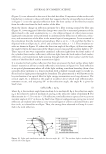
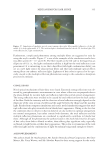
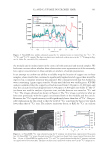
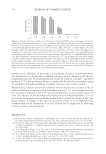
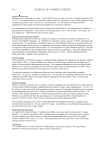
MECHANISM FOR HAIR SHINE 327 Figure 6 shows refl ection intensity curves in the normal arrangement as a function of the receiving angle. Each curve of parts a and b corresponds when the direction angle, φ, of the ellipsoidal cross section of a fi ber was changed, from 0° to 60° around the fi ber axis, in 15° increments. Even for the same hair fi ber, the refl ection profi les change drastically by changing the rotation angle around its axis. The maximum refl ection intensity also strongly depends on the ellipticity of the fi ber cross section, i.e., the smaller the elliptic- ity is, the stronger the peak intensity is. The peaks tend to be observed at the larger receiving angles with the smaller ellipticities of the fi ber cross section. DISCUSSION The difference in the two kinds of hair fi ber appearance, Group A and Group B, is notice- able when fi bers are observed in the normal arrangement. As shown in Figure 5, the peak intensity of the hairs of Group A is about seven times as strong as that of the hairs of Group B (577 vs 83), which explains the different appearance between the two groups. The ellipticities were different between the two groups, and the refl ection profi les of the Figure 5. Typical examples of the refl ection intensity curve of a blonde fi ber in the normal arrangement: (a) a hair of Group A (b) a hair of Group B. The shadowed regions are immeasurable angle ranges due to the sample holder intercepting refl ected light. Figure 6. Change of the intensity curve of goniophotometry in the normal arrangement by changing the direction angle, φ, of an ellipsoidal cross section of a fi ber around its axis: (a) ellipticity 0.56 (b) ellipticity 0.90. The direction angles include uncertainty of an initial angle of the cross section, α. Immeasurable re- gions due to the experimental setup are shown shadowed, as in Figure 5.
Purchased for the exclusive use of nofirst nolast (unknown)
From: SCC Media Library & Resource Center (library.scconline.org)