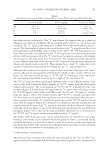
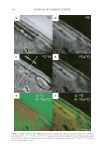
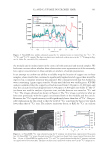
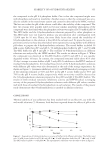
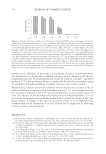
J. Cosmet. Sci., 60, 353–357 (May/June 2009) 353 8-Hydroxydaidzein is unstable in alkaline solutions TE-SHENG CHANG, Department of Biological Science and Technology, National University of Tainan, 33 sec. 2, Shu-Lin St., Tainan, Taiwan. Accepted for publication December 29, 2008. Synopsis 8-Hydroxydaidzein is a suicide substrate of mushroom tyrosinase with potent irreversible inhibitory activity. Despite its high potential in the cosmetics industry, it was found that 8-hydroxydaidzein was unstable in a formulated cream. In this technical note, the stability of 8-hydroxydaidzein in various solutions is investi- gated. The compound was dissolved in a series of solvents, and the residual 8-hydroxydaidzeins in the pre- pared solutions were sequentially determined during storage by HPLC. As a result, the loss in time of 8-hydroxydaidzein in both pH 6.8 phosphate buffer and DMSO showed typical fi rst-order kinetics, and the loss rate constant of the compound in pH 6.8 phosphate buffer (4.48 × 10⁻³ hour−1) was 18-fold higher than that in DMSO (2.5 × 10⁻⁴ hour−1). The stabilities of the compound in different buffers with pH values rang- ing from pH 5 to pH 9 were determined in advance. The results showed that the compound was completely degraded in one day in the pH 8 and pH 9 buffers. In contrast, 8-hydroxydaidzein remained stable above 85% after 20 days’ storage in the pH 5 and pH 6 buffers. In addition to the residual 8-hydroxydaidzein analysis, the residual bioactivities, including tyrosinase inhibitory activity and DPPH-radical scavenging activity of the 8-hydroxydaidzein solutions after 20 days’ storage in different pH values, were also deter- mined, and the results correlated well with those of the stability experiments. All the results demonstrated that 8-hydroxydaidzein is unstable in alkaline solutions. According to the data in the present report, it is recommended that 8-hydroxydaidzein be formulated in an acid solution for its applications. INTRODUCTION 8-Hydroxydaidzein is a biotransformed metabolite of soy isofl avone daidzein by the fungi Aspergillus saitoi or A. oryzae (1–2). The compound has been proven to be a potent mushroom tyrosinase inhibitor (3). The reaction mechanism of the inhibitor was demonstrated to be an irreversible mode and belonged to a suicide substrate type of tyrosinase (4). Because rare potent irreversible inhibitors were found, the compound has great potential in the whitening cosmetics industry. However, when the compound was applied to cosmetics products, it was found that 8-hydroxydaidzein was unstable in a formulated cream at longer storage times (unpublished data). The instability property of this compound is very critical for its applications. In order to resolve the instability problem of 8-hydroxydaidzein, the stability of 8-hydroxydaidzein in various solutions was investigated. MATERIALS AND METHODS At fi rst, both a phosphate buffer and dimethyl sulfoxide (DMSO) were used to dissolve 8-hydroxydaidzein, and the residues of the compound in the prepared solutions were

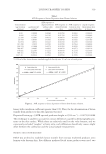
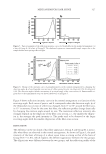
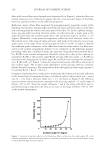
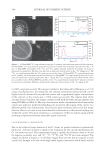
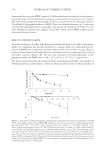
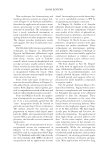
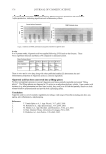
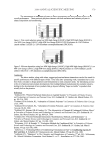
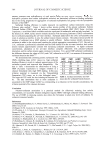
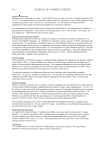
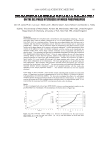
JOURNAL OF COSMETIC SCIENCE 354 determined by using the HPLC method. 8-Hydroxydaidzein was purifi ed as described in our earlier work (3) and dissolved in acetone as a stock with a concentration of 2 mg/ml. The stock of the compound was diluted 20-fold to a concentration of 100 μg/ml of either 50 mM pH 6.8 phosphate buffer or DMSO. Then, the diluted solutions, in 1.5-ml tubes covered with aluminum foil to avoid light, were placed on a bench at 25°C for 15 to 18 days. During the storage time, samples (20 μl) were taken out for HPLC analysis at the determined interval times. RESULTS AND DISCUSSION As shown in Figure 1A, when 8-hydroxydaidzein was dissolved in the pH 6.8 phosphate buffer, the compound was quickly degraded. In contrast, when the compound was dis- solved in DMSO, the compound remained stable at 80% after 18 days’ storage. Kinetic analyses showed that 8-hydroxydaidzein loss in both solvents was apparently the result of fi rst-order reactions (Figure 1B). The loss rate constants of 8-hydroxydaidzein in the phosphate buffer and DMSO were 4.48 × 10⁻³ and 2.5 × 10⁻⁴ hour−1, respectively. The above results show that the utilized solvent could dramatically affect the stability of 8-hydroxydaidzein in the solution. There are three possible reasons for the instability of Figure 1. Degradation of 8-hydroxydaidzein displayed by residual plot (A) or ln[Ct/Co] plot (B) in 50 mM of pH 6.8 phosphate buffer (♦) and DMSO (■). Samples (1 ml) were stored at 25°C, and 8-hydroxydaidzein was analyzed by HPLC. The HPLC analysis was performed on a Hitachi D-7000 HPLC (Hitachi, Ltd., Tokyo, Japan) system equipped with a L-7400 UV detector and a 250 × 4.6 mm i.d., ODS 2 Spherisorb C18 reversed-phase column (Phase Separation Ltd, Deeside Industrial Park, Clwyd, UK). The operating condi- tions were as follows: solvent, 30% acetonitrile/water containing 1% acetic acid fl ow rate, 0.8 ml/min detec- tion, 262 nm injected volume, 20 μl from 1-ml assay system containing 100 μg 8-hydroxydaidzein/ml of either DMSO or phosphate buffer. The residual 8-hydroxydaidzein of each sample at the determined interval times was calculated by fi tting the HPLC area of the sample to a standard curve of 8-hydroxydaidzein. Con- centrations ranged from 0 to 100 μg/ml.
Purchased for the exclusive use of nofirst nolast (unknown)
From: SCC Media Library & Resource Center (library.scconline.org)