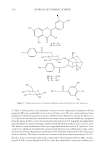
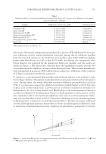
J. Cosmet. Sci., 60, 347–352 (May/June 2009) 347 Tyrosinase inhibitors isolated from the roots of Paeonia suffruticosa HSIOU-YU DING, HANG-CHING LIN, and TE-SHENG CHANG, Institute of Cosmetics Science, Chia Nan University of Pharmacy and Science, Tainan (H.-Y.D.), R&D Center, Sinphar Pharm. Co., Ltd, I-Lan (H.-C.L.), and Department of Biological Science and Technology, National University of Tainan, 33 sec. 2, Shu-Lin St., Tainan (T.-S.C.), Taiwan Accepted for publication November 6, 2008. Synopsis The inhibition of mushroom tyrosinase by Paeonia suffruticosa root-derived materials was evaluated. Six tyro- sinase inhibitors were isolated by ethanol extraction, n-hexane, ethyl acetate, n-BuOH, and water partition, silica gel column chromatography, Sephadex LH-20, Lobar PR-8, and high-performance liquid chromatog- raphy methods, and they were identifi ed as kaempferol (I), quercetin (II), mudanpioside B (III), benzoyloxy- paeonifl orin (IV), mudanpioside H (V), and pentagalloyl-β-D-glucose (VI) on the basis of spectroscopic evidence. The inhibitory activities of compounds I to VI against mushroom tyrosinase were determined with IC50 values of 0.120, 0.108, 0.368, 0.453, 0.324, and 0.063 mM, respectively. The kinetic study indicated that all purifi ed inhibitors acted competitively for the L-dopa binding site of the enzyme, with an exception of compound VI, which acted non-competitively. INTRODUCTION Tyrosinase is a copper-containing monooxygenase widely distributed in nature. The en- zyme catalyzes the fi rst two reactions of melanin synthesis, the hydroxylation of L-tyrosine to 3,4-dihydroxyphenylalanine, L-Dopa, and the oxidation of L-Dopa to dopaquinone. This o-quinone is a highly reactive compound and can polymerize spontaneously to form melanin (1). Although the pigment melanin in human skin is a major defense mechanism against the ultraviolet light of the sun, the production of abnormal pigmentation such as melasma, freckles, age-spots, liver spots, and other forms of melanin hyperpigmentation can be a serious aesthetic problem (2). Hence, inhibiting tyrosinase activity and prevent- ing abnormal pigmentation has been the subject of many studies (3–4). Paeonia suffruticosa Andrews (Paeoniaceae), commonly known as “Mudanpi,” is an im- portant crude drug used in Chinese traditional medicine as an analgesic a sedative an anti-infl ammatory agent a remedy for cardiovascular diseases, extravasated blood, and Address all correspondence to Te-Sheng Chang.

JOURNAL OF COSMETIC SCIENCE 348 stagnated blood in female genital diseases (5) and for skin care, as mentioned in ancient books (6). Earlier investigations have reported the pharmacological activity of P. suffruti- cosa and the isolation of acetophenones, monoterpenes, monoterpene glycosides, triterpe- noids, aromatic acid derivatives, fl avonoids, steroids, and purine from the root cortex of this plant (7–8). In previous research we also reported the isolation, structural identifi ca- tion, and pharmacological activity of some natural compounds from P. suffruticosa (9–12). This paper deals with the isolation and identifi cation of tyrosinase inhibitors from the root cortex of P. suffruticosa. MATERIALS AND METHODS GENERAL EXPERIMENTAL PROCEDURES Melting points were determined on a Yanagimoto micro-melting point apparatus and are uncorrected. Optical rotations were determined on a JASCO DIP-370 polarimeter at 25°C. The UV spectra were obtained on a Hitachi 200-20 spectrophotometer, and IR spectra were measured on a Hitachi 260-30 spectrophotometer. 1 H NMR spectra were recorded with a Varian Gemini NMR spectrometer at 400 MHz, and 13 C NMR spectra were recorded with a Varian Gemini NMR spectrometer at 100 MHz in CDCl3, CD3OD, and C5D5N. EIMs were obtained with a JEOL JMS-HX110 mass spectrometer at 70 eV, and FABMs were obtained with a JEOL TMSD-100 mass spectrometer. Silica gel (Merck, 60–230 or 230–400 mesh) and Sephadex LH-20 were purchased from Pharmacia Fine Chemicals. A pre-packed column (Lihroprep RP-8, 40–63 mm, 250 × 310 μm) of low- pressure liquid chromatography was purchased from Merck and Co. Preparative HPLC was carried out by a Shimadzu LC-8A chromatograph on a reverse phenyl column (Shim- pack pre-phenyl column, 20 × 250 mm, 10 μm) for reverse chromatography (10). MATERIALS The root cortex of P. suffruticosa was purchased from a local Chinese drug store (Chen Yen Company, Taipei, Taiwan). The specimen of the plant was verifi ed by Prof. Sheng Chu Kuoh (China Medical University, Taichung, Taiwan) via morphological examinations with a light microscope. Mushroom tyrosinase (2870 U/mg), L-tyrosine, L-Dopa, and dimethyl sulfoxide (DMSO) were purchased from Sigma Chemical (St Louis, MO). Kojic acid was obtained from Aldrich Chemical Co. (Milwaukee, WI). Other reagents and sol- vents used were commercially available and used as received. EXTRACTION AND SEPARATION The dry root cortex (45.0 Kg) of P. suffruticosa was crushed and extracted four times with 95% EtOH, followed by 70% EtOH. The combined EtOH extracts (6.8 kg) were concen- trated under reduced pressure to yield dark brown syrup that was partitioned between 90% MeOH (MeOH/H2O = 9:1) and n-hexane. The concentrated 90% MeOH layer (5.09 kg) was concentrated and partitioned with EtOAc and H2O. The aqueous solution was again
Purchased for the exclusive use of nofirst nolast (unknown)
From: SCC Media Library & Resource Center (library.scconline.org)