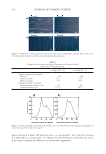
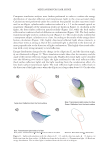
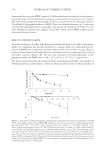
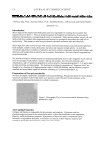
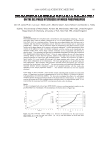
TYROSINASE INHIBITORS FROM P. SUFFRUTICOSA 349 partitioned between n-BuOH and H2O. Each solute layer was concentrated in a vacuum to yield n-hexane (1.61 kg), ethyl acetate (0.178 kg), n-butanol (0.89 kg), and water (3.02 kg). The ethyl acetate layer and n-BuOH (100 mg/ml in DMSO) showed the high- est anti-tyrosinase activity. The ethyl acetate layer was subjected to silica gel column chromatography and eluted with CHCl3, CHCl3-MeOH (97:3) to afford acetophenones. The residue was eluted with MeOH, combined with the n-BuOH extract, and subjected to column chromatography on silica gel with CH2Cl2-MeOH (95:5, 90:10, 85:15) and MeOH, successively. Rechromatography of the fi rst fraction on a Sephedex LH-20 col- umn, eluted with MeOH, gave two fractions. The fi rst fraction was further separated by a Sephedex LH-20 column, eluted with MeOH-H2O (95:5), to give kaempferol (com- pound I, 25.0 mg) and quercetin (compound II, 40.5 mg). Rechromatography of the second fraction on preparative Lobar RP-8, followed by HPLC separation using a phenyl column and MeOH-H2O (45:55, 35:65) as eluted, gave mudanpioside B (compound III, 186.3 mg), benzoyloxy-paeonifl orin (compound IV, 5.04 gm), and mudanpioside H (compound V, 366.0 mg). In the same manner, the third fraction using MeOH-H2O (20:80) as eluted gave pentagalloyl-β-D-glucose (compound VI, 67.5 mg). ENZYMATIC ASSAY OF TYROSINASE Mushroom tyrosinase activity was determined according to the methods described in our previous report with some modifi cations (4). An amount of 880 μl of 2 mM substrate (L- Dopa dissolved in 50 mM phosphate buffer, pH 6.8) was mixed with 100 μl of the tested sample (dissolved in DMSO) at 25°C for 2 min. Then, 20 μl of tyrosinase (1000 U/ml in phosphate buffer) was added to initiate the reaction. The assay mixture was incubated at 25°C for 10 min. The increase in absorbance at 475 nm due to the formation of dopa chrome was monitored with a spectrophotometer. The percentage of inhibition of tyrosinase activ- ity was calculated as follows: % inhibition = [(A − B)/A] × 100, where A is the absorbance at 475 nm with DMSO instead of the tested sample, and B is the absorbance at 475 nm with the sample. The concentration of a compound at which 50% of the enzyme activity was inhibited (the IC50 value) was obtained by linear curve fi tting. The isolated com- pounds’ inhibition kinetics was analyzed by the Lineweaver-Burk method. Experiments were carried out using the same protocol described above, except for the concentration of L-Dopa (0.2 to 1 mM). All enzymatic experiments were repeated at least twice in order to ensure the reproducibility of the results, and the mean values ± SD are reported here. RESULTS AND DISCUSSION The ethanol extract of the root of P. suffruticosa showed inhibitory activity against mush- room tyrosinase. Partition guided by the tyrosinase inhibitory activity indicated that the ethyl acetate and n-BuOH layer from the ethanol extract showed the bioactivity. Six com- pounds were purifi ed by silica gel column chromatography, LH-20, Lobar RP-8, and high-performance liquid chromatography from the ethyl acetate and n-BuOH layer. Their structures were elucidated with MS and NMR spectroscopic analysis by comparing the spectra data with those of previous reports (Figure 1). The mushroom tyrosinase inhibitory effects of the six compounds were evaluated using L-dopa as an enzyme substrate and kojic acid as a positive control. The results are shown

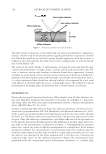
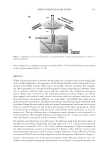
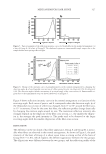
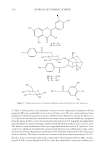
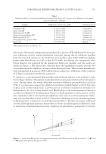
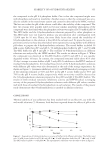
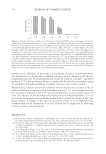
JOURNAL OF COSMETIC SCIENCE 350 in Table I. Among them, the inhibitory activities of two compounds, kaempferol (I) and quercetin (II) were comparable to the activity of kojic acid. The two compounds have been purifi ed and identifi ed as potent tyrosinase inhibitors from Heterotheca inuloides by Kubo et al. (13). Quercetin also has been identifi ed as the major active tyrosinase-inhibiting compound from the leaves of Myrica rubra (14) and Zanthoxylum piperitum (15). Similarly, kaempferol has been identifi ed as a potent tyrosinase inhibitor from the fl ower petals of Crocus sativus L (16). The kinetics study demonstrated the two compounds from the roots of P. suffruticosa to be competitive inhibitors of mushroom tyrosinase from the Lineweaver-Burk plot results, where the lines obtained in the presence and absence of the inhibitors intersected on the vertical axis (data not shown). The kinetics results are consistent with those of previous reports (13–16). Besides, three monoterpene glycoside compounds benzoyloxypaeonifl orin (III), mudan- pioside B (IV), and mudanpioside H (V), were fi rst identifi ed as tyrosinase inhibitors in Figure 1. Chemical structures of tyrosinase inhibitors isolated from the root of P. suffruticosa.
Purchased for the exclusive use of nofirst nolast (unknown)
From: SCC Media Library & Resource Center (library.scconline.org)