J. Cosmet. Sci., 60, 359–363 (May/June 2009) 359 SCIENCE AND APPLICATIONS OF SKIN DELIVERY SYSTEMS, Johann W. Wiechers, Ed., (Allured Publishing Corp., Carol Stream, IL, 2008), 526 pp 14 pp. of color plates. As Dr. Wiechers explains in the preface, this book is intended to link information on delivery systems with the scientifi c un- derpinnings of their application. Formula- tors benefi t by knowing the potential applications as well as the limitations of each type of system and can therefore make an intelligent decision about which sys- tems are most likely to be of value in solv- ing a particular problem. The book is divided into fi ve parts. The fi rst deals with methodology for “Measur- ing Skin Delivery.” This is followed by “Skin Delivery from Emulsions,” Encapsu- lation Techniques,” “Alternate Ways to Enhance Skin Delivery,” and “Special De- livery Routes.” The fi rst chapter, by Dr. Wiechers, be- gins with an overview of the basics. There are short sections defi ning delivery, on why it is useful for cosmetics, and on routes of penetration and sites of action within the skin, as well as a brief overview of delivery systems. There is also a brief overview of in vitro and in vivo studies. This is followed by a chapter, also by Dr. Wiechers, which gives some additional details about mea- surement techniques. Chapter 3, by Walters and Brain, should be required reading for anyone who wishes to perform or interpret in vitro skin perme- ation experiments. Noting that there is generally good correlation between in vitro and in vivo data for specifi c compounds, the authors point out the need for additional data, particularly with respect to assessing the toxicological potential of cosmetic in- gredients. Among the issues with test pro- tocols is the need for testing on actual product formulations. Radiolabeled mate- rial facilitates analysis, but is nonspecifi c, i.e., impurities may carry the label and lead to misinterpretation of the data. Differ- ences between fi nite and infi nite dose regi- mens are described, and the need for proper selection of the type of application is em- phasized. As human skin is quite variable, suffi cient replicates should be performed to make statistically signifi cant comparisons (for example, of different formulations con- taining the same active) or to identify trends (for example, the relationship between mo- lecular weight and permeation). A section of the chapter describes stra- tum corneum skin stripping and the con- cerns with this technique. One problem is that successive strips do not remove equiva- lent amounts of the stratum corneum. It is common to plot the amount of permeant contained against the number of strips, but this does not show the relationship between permeation and stratum corneum depth. Furthermore, after reviewing the relevant literature, the authors conclude there is in- suffi cient correlative data available to vali- date skin stripping as a bioequivalence tool. The fi nal chapter in the methodology section, by Moore and Bi, is concerned with infrared spectroscopic techniques. This is a specialized technique requiring Book Reviews

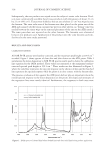
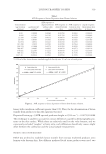
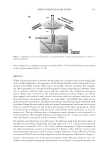
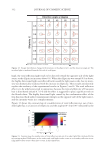
JOURNAL OF COSMETIC SCIENCE 360 equipment that most R&D labs do not possess. Among the applications illustrated in this chapter are lipid and protein com- position in stratum corneum, the confor- mational order of lipids, and the effect of water exposure on a sunscreen-containing fi lm. Several color images are presented to provide a feel for the type of information that is available from the technique. Part II of the book, “Skin Delivery from Emulsions,” begins with a chapter by Wiechers and Watkinson that describes many formulation effects on skin delivery. The physicochemical properties favoring skin penetration are summarized and in- clude such items as favorable octanol–water partition coeffi cient, low molecular weight, lack of molecular charge, and low melting point. The authors describe a detailed study of four pharmaceutical actives in fi ve for- mulations and analyze the results in terms of transdermal (through the skin) and der- mal (in the skin) absorption. They conclude that formulation effects are relatively mi- nor, while the properties of the active are of greatest importance in determining skin delivery. In contrast to this conclusion, Chapter 6, by Wiechers, shows that formu- lation optimization can improve product effi ciency and reduce the amount of an ac- tive needed to provide the desired effect. He describes a technique (formulating for effi ciency) designed to maximize thermo- dynamic activity of an active for maximum delivery. Chapter 7, by Wiechers et al., describes a study of the effect of dimethyl isosorbide and diethylene glycol monoethyl ether on skin penetration by hydroquinone and oc- tadecenedioic acid. The result (a relative lack of overall effect) illustrates how a given additive can infl uence the delivery process in opposite ways. In Chapter 8, Wiechers et al. explore the effect of several emulsifi er systems on the effectiveness of certain moisturizer compo- sitions and the skin delivery of two actives, octadecenedioic acid (lipophilic) and propagermanium (hydrophilic). Formula- tions containing emulsifi ers capable of forming liquid crystals outperformed cor- responding formulations whose emulsifi ers lacked this capability in clinical studies of moisturizer effectiveness. In vitro studies also demonstrated that liquid crystal for- mation led to increased delivery of the ac- tives. The ability of liquid crystal-forming emulsifi ers to improve emulsion stability has been known for some time this study gives additional reasons for utilizing liquid crystals in emulsion systems. In view of the importance of liquid crys- tals in cosmetic systems, Suzuki’s review of liquid crystalline emulsions (Chapter 9) is a welcome addition to the book. Sections of this chapter explore self-assembly of am- phiphilic molecules and the types of struc- ture they form, their characterization, and methods of detection. A detailed descrip- tion of the formation of fi ne three-phase emulsions is provided. Other systems that receive detailed treatment are an emulsion containing ceramide substitutes, clear gel- like emulsions, and a lamellar liquid crys- tal gel. Cosmetic applications of the various systems are also described. The relationship between emulsion droplet size and skin delivery is probed by Izquierdo in Chapter 10. A thorough lit- erature review leads to the conclusion that there is little evidence in support of a par- ticle size effect. In most cases reported in the literature, formulations varied in com- position as well as particle size, making it diffi cult to come to a defi nitive conclusion. The author refers to his own work on tetra- caine formulations, which showed a lack of infl uence of emulsion particle size on skin penetration. I should add that in our labo- ratory, we processed a sunscreen formula- tion using different techniques that resulted in two very different emulsion droplet sizes. Delivery to the skin of the dissolved sunscreen agent was the same from both variations, illustrating the lack of effect of droplet size.
Purchased for the exclusive use of nofirst nolast (unknown)
From: SCC Media Library & Resource Center (library.scconline.org)