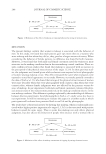
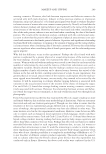
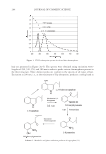
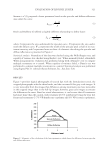
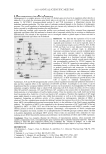
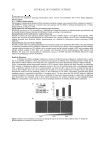
TRYPTOPHAN FLUORESCENCE IN HAIR 293 mixing a bleaching powder (Clairol BW2 powder bleach) and hydrogen peroxide (Clairol 20 volume cream developer). The hair was precleaned with 3% ammonium lauryl sulfate solution prior to use in experiments. Sepia, synthetic melanin, L-Trp, and L-kynurenine were purchased from Sigma. Lipomelanin and water-soluble melanin were obtained from Mel-Co. INSTRUMENTATION Fluorescence measurements were obtained by using a Fluorolog-2 fl uorescence spectro- photometer (Model 212, Spex Industries, Edison, NJ) and a bifurcated fi ber optics acces- sory to collect the spectra directly from the surface of hair by delicately pressing the probe against the hair lying on a solid, black-colored support to produce good contact and eliminate stray illumination No special procedures were required to prepare the fi bers for fl uorescence measurements. Some measurements, as indicated further on in the text of the paper, were carried out using a double-grating Fluorolog-2 fl uorescence spectrophotom- eter. The emission and excitation slits were set at 2-nm bandpasses, with an exception for studies of bleached hair in which a 1-nm bandpass was employed due to higher fl uores- cence light intensity. The measurements were performed in both emission and excitation modes by irradiating hair in the wavelength range of 260 to 400 nm. This range of wave- lengths was monitored in order to probe hair chromophores absorbing the light in various parts of the UV-Vis spectrum. The UV-Vis absorption spectra of L-Trp (aqueous solution at a concentration of 1.65·10-4 M), L-kynurenine (aqueous solution at a concentration of 2.11·10-4 M), and water-soluble melanin (at a concentration of 0.03 mg/ml) were collected using a Perkin-Elmer Model 559A spectrophotometer. Hair fi bers were photoirradiated by artifi cial radiation in an Atlas weatherometer, which employed a xenon lamp to simulate solar radiation. Thermal treatment of hair was carried out using a Soft Sheen, Optimum Styling Tools, curling iron (Model SOC 125 S) manufactured by Continental Hair Products (Glendale, AZ). RESULTS AND DISCUSSION FLUORESCENCE SPECTRA OF VARIOUS TYPES OF HAIR The absorption and emission characteristics of keratin fi bers is dominated by the presence of the pigment melanin and the absorbing residues of the protein structure, such as the amino acid Trp along with its oxidation products, i.e., kynurenines (6–14). A typical solubilized melanin absorption spectrum is characterized by a monotonic in- crease in absorbance with decreasing wavelength as shown in Figure 1 (15–17). The ab- sorption maxima of Trp and kynurenine lie at approximately 285 nm and 360 nm, respectively (Figure 1). A scheme presenting the conversion of Trp into its oxidation products, 5-hydroxytryptophan, N-formylkynurenine, kynurenine, and 3-hydroxykynure- nine, is shown in Scheme 1 (14). The fl uorescence spectra of unpigmented white hair, white hair with a yellow tinge (Piedmont), blonde hair, highly pigmented dark brown hair, black African hair, and bleached

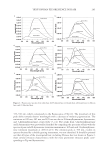
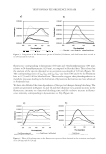
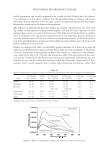
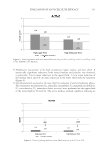
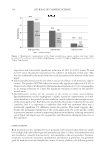
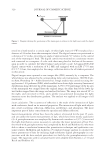
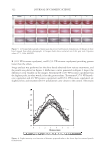
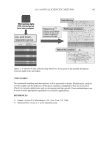
JOURNAL OF COSMETIC SCIENCE 294 hair are presented in Figure 2(a-f ). The spectra were obtained using excitation wave- lengths of 290, 320, 350, and 380 nm in order to probe various chromophores present in the fi ber structure. Three distinct peaks are evident in the spectra of all types of hair. Excitation at 290 nm, i.e., at the maximum of Trp absorption, produces a strong band at Figure 1. UV-Vis absorption spectra of selected hair chromophores. Scheme 1. Metabolic and photo-oxidation products of tryptophan (14).
Purchased for the exclusive use of nofirst nolast (unknown)
From: SCC Media Library & Resource Center (library.scconline.org)