J. Cosmet. Sci., 62, 291–304 (May/June 2011) 291 Tryptophan fl uorescence in hair—Examination of contributing factors JANUSZ JACHOWICZ and ROGER L. McMULLEN, International Specialty Products, Wayne, NJ 07470. Accepted for publication January 24, 2011. Synopsis Various types of hair, including white (unpigmented), Piedmont (yellow-colored), blonde, brown, curly black of African origin, straight black of Chinese origin, and chemically processed (bleached) hair, were studied by using fl uorescence spectroscopy. Fluorescence measurements were obtained by using a single- or double-grating fl uo- rescence spectrophotometer and a bifurcated fi ber optics accessory to measure the spectra directly from the sur- face of the hair. The results have shown that all types of hair share similar fl uorescence characteristics, as recorded by excitation at 290 nm, 320 nm, 350 nm, and 380 nm, with emissions that could be ascribed to chromophores such as tryptophan (Trp), N-formylkynurenine, kynurenine, and 3-hydroxykynurenine. The relative intensities of fl uorophore emissions were found to be dependent on factors such as melanin content and the history of UV light or thermal exposure. Trp fl uorescence was also found to be dependent upon the state of the hair matrix. Softening of hair keratin by chemical reduction (breakage) of disulfi de bonds or by hydration, leads to a 50%– 100% increase in Trp emission intensity. Conversely, stiffening of the hair matrix by re-oxidation of reduced hair with hydrogen peroxide, or drying of wet hair, produces a decrease in fl uorescence intensity. The results were interpreted by invoking the behavior of certain enzymes, which demonstrate Trp quenching by neighboring disulfi de bonds or by hydrogen bonding with alanine residues, or with certain side-chain amino acids. INTRODUCTION Spectroscopic techniques have been frequently employed for the characterization of chemical and physical processes related to hair. For example, reactions occurring during photo and oxidative degradation of hair have been analyzed by IR (1), fl uorescence (2), Raman (3), and ESCA (4) spectroscopies. IR analysis was employed to identify the oxida- tion products of sulfur-containing amino acids while Raman spectroscopy may be uti- lized for simultaneous analysis of tryptophan decomposition, disulfi de bond breakage, thiol formation, and the appearance of oxidation products. Fluorescence proved to be very convenient in monitoring the photodecomposition of Trp as a result of exposure to solar radiation. These studies were primarily concerned with Trp emission, which is observed at wavelengths in the range of 335 nm to 350 nm. Since the absorption maximum of Trp is at 280 nm, it partially overlaps the UV-B region of solar radiation, which is related to a number of hair damage reactions such as surface roughening due to photodecomposi- tion of surface lipids or loss of mechanical strength. Thus, decomposition of Trp itself can be employed as an indicator of hair photo-exposure and damage.

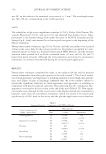
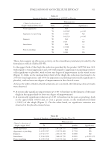
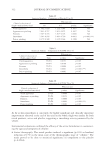
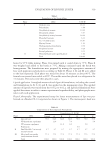
JOURNAL OF COSMETIC SCIENCE 292 However, the potential of Trp fl uorescence has not been fully exploited and can be further extended to study the UV-A and visible regions (from 320 nm to 500 nm) of the absorp- tion and emission spectra of hair (Table I). In this range of wavelengths, we analyze prod- ucts of Trp decomposition, such as kynurenines, rather than Trp itself. The spectroscopic changes in hair occurring in this wavelength range are important for cosmetic applica- tions such as hair UV protection and hair dyeing. Furthermore, they can be infl uenced by the adsorption or deposition of UV-A photofi lters, dyes, pigments, or natural products such as melanin. In addition, Trp fl uorescence can be affected by chemical or physical modifi cation of hair. As discussed in this paper, waving and re-oxidation, alkaline relax- ing, or simply changing the content of water in hair can have a signifi cant effect on the position and intensity of Trp emission. This is due to the fact that the position and the intensity of the fl uorescence of Trp residues are very sensitive to their chemical environ- ment in the protein matrix (5). In the current investigation, we concentrate on the analysis of Trp-related spectral changes in hair as a result of photoirradiation, exposure to elevated temperatures, and selected chemical and physical treatments. Hair samples with different degrees of pigmentation, such as unpigmented Piedmont hair, Caucasian dark brown hair, and black-colored Asian hair (Chinese origin) were analyzed by the use of fl uorescence spectroscopy. The report also discusses the effect of melanin on the fl uorescence spectra of hair. EXPERIMENTAL MATERIALS AND METHODS All fi ber samples, consisting of Piedmont hair as well as blonde, Caucasian dark brown, and Asian (Chinese origin) hair, were commercially blended and purchased from DeMeo Brothers, New York. African and unpigmented white hair were purchased from Interna- tional Hair Importers (Glendale, NY). Commercially bleached hair was obtained from DeMeo Brothers (fl uorescence spectrum obtained by a single-grating Fluorolog-2 instru- ment is shown in Figure 2f) and from International Hair Importers (fl uorescence spec- trum obtained by double-grating Fluorolog-2 instrument is shown in Figure 3). Bleached hair was also prepared in-house by reacting dark brown hair with a 1:1 paste obtained by Table I Hair Chromophores Chromophore Absorption (nm) Emission (nm) Melanin 200–600 Weak Trp 285 330–350 N-Formylkynurenine 320 420 Kynurenine 350–360 460 3-Hydroxykynurenine 365 495 Tyrosine 275 nm 306, 392 Phenylalanine 260 302 Cystine 200 465 Artifi cial hair color 200–600 Weak
Purchased for the exclusive use of nofirst nolast (unknown)
From: SCC Media Library & Resource Center (library.scconline.org)