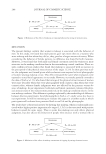
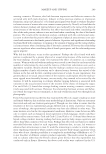
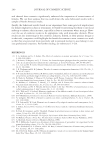
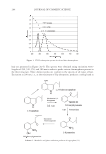
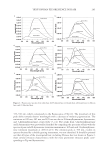
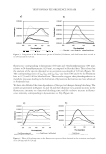
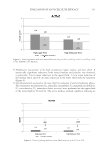
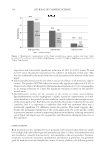
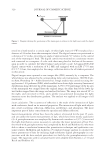
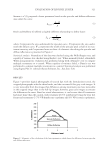
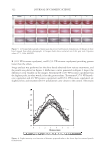
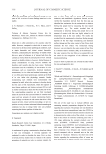
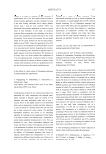
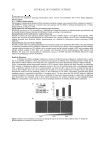
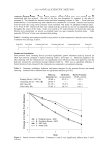
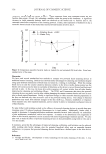
EVALUATION OF ANTI-CELLULITE EFFICACY 313 Morphometric measurements of the thigh circumferences (upper, median, and lower third) • . A statistically signifi cant reduction, both versus baseline and placebo, was observed, in particular: 0.9-cm mean reduction in the upper third, 1.2-cm mean reduction of the median third, and 0.6-cm mean reduction in the lower third with the treatment (Figure 4). Skin plastoelasticity measured on the inner thigh for evaluation of elasticizing/fi rming effi cacy • . The torsiometric measurements (Ue, immediate extensibility Uf, maximum extensibility Uv, viscoelasticity Ur, immediate elastic recovery) were performed on the upper third of the inner thigh at T0 and T4. The active product resulted capable of inducing an Figure 2. Visual appearance with test cream [Wilcoxon test, p0.05 (*) vs T0 p0.01 (**) vs T0 p 0.05 (*) T4 ACTIVE vs T4 Placebo]. Figure 3. Pain at pinching with test cream [Wilcoxon test, p0.05 (*) vs, T0].

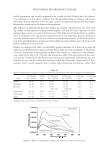
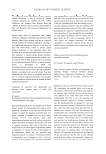
JOURNAL OF COSMETIC SCIENCE 314 Figure 4. Morphometric measurements of the thigh circumferences (upper, median, and lower third) [p0.001 (***) vs T0 p0.05 (*) T4B vs T4B Placebo p0.01 (**) T4B vs T4B Placebo p0.001 (***) T4B vs T4B Placebo]. important and statistically signifi cant reduction of 20% (p0.001 versus T0 and p0.05 versus the placebo) of parameter Ur, which is an indicator of skin tone. This was also confi rmed by the results from the visual assessment of the fi rmness of the inner thigh. Ultrasonography performed on the outer thigh to measure the thickness of the panniculus adiposus • (in mm). The product ACTIVE induced a statistically signifi cant reduction of 9.4% in the panniculus adiposus with regard to the baseline measurements (p0.01), corresponding to an average reduction of 1 mm. No signifi cant variation occurred in the placebo- treated areas. Spectrophotometric analysis for the assessment of the activity on surface microcirculation. • Spectrophotometry results highlighted a highly signifi cant improvement (p0.001 versus baseline) in the general vascular condition, mainly related to the massage activity of the cream application. Both the active and the placebo product improved the vascular condition, but it is important to underline that with the treatment there was a statistically signifi cant 3% difference versus the placebo. This result suggests that, besides the massaging stimulation of the cream application, the active product seems to possess an intrinsic activity in improving skin microcirculation, reducing interstitial excess fl uids and improving cell oxygenation and fi ltration/re-absorption processes in the capillaries. CONCLUSIONS Both treatments (active and placebo) were generally well tolerated, apart from one single case of slight folliculitis that regressed spontaneously after 3–4 days’ discontinuation and was classifi ed as “aspecifi c skin reactivity,” not imputable to the active product. Cosmetic acceptance in terms of consistency, spreadability, and absence of greasiness, was generally good for both the active and the placebo creams. In terms of effi cacy, the following results
Purchased for the exclusive use of nofirst nolast (unknown)
From: SCC Media Library & Resource Center (library.scconline.org)