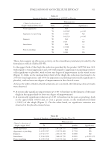
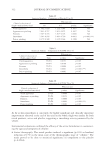
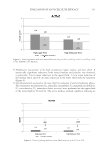
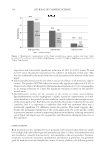
MAKEUP AND TIPPING 289 wearing cosmetics. However, this link between impression and behavior seems to be activated only with male observers. Indeed, in these previous studies on impression formation, except in Cash and al.’s (5), female participants were found to evaluate the phys- ical attractiveness of women who wore cosmetics more positively. Overall, we found that the relation between makeup and tipping behavior was mediated by the rating of the physical attractiveness of the waitress. However, this effect was found only when considering the data of the male patrons, whereas it was not found when considering the data of the female patrons. The results of the mediation analysis combined with the correlational analy- sis seem to show that this positive effect on judgment of physical attractiveness is not asso- ciated with variation in the female patron’s behavior. A positive and signifi cant relationship was found both with compliance to tipping or the amount of tipping and the rating of phys- ical attractiveness when considering data of the male customers. However, this relationship was not signifi cant when considering data of female participants, and the relationships even appear negative. Why did this difference occur in this experiment? Perhaps the effect found with male patrons is explained by a greater physical or sexual attractiveness of the waitress when she wore makeup. A recent study (11) examined the effect of cosmetics in a courtship context. Women with and without makeup were seated in two bars for one hour and the number of solicitations by men and the latency of their fi rst solicitation were used as dependent variables. Results showed that the makeup condition was associated with a higher number of male solicitations and a shorter latency between the arrival of the women in the bar and the fi rst courtship solicitation of a male. In our experiment, this greater physical or sexual attractiveness of the waitress could explain why the male pa- trons tipped more favorably because, unconsciously, they wanted to be noticed by the waitress. It will be interesting to evaluate whether tipping behavior is associated with variation in the sexual attractiveness of the waitress or the chance of dating the target. Cox and Glick (3) found that average-looking women wearing cosmetics were posi- tively associated with sexiness. However, the relationship between sexiness and behav- ior toward the target was not examined, as the only evaluation made was through facial photography. Even if this experiment was the fi rst that examined the effect of a target’s makeup on male and female behavior, this study has some methodological limitations. Only one restaurant was tested and only one waitress participated. Though care was taken to ensure that the treatment of the two experimental groups differed only in terms of presence versus ab- sence of makeup, the experimental conditions may have also differed in other ways. The same waitress acted in the two experimental conditions. However, some factors are diffi - cult to control, such as changes in facial expression or body language, which could have infl uenced her attractiveness. Cash and Cash (12) and Cash et al. (5) found that American female college students wearing makeup had more positive body-image cognitions and affects than when cosmetics were not worn. Perhaps this effect led our waitress to exhibit nonverbal behaviors related to such cognitions: behaviors that, in turn, led women to enhance their attractiveness to men. It would be interesting to conduct a similar experi- ment employing women for whom cosmetics have positive body-image cognitions versus those who do not. Another possibility is to employ the methodology of Mulhern et al. (7) to test the effect of different cosmetic products separately. The results cannot be general- ized to cultures other than the French culture given the fact that this experiment was conducted only in France. However, the above-cited studies were conducted in the U.S.

JOURNAL OF COSMETIC SCIENCE 290 and showed that cosmetics signifi cantly enhanced the impression of attractiveness of females. We can then suppose that we could obtain the same behavioral results with a sample of North American males. Finally, the behavioral results found in our experiment have some practical implications for female employees in bars or restaurants. It would be interesting for them to use facial makeup to enhance their incomes, especially in bars or restaurants where men go. How- ever, the use of cosmetics seems to be appropriate only with masculine clientele. These results are also interesting for the cosmetics industry. Indeed, in their product design or in their ads, companies could highlight the benefi t for women to wear cosmetics to work so that they are perceived more positively and to persuade women to use makeup in var- ious professional situations. For further reading, see references (13–20). REFERENCES (1) J. A. Graham and A. J. Jouhar, The effects of cosmetics on person perception, Int. J. Cosmet. Sci., 3, 199–210 (1981). (2) J. Richetin, P. Huguet, and J. C. Croizet, Les charactéristiques physiques dans les premières impres- sions: Le cas particulier de l’utilisation des cosmétiques, L’ Année Psychologique, 107, 65–86 (2007). (3) C. L. Cox and W. H. Glick, Resume evaluation and cosmetics use: When more is not better, Sex Roles, 14, 51–58 (1986). (4) J. E. Workman and K. K. Johnson, The role of cosmetics in impression formation, Cloth. Text. Res. J., 10, 63–67 (1991). (5) T. F. Cash, K. Dawson, P. Davis, M. Bowen, and C. Galumbeck, Effects of cosmetics use on the physical attractiveness and body image of American college women, J. Soc. Psy., 129, 349–355 (1989). (6) R. Nash, G. Fieldman, T. Hussey, J.-L. Lévêque, and P. Pineau, Cosmetics: They infl uence more than Caucasian female facial attractiveness, J. App. Soc. Psy., 36, 493–504 (2006). (7) R. Mulhern, G. Fieldman, T. Hussey, J. L. Lévêque, and P. Pineau, Do cosmetics enhance female Caucasian facial attractiveness. Int. J. Cosmet. Sci., 25, 199–205 (2003). (8) J. W. Stillman and W. E. Hensley, She wore a fl ower in her hair: The effect of ornamentation on non- verbal communication, J. Appl. Commun. Res., 1, 31–39 (1980). (9) K. L. Tidd and J. S. Lockard, Monetary signifi cance of the affi liative smile: A case for reciprocal altru- ism, Bull. Psychonom. Soc., 11, 344–346 (1978). (10) D. P. MacKinnon, Introduction to Statistical Mediation Analysis (Lawrence Erlbaum Associates., 2008). (11) N. Guéguen, The effects of women’s cosmetics on men’s courtship behavior, N. Am. J. Psychol., 10, 221–228 (2008). (12) T. F. Cash and D. W. Cash, Women’s use of cosmetics: Psycological correlates and consequences, Int. J. Cosmet. Sci., 4, 16–14 (1982). (13) J. Cohen, Statistical Power Analysis for the Behavioral Sciences (2nd ed.). (Lawrence Earlbaum Associates, 1988). (14) B. Fink, K. Grammer, and R. Thornhill, Human facial attractiveness in relation to skin texture and colour, J. Comp. Psy., 115, 92–99 (2001). (15) G. Kay, Dying to Be Beautiful: The Fight for Safe Cosmetics (Ohio State University Press, 2005). (16) N. Malkan, Not Just a Pretty Face: The Ugly Side of the Beauty Industry (New Society Publishers, 2006). (17) A. Marwick, Beauty in History. (Thames & Hudson, 1988). (18) W. J. McKeachie, Lipstick as a determiner of fi rst impressions of personality: An experiment for the general psychology course, J. Soc. Psy., 36, 241–244 (1952). (19) T. K. Shackelford, D. P. Schmitt, and D. M. Buss, Universal dimensions of human mate preferences. Pers. Ind. Diff., 39, 477–458 (2005). (20) M. J. Tovée, K. Tasker, and P. J. Benson, Is symmetry a visual cue to attractiveness in the human female body? Evol. Hum. Behav., 21, 191–200 (2000).
Purchased for the exclusive use of nofirst nolast (unknown)
From: SCC Media Library & Resource Center (library.scconline.org)