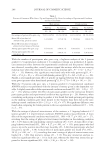
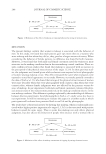
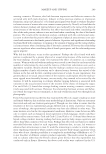
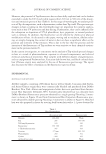
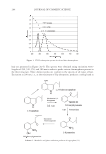
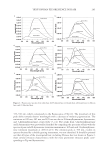
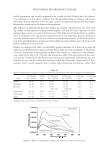
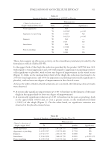
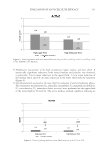
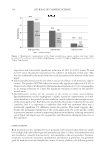
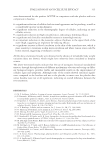
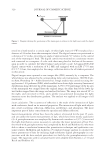
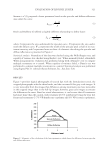
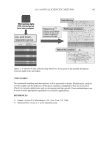
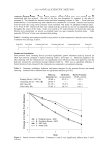
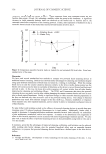
TRYPTOPHAN FLUORESCENCE IN HAIR 299 highly pigmented and visually appeared to be as dark as black Chinese hair. An alterna- tive explanation of this effect could be that the photobleaching of melanin, which also takes place during exposure of hair to light, results in higher absorption and thus higher fl uorescence emission by the keratin chromophores. The behavior of light brown hair was similar. In contrast, bleached hair lost very little Trp, while its fl uorophores at longer wavelengths (420 and 465 nm) experienced more damage than was the case with other hair types. The behavior of bleached hair is complex since it undergoes very signifi cant transformations in the bleaching process, leading to not only melanin removal, but also oxidation of the keratin protein. A detailed explana- tion of the photodegradation mechanism of bleached hair is beyond the scope of this paper and will be addressed in future work. Finally, we analyzed the effect of externally applied melanin (as a leave-in or rinse-off solution) on the fl uorescence spectra of hair. The results, presented in Figure 6, show that a leave-in deposition of lipomelanin on white hair results in a reduction of hair fl uores- cence both in the Trp (330–350 nm) and kynurenine (400–500 nm) regions of the emis- sion spectra. Furthermore, the fl uorescence spectrum of pigmented, light brown hair was found to be very similar to that obtained from white hair externally coated with 2% lipo- melanin. Such a result suggests that a simple light-absorption mechanism, rather than Table II Results of Fluorescence Analysis of Intact and Photoirradiated Hair with Various Degrees of Pigmentation Hair I (350) (cps) Exc. 290 nm % Trp loss I (420) (cps) Exc. 350 nm I (465) (cps) Exc. 350 nm % 420 nm loss % 465 nm loss White 2.4·106 56.7 1.6·107 1.5·107 21.5 26.9 Piedmont 1.6·106 64.8 1.4·107 1.4·107 25.5 30.3 Bleached 1.1·106 30.2 1.9·107 (431 nm) 1.9·107 (460 nm) 32.6 32.2 Light brown 0.8·106 38.8 8.5·106 8.7·106 9.1 5.7 Dark brown 0.7·106 47.7 1.1·106 0.8·106 3.0 4.0 Asian 0.6·106 42.9 1.7·106 1.3·106 13.3 17.9 Irradiation was carried out in a weatherometer for 72 hours. Figure 6. Effect of lipomelanin coating on the fl uorescence spectra of white hair.

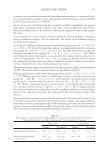
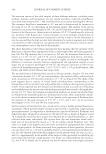
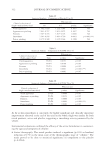
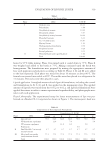
JOURNAL OF COSMETIC SCIENCE 300 energy transfer between hair and melanin chromophores (which would require intimate contact between melanin and protein chromophores), is responsible for the observed quenching of hair fl uorescence. It is also important to point out a blue shift in the maxi- mum emission of Trp from 350 nm for white hair, to 342 nm and 336 nm for hair coated with 1% and 2% lipomelanin, respectively. As shown in the previous section, a similar shift is observed in the fl uorescence spectra of hair with increasing amounts of melanin pigmentation, i.e., upon comparison of the spectra for unpigmented white or Piedmont hair with those corresponding to brown- or black-colored hair. We also carried out experiments to test the photoprotective properties of externally ap- plied melanin to hair. The results of fl uorescence analysis of white hair irradiated in a weatherometer are collected in Table III. The loss and protection parameters were calcu- lated based on the fl uorescence peaks corresponding to Trp and kynurenine. The effect of melanin application followed by rinsing was found to be minimal in the case of Trp and slightly higher for UV-A chromophores. For leave-in treatments the extent of photopro- tection was signifi cant and ranged from 24% for Trp to as high as 55.8% for kynurenine in the case of 1% melanin application. The calculated loss and protection values for kynurenines were actually higher for 1% melanin than for 2% melanin treatment. This fi nding suggests saturation of a protective effect for relatively photoresistant kynurenine chromophores. EFFECT OF CHEMICAL TREATMENTS Chemical modifi cation of hair by reducing agents was found to produce a dramatic in- crease in the Trp fl uorescence of hair. We have carried out experiments employing sodium and ammonium thioglycolates, which are most frequently used in hair waving products. Both reducing agents react with disulfi de bonds at pH 8–9.5, leading to a symmetric scission and formation of two thiol groups. The thiols can be re-oxidized by reaction with hydrogen peroxide, thereby reconstituting the cleaved disulfi de bonds. Table IV compares the results of the fl uorescence analysis for untreated hair and for hair treated with sodium thioglycolate (NaTGA), ammonium thioglycolate (NH4TGA), so- dium hydroxide, and a commercial perm based on ammonium thioglycolate. The data demonstrate a large increase in the fl uorescence intensity of Trp—about 40–50% after hair reduction. The application of a commercial perm, which represents a complete for- mulation (the concentration of the reducing agent is unknown the formula also contains surfactants and emulsifying agents), led to an increase in Trp fl uorescence intensity of Table III Results of Fluorescence Analysis of Trp and Kynurenine Photodegradation of Untreated and Lipomelanin-Treated White Hair Treatment % Trp loss/ protection % 420 nm loss/ protection % 465 nm loss/ protection Untreated 56.7/0 21.5/0 26.9/0 1% Melanin rinse-off 56.0/1.2 20.6/4.2 25.7/4.5 1% Melanin leave-in 43.1/24 12.0/44.7 11.9/55.8 2% Melanin leave-in 35.3/37.7 16.4/23.7 14.6/45.7
Purchased for the exclusive use of nofirst nolast (unknown)
From: SCC Media Library & Resource Center (library.scconline.org)