J. Cosmet. Sci., 62, 327–329 (May/June 2011) 327 Water immersion does not alter the minimal erythema dose MICHAEL CASWELL, CARYL WOOD, and ELIZABETH MALY, Consumer Product Testing Company, Inc., 70 New Dutch Lane, Fairfi eld, NJ 07004. Accepted for publication February 17, 2011. Synopsis To determine the water resistance of a sunscreen, the COLIPA method requires the determination of two minimal erythema doses (MEDs): a static MED (MEDUS) and a wet MED (MEDUW) (1). The MEDUS is used in calculating the static SPF the MEDUW is used in calculating the SPF after water immersion. Herein, we report that in the 107 subjects examined, the mean MEDUS (21.0±0.55 mJ) is not different from the mean MEDUW (21.0±0.61 mJ). This shows that water immersion does not alter the minimal erythema dose and strongly suggests that the determination of two MEDs is unnecessary and that one should be eliminated. Eliminating one of the two MED determinations would increase the benefi t/risk ratio of the COLIPA sun- screen water-resistance effi cacy testing without harm to effi cacy. INTRODUCTION Any clinical trial should maximize the benefi t/risk ratio. One method is to reduce the risk to the subjects in the clinical trial. Another method is to increase the benefi t for the sub- jects or for a greater population. To that end, sunscreen effi cacy testing maximizes the benefi t because millions of consumers receive the benefi t from the subjects participating in the sunscreen testing. To determine the water resistance of a sunscreen, the COLIPA method requires the deter- mination of two minimal erythema doses (MEDs): a static MED (MEDUS) and a wet MED (MEDUW) (1). The MEDUS is used in calculating the static SPF the MEDUW is used in calculating the SPF after water immersion. The World Health Organization (2) and the US Department of Health and Human Ser- vices–National Toxicology Program (3) have declared that UV radiation is a carcinogen. Thus, clinical trials that involve UV radiation could increase their benefi t/risk ratio by reducing the risk of exposure to UV radiation. Reducing the number of unprotected MED determinations would reduce the risk of sunscreen effi cacy testing during the COLIPA water resistance testing. Gambichler et al. reported no difference between MEDUS and MEDUW in 12 subjects (4). Herein, we report that in the 107 subjects tested, the mean MEDUS is not different from Address all correspondence to Michael Caswell.

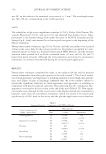
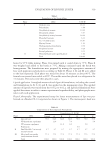
JOURNAL OF COSMETIC SCIENCE 328 the mean MEDUW. This strongly suggests that the determination of two MEDs is unnecessary that and one should be eliminated. Eliminating one of the two MED deter- minations would increase the benefi t/risk ratio of the COLIPA sunscreen water resistance effi cacy testing without harm to effi cacy. While this would not benefi t the millions of sunscreen users, it would benefi t the subjects in the clinical trial. METHODOLOGY Multiport solar simulators (Solar Light Company, Philadelphia, PA) are maintained by the Metrology Department at Consumer Product Testing Company, Inc. Data from 59 subjects were generated from 150-W multiport solar simulators data from 48 subjects were generated from 300-W multiport solar simulators. The MED, the minimum amount of energy required to produce a uniform, clearly demar- cated erythema response in each subject, was determined according to COLIPA method- ology (1). In the COLIPA methodology, 15 to 30 minutes after application the test sites are immersed in water for 20 minutes, dried for 15 minutes, immersed again for 20 min- utes, and then air dried for 15 minutes or until completely dry before UV exposure. RESULTS In testing sunscreens using the COLIPA guidelines, this testing facility has generated 107 MEDUS and MEDUW on identical subjects. For the 107 subjects, the means of the MEDUS and MEDUW are identical: MEDUS MEDUW Mean 21.0 mJ 21.0 mJ STDEV 0.55 mJ 0.61 mJ In 106 cases, the MEDUS equaled the MEDUW. In only one of 107 instances did the MEDUS not match the MEDUW, and in that instance the MEDUS was slightly higher. From this data, we conclude that the MEDUS is equivalent to the MEDUW. Because the MEDUS and MEDUW are equivalent, we propose that determination of the MEDUW be eliminated from the COLIPA guidelines for SPF testing. The MEDUW serves no useful purpose and increases the exposure of the subject to UV radiation. CONCLUSION Data from 107 subjects shows that water immersion does not alter the minimal erythema dose because there is no difference between the MEDUS and MEDUW. Thus, the MEDUS and MEDUW as required by the COLIPA method for water- resistant sunscreen testing are redundant and unnecessary. Eliminating the MEDUW would increase the benefi t/risk of the clinical trial while maintaining quality in test methodology.
Purchased for the exclusive use of nofirst nolast (unknown)
From: SCC Media Library & Resource Center (library.scconline.org)