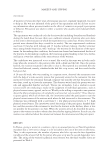
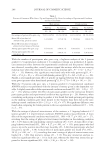
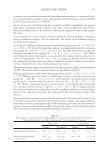
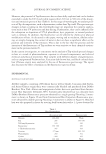
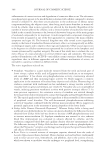
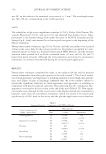
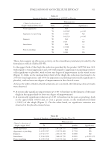
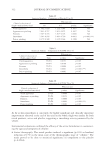
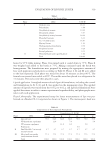
EVALUATION OF LIPSTICK LUSTER 319 heated to 95°C while mixing. Phase I was mixed until it cooled down to 75°C. Phase II was weighed and added to the batch at 75°C. Mixing continued until the batch was homogeneous. The formulations were prepared by mixing the appropriate amounts of base with pigments and polymers according to Table II. Phases I, II, and III were added to the base separately. Each phase was mixed for about 10 minutes at about 80°C. The formula was poured into molds at 80°C. The molds were then placed in a refrigerator for 15 minutes. The sticks were then placed in cases. Lipstick application. A weighed amount of each lipstick formulation, including the control and formulations A, B, C, D, and E, was applied on the mannequin’s lips. The applied amount of lipstick was varied from the 0.01 g to 0.02 g. All lipstick formulations were applied four times in order to ensure experimental reproducibility, and photographs were taken with each application. Digital photography. The experimental setup for luster measurements of lips was per- formed on a Beseler CS-14 copystand as shown in Figure 1. The mannequin’s head was Table I Formulation of the Lipstick Base Phase INCI % W/W I Ozokerite wax 16.11 Polyethylene 7.68 Octyldodecyl stearate 19.40 Diisopropyl adipate 3.07 Octyldodecyl stearoyl stearate 18.40 Phenethyl benzoate 6.14 C12-15 alkyl lactate 16.87 Myristyl lactate 1.54 Hydrogenated polyisobutene 9.36 Tocopheryl acetate 0.29 Retinyl palmitate 0.14 II Phenoxyethanol (and) caprylyl glycol 1.00 Total 100.00 Table II Compositions of Tested Lipstick Formulations Phase INCI Formulations (% W/W) Control A B C D E F I Lipstick base 75.0 64.0 64.0 64.0 70.0 70.0 70.0 VP/hexadecene copolymer 11.0 7.0 5.0 VP/eicosene copolymer 11.0 4.0 5.0 Polybutene 5.0 II D&C Red No.7 in isocetyl stearoyl stearate 2.7 2.7 2.7 2.7 2.7 2.7 2.7 III Mica (and) iron oxides (and) titanium dioxide 22.3 22.3 22.3 22.3 22.3 22.3 22.3 Total 100.0 100.0 100.0 100.0 100.0 100.0 100.0

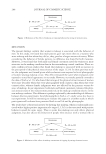
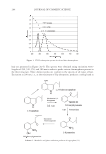
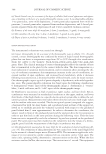
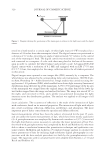
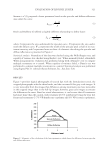
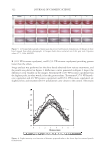
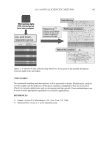
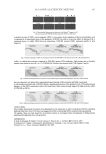
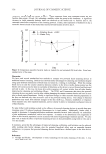
JOURNAL OF COSMETIC SCIENCE 320 rested on a hard stand at a certain angle. A white light source (14 W) was placed at a distance of 24 inches from the mannequin’s head. The digital camera was positioned at a distance of 12 inches, providing an angle of approximately 30° relative to the central axis of the mannequin’s head. The digital camera was mounted on a stationary mount and connected to a computer. A color code chart was placed at the base of the manne- quin in order to calculate the white balance and provide a scale. A Cannon EOS 20D digital camera with a resolution of 8.2 MP, and equipped with an EFS 17-55 mm (f/3.5-7.1) lens, was employed as the image collection device for all studies presented in this article. Digital images were captured as raw images fi les (CR2) remotely by a computer. The white balance was adjusted to the corresponding lamp color temperature, 3800°K (Cam- era Raw, Photoshop 10 – Adobe Systems Inc). Image analysis was carried out using Im- ageJ version 1.42q software (NIH), which enabled us to obtain light intensity (luminance) distributions along the lower lip of the mannequin. A 950 × 550 pixel image of the lip area of the mannequin was cropped from the original image the shine band of the lower lip was further cropped from this image and analyzed for luster. The image was rotated 90° to the right, and converted to 8-bit, and a profi le was generated measuring the light intensity across the distribution gradient. The analysis was applied to all images of all treatments. Luster calculations. The occurrence of refl ection is the result of the interaction of light with a substrate, based on its material properties. The interaction of light with objects also creates scattering, refraction, diffraction, interference, and adsorption. The most important part of luster comes from the specular and diffuse refl ection. Luster measurements of hair have been the subject of research for the past 35 years, and are unlike the luster measurements of lips, which have been mostly qualitative (4). A goniophotometer was employed by Stamm and coworkers in 1977 (5) to record the light distribution curves necessary to calculate the luster parameters of hair. Fur- ther work with goniophotometry was completed by Reich and Robbins (6), who were able to show a correlation between this quantitative technique and qualitative con- sumer studies. McMullen and Jachowicz (7) employed image analysis to calculate the luster parameters of hair by utilizing high-resolution digital photography in con- junction with the data analysis procedures set forth by the goniophotometric tech- nique. The equations used to calculate luster were adopted from Stamm et al. (5) and Reich and Robbins (6). Figure 1. Diagram showing the positioning of the mannequin in relation to the light source and the digital camera.
Purchased for the exclusive use of nofirst nolast (unknown)
From: SCC Media Library & Resource Center (library.scconline.org)