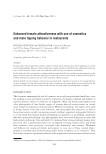
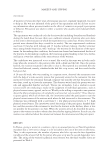
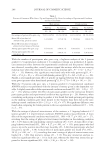
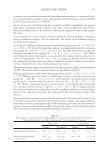
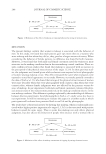
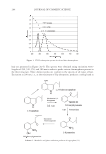
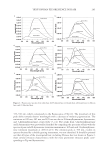
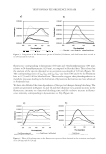
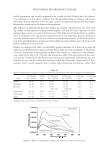
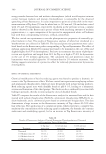
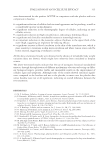
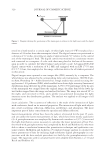
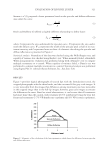
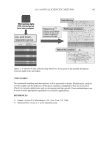
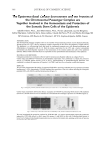
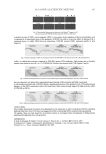
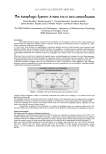
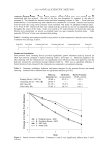
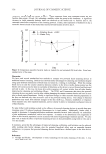
EVALUATION OF ANTI-CELLULITE EFFICACY 309 measures the resulting torsion angle at the maximum of mechanical stimulation and at the end of the stimulus (return phase). For each of the curves, the cutaneous rotation can be measured allowing the defi nition of the following parameters: U • e : immediate extensibility (measured at 0.02 sec) U • f : maximal extensibility (measured at 0.9 sec) U • v : viscoelasticity U • r : immediate elastic return (at 0.02 sec on the return phase) A typical torsion curve example is provided in Figure 1. Among all the available methods to assess cutaneous elasticity, the method involving torsion appears to be one of the most interesting, as it is very sensitive to the variations of the mechanical properties of the stratum corneum (14) (d) Ultrasonography performed on the outer thigh to measure the thickness of the panniculus adiposus (in mm) (15,16). Ultrasonography allowed the measurement of the panniculus adiposus of the upper third of the outer thigh by means of the equipment Body Metrix BX2000 (Genex). In this system, a probe generates high-frequency sound waves, transmitting them within the human body. The waves cross tissues and are refl ected at the tissue inter- faces. By recording the echoes of the refl ected waves, the equipment defi nes the thickness of a certain tissue, and this is made possible by measuring the time it takes for the signal to reach an interface and by multiplying it by the speed of the waves in that specifi c tissue (in the adipose tissue, the speed is around 1400m/s). A watery gel is applied on the probe in order to minimize wave dispersion. (e) Spectrophotometric analysis for the assessment of the activity on surface microcirculation (17). The area of the inner knee represents the most sensitive zone subject to microcirculation variations, where the presence of cellulite is best shown in terms of circulatory stasis. For this reason, the effi cacy of the test product was evaluated with a spectrophotometric mea- surement of the skin color on the inner knee. Spectrophotometric evaluations employed a spectrophotometer for the spectra of visible, infrared, and ultraviolet (λ 300-900 nm) using a tungsten halogen lamp and a deuterium lamp compliant to CIE (Commission Internationale de I’Eclairage). The light source was turned on 30 minutes prior to the use of the equipment in order to stabilize the lamp emissions. The inclination of the probe Figure 1. Skin angular deformation versus time upon application of constant torque. Ue: immediate defor- mation Ur: immediate recovery upon torque switching off.

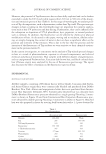
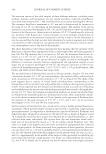
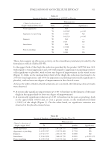
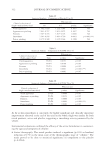
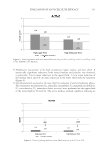
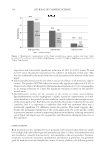
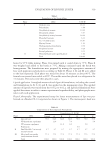
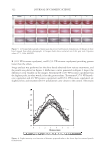
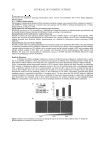
JOURNAL OF COSMETIC SCIENCE 310 was 90° on the surface to be examined, on an area of ca. 2 mm2. The wavelength range was 380–780 nm, corresponding to the visible spectrum. SAFETY The tolerability of the active ingredients visnadine (0.25%), Ginkgo biloba Dimeric Fla- vonoids Phytosome® (0.5%), and escin (1%) (all obtained from Indena S.p.A., Italy), formulated in the fi nished dosage form under the name of ACTIVE (manufactured by Sinerga S.p.A., Italy), was assessed by occlusive patch test prior to the beginning of the effi cacy evaluation. Twenty-three female volunteers, aged 30 to 55 years, used the test product over a period of four weeks, twice daily. In the occlusive patch test, the product was applied in a stan- dardized amount of 20 μl on a Fixomull stretch patch (BSN Medical), and the medium irritation index resulted in 0 at all the considered times (15 min, and 24, 48, and 72 hours from patch removal). Although the trial population was limited to sensitization evaluations, no irritation was observed during the occlusive patch application. RESULTS Twenty-three volunteers completed the study, as two subjects left the trial for personal reasons independent from their participation in the trial at week 2. The clinical evalua- tion (visual appearance and appearance at pinching, fi rmness of inner thigh, skin smooth- ness, and degree of pain at pinching) confi rmed that the active product induced a statistically signifi cant reduction in visual appearance and appearance at pinching in comparison with placebo-induced variations, thus indicating that the “orange peel-like” appearance was found to be less evident at the end of the trial (Tables I, II). Non-signifi - cant results were obtained for the visual score in the placebo-treated area (compared to baseline), apart from the smoothness evaluation, which was found to be statistically signifi cant (p0.001) both in the active and the placebo application versus baseline. Table I Statistical Analysis—Comparison of ACTIVE vs Placebo Clinical evaluations of thigh—upper third Wilcoxon test Time p-value Signifi cance Visual appearance T0 0.3388 NS T4 0.0268* p0.05 Appearance at pinching T0 0.3388 NS T4 0.0017** p0.01 Firmness T0 NA — T4 0.0481* p0.05 Smoothness T0 NA — T4 0.3388 NS Pain at pinching T0 NA — T4 0.1667 NS
Purchased for the exclusive use of nofirst nolast (unknown)
From: SCC Media Library & Resource Center (library.scconline.org)