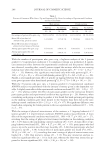
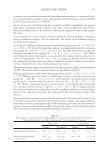
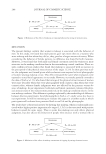
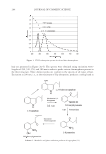
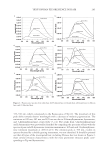
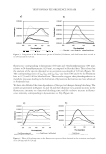
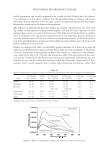
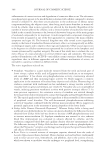
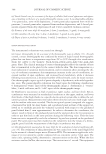
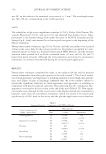
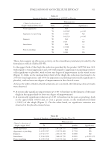
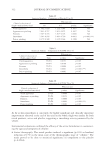
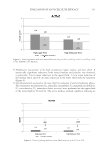
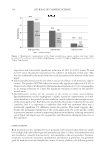
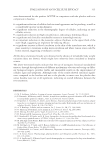
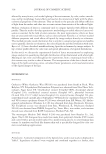
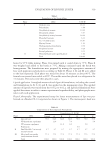
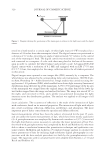
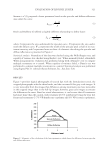
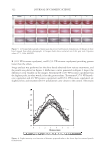
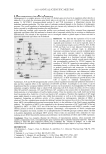
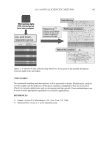
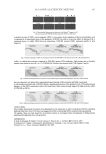
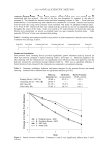
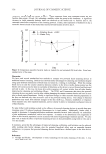
JOURNAL OF COSMETIC SCIENCE 294 hair are presented in Figure 2(a-f ). The spectra were obtained using excitation wave- lengths of 290, 320, 350, and 380 nm in order to probe various chromophores present in the fi ber structure. Three distinct peaks are evident in the spectra of all types of hair. Excitation at 290 nm, i.e., at the maximum of Trp absorption, produces a strong band at Figure 1. UV-Vis absorption spectra of selected hair chromophores. Scheme 1. Metabolic and photo-oxidation products of tryptophan (14).

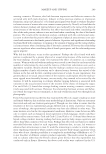
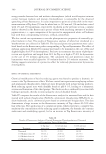
TRYPTOPHAN FLUORESCENCE IN HAIR 295 335–350 nm, which corresponds to the fl uorescence of Trp (2). The maximum of this peak shifts towards shorter wavelength with a decrease of melanin pigmentation. The emissions at 420 nm, 465 nm, and 495 nm are due to N-formylkynurenine, kynurenine, and 3-hydroxykynurenine, respectively (7–14). The peaks from 3-hydroxykynurenine and L-kynurenine were previously identifi ed by comparing the spectrum of hair with the spectra of pure solid L-kynurenine (emission maximum at 465 nm) and 3-hydroxykynure- nine (emission maximum at 495) (14,15). The emission peak at 395 nm, evident in spectra obtained by a double-grating instrument, was not identifi ed. It should be pointed out that all types of the investigated hair, including Chinese hair not shown in Figure 2, share similar emission characteristics with the most prominent emission peaks corre- sponding to Trp and kynurenines. Figure 2. Fluorescence spectra of (a) white hair, (b) Piedmont hair, (c) blonde hair, (d) brown hair, (e) African hair, and (f ) bleached hair.
Purchased for the exclusive use of nofirst nolast (unknown)
From: SCC Media Library & Resource Center (library.scconline.org)