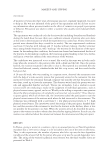
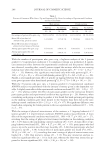
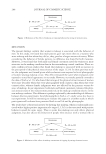
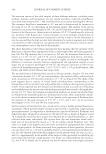
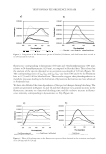
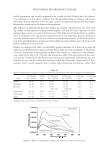
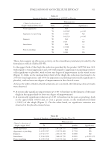
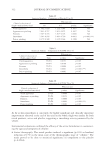
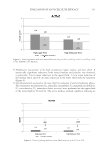
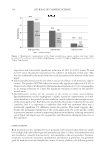
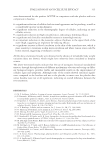
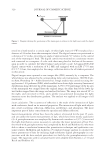
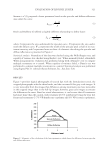
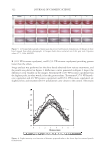
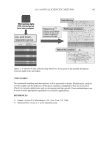
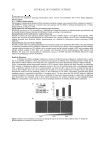
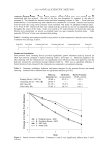
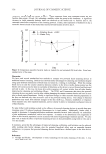
JOURNAL OF COSMETIC SCIENCE 314 Figure 4. Morphometric measurements of the thigh circumferences (upper, median, and lower third) [p0.001 (***) vs T0 p0.05 (*) T4B vs T4B Placebo p0.01 (**) T4B vs T4B Placebo p0.001 (***) T4B vs T4B Placebo]. important and statistically signifi cant reduction of 20% (p0.001 versus T0 and p0.05 versus the placebo) of parameter Ur, which is an indicator of skin tone. This was also confi rmed by the results from the visual assessment of the fi rmness of the inner thigh. Ultrasonography performed on the outer thigh to measure the thickness of the panniculus adiposus • (in mm). The product ACTIVE induced a statistically signifi cant reduction of 9.4% in the panniculus adiposus with regard to the baseline measurements (p0.01), corresponding to an average reduction of 1 mm. No signifi cant variation occurred in the placebo- treated areas. Spectrophotometric analysis for the assessment of the activity on surface microcirculation. • Spectrophotometry results highlighted a highly signifi cant improvement (p0.001 versus baseline) in the general vascular condition, mainly related to the massage activity of the cream application. Both the active and the placebo product improved the vascular condition, but it is important to underline that with the treatment there was a statistically signifi cant 3% difference versus the placebo. This result suggests that, besides the massaging stimulation of the cream application, the active product seems to possess an intrinsic activity in improving skin microcirculation, reducing interstitial excess fl uids and improving cell oxygenation and fi ltration/re-absorption processes in the capillaries. CONCLUSIONS Both treatments (active and placebo) were generally well tolerated, apart from one single case of slight folliculitis that regressed spontaneously after 3–4 days’ discontinuation and was classifi ed as “aspecifi c skin reactivity,” not imputable to the active product. Cosmetic acceptance in terms of consistency, spreadability, and absence of greasiness, was generally good for both the active and the placebo creams. In terms of effi cacy, the following results

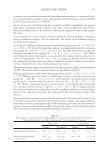
EVALUATION OF ANTI-CELLULITE EFFICACY 315 were demonstrated for the product ACTIVE in comparison with the placebo and/or in comparison to baseline: a signifi cant reduction of cellulite both in visual appearance and at pinching, as well as • a considerable increase in skin fi rmness a signifi cant reduction in the thermographic degree of cellulite, indicating an anti- • cellulite activity a signifi cant reduction in thigh circumferences, indicating a slimming effi cacy • a signifi cant and clinically considerable increase in inner-thigh tonicity • an important reduction in the • panniculus adiposus thickness in the upper third of the outer thigh, suggesting an important fat-reducing effi cacy a signifi cant increase in blood circulation in the skin of the inner-knee area, which is • more sensitive to variations in skin microcirculation and where venous stasis could be better assessed, suggesting a vasokinetic activity. All the above-mentioned results were obtained in the absence of remarkable body weight variations (data not shown), which might have otherwise been considered as dropout criteria. The above-mentioned results indicate that the use of synergistic botanical standardized extracts, through the exploitation of different mechanisms of action and acting on differ- ent biological targets, provides visible and measurable results in the improvement of cellulite signs and symptoms. Although some of the results showed statistical signifi - cance compared to the baseline and not to the placebo, in most cases the placebo data versus baseline were not at all signifi cant, indicating an overall difference between the two treatments. REFERENCES (1) M. P. Goldman, Cellulite: A review of current treatments, Cosmet. Dermatol., 15, 17–20 (2002). (2) E. Emanuele, M. Bertona, and D. Geroldi, A multilocus candidate approach identifi es ACE and HIF1A as susceptibility genes for cellulite, J. Eur. Acad. Dermatol. Venereol. (2010). (3) B. Querlux, C. Cornillon, O. Jolivet, and J. Bittoun, Anatomy and physiology of subcutaneous adipose tissue by in vivo magnetic resonance imaging and spectroscophy: Relationship with sex and presence of cellulite, Skin Res. Technol., 8, 118–124 (2002). (4) A. V. Rawlings, Cellulite and its treatment, Int. J. Cosmet. Sci., 28, 175–190 (2006). (5) O. Thrastrup, B. Fjalland, and J. Lemmich, Acta Pharmacol. Toxicol. 52, 246 (1983). (6) H. Erbring, H. Uebel, and G. Vogel, Arzneim Forsch., 1, 283 (1967). (7) H. Eyraud, and M. Aurousseau, Arneim Forsch. (Drug Res.), 23, 201 (1973). (8) E. Bombardelli, M. Spelta, and S. B. Curri, Aging skin: Activity on the smallest skin blood vessels of an Ammi visnaga purifi ed extract, 16th IFSCC Congress, October 8–11, 1990, New York. (9) M. Dell’Agli and E. Bosisio, Bifl avones of Ginkgo biloba stimulate lipolysis in 3T3-L1 adipocytes, Planta Med, 68, 76–79 (2002). (10) M. Dell’Agli, G. V. Galli, and E. Bosisio, Inhibition of c-GMP-phosphodiesterase-5 by bifl avones of Ginkgo biloba, Planta Medica, 72, 468–470 (2006). (11) E. Bombardelli, A. Cristoni, and P. Morazzoni, Phytosome in functional cosmetics, Fitoterapia, 65(5), 387–401 (1994). (12) C. R. Sirtori, Aescin: Pharmacology, pharmacokinetics and therapeutic profi le, Pharmacol. Res., 44(3), 183–193 (2001). (13) D. A. Sandler and J. F. Martin, Liquid crystal thermography as a screening test for deep vein thrombosis, Lancet (March 23, 1985).
Purchased for the exclusive use of nofirst nolast (unknown)
From: SCC Media Library & Resource Center (library.scconline.org)