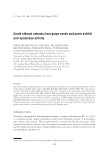
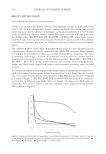
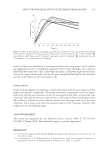
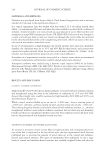
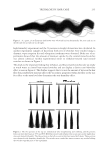
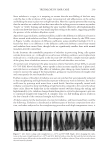
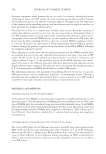
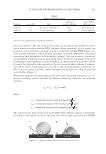
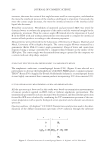
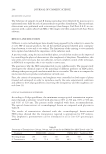
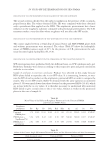
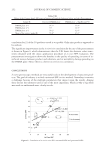
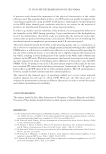
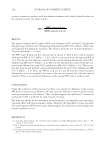
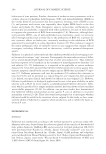
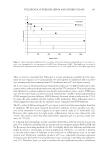
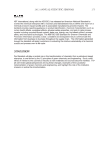
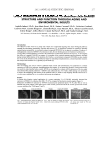
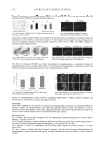
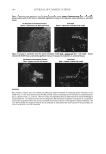
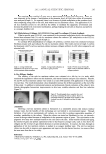
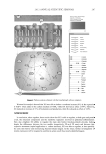
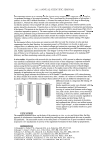
TREHALOSE IN HAIR CARE 235 Figure 1. A 2-gram, 25-cm European dark brown wavy #6 switch laid out horizontally. The root ends are on the left and the tip ends are on the right. high-humidity experiment and the % increase in weight of moisture was calculated. In another experiment samples of hair from both sets of switches were studied using a dynamic vapor sorption kit and adsorption isotherms were obtained. Both sets of ex- periments showed that the amount of moisture uptake by the control ironed switches was almost identical (within experimental error) to trehalose-treated (and ironed) switches as shown in Figure 3. This leads to the important fi nding that trehalose- and heat-treated switches take up nearly as much water as control heat-treated switches and yet display a distinct anti-humidity effect as seen in Figure 2. This further suggests that it is not the amount of water in the hair fi ber but possibly how moisture affects the viscoelastic properties within the fi ber or the sur- face effect at the array level that determines the anti-humidity effect. Figure 2. The two pictures at the top are immediately after straightening and combing, and the pictures below are after three hours at 30°C and 80% RH. Hair treated with trehalose (the two pictures on the right) show clear anti-humidity benefi ts. The two pictures on the left are control switches treated with water. These pictures were obtained in the humidity chamber kit. The switches were combed fi ve times to remove any residue holding the switches together prior to the experiment.

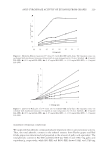
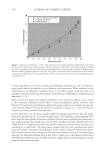
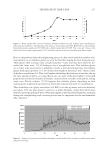
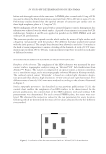
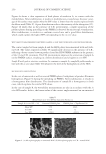
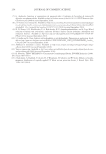
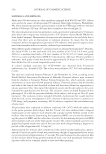
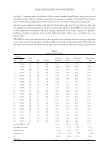
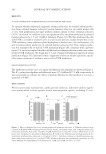
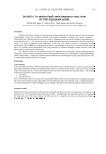
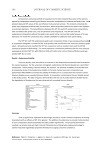
JOURNAL OF COSMETIC SCIENCE 236 A likely hypothesis for the above striking anti-humidity observation is that we think the water uptake ability of trehalose is in its different solid-state forms. While trehalose is nor- mally found in its dihydrate crystalline form, it can under certain conditions exist in an amorphous or glassy form, and these forms can interconvert depending on temperature and humidity (11–13). Here we have investigated the sorption isotherms of two forms of trehalose, one of which is the crystalline dihydrate and the other a “part-crystalline/part-glassy” trehalose form (Figure 4). Concurrently, the dihydrate and the part glassy samples were studied using powder x-ray methods (Figure 5). From the powder x-ray graphs in Figure 5, it is clear that the one sample is far more crystalline than the other. In the literature (14), the water uptake profi le of trehalose glass shows that the glassy form picks up water up to ~12% of its weight until ~50% RH (this is approximately 60% more than the water uptake shown here in Figure 4 for the part-crystalline/part-glassy mate- rial, suggesting that this sample may contain 40% crystalline material). Further increase in %RH results in a slight drop in the water uptake, and then a steady state is reached corre- sponding to a stable form. The fi nal fi gure suggests that the part-crystalline/part-glassy material has fully converted to the dihydrate crystal, which as Figure 4 (dashed line) shows, does not pick up any water. Irrespective of the actual amount picked up by the part-glassy material, the important fi nding here is that water is taken up in this material until about 50% RH and a further increase in %RH results in a slight drop in moisture uptake initially, with no further moisture gain. Figure 3. Adsorption isotherms at ~25°C of 2% trehalose-treated (and ironed) hair (dashed line), and control and ironed hair (dotted line) obtained using a DVS kit (within two days of the heat-styling treatment without any rinse or washing in between), showing very small differences in water uptake, with the trehalose-treated switches showing slightly higher moisture gain. Also given is the normal DVS curve (solid line) for untreated and un-ironed virgin hair. It is noticeable that the effect of heat treatment (200°C irons) has changed the shape of the DVS curves.
Purchased for the exclusive use of nofirst nolast (unknown)
From: SCC Media Library & Resource Center (library.scconline.org)