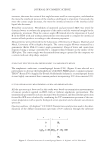
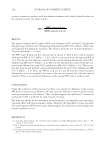
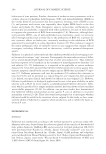
FULLERENOL SUPPRESSES SEBUM AND INHIBITS LIPASE 261 ASSAY FOR SEBUM PRODUCTION FROM HAMSTER SEBOCYTES Hamster sebocytes were grown in HuMedia-BB supplemented with 8% fetal bovine se- rum (FBS), 2% human serum (HS), and 10 ng/ml hEGF. After reaching confl uency, the culture was continued for a further seven days. The cells were then fed with HuMedia- BB supplemented with 8% FBS, 2% HS, and 10 μg/ml insulin to induce differentiation and thus sebum production, and simultaneously irradiated with UVB (10 mJ/cm2). Every second day the medium was changed and fresh fullerenol solution was added. After incu- bation for 14 days, the cells were harvested and subjected to an assay for lipid pro- duction (SE-3001 kit) by using the “oil red” method according to the manufacturer’s instructions this allowed us to determine the sebum produced per cell. Sebum pro- duction from hamster sebocytes was statistically analyzed by the Student’s t-test. Dif- ferences of p 0.05 were considered signifi cant. PREPARATION OF P. ACNES LIPASE Collected human sebum was suspended in boiled and de-aerated saline (10 ml). The suspension was placed on a GAM agar plate for the growth of anaerobic bacteria and cultured at 37°C for 48 h. A single colony of P. acnes was isolated and cultured in GAM liquid medium under the same conditions. The bacterial cells were collected by centrifugation (3,000g, 5 min, 4°C) and washed twice in 50 mM Tris-HCl (pH 7.4). The P. acnes cells were ruptured by ultrasonication and the obtained cell lysate was used as P. acnes lipase diluted to 100 μg/ml by Tris-HCl (50 mM, pH 7.4) (29). MEASUREMENT OF LIPASE-INHIBITORY ACTIVITY The inhibitory activity against P. acnes lipase was assessed by measuring the level of fl uorescent 4-MU produced by lipase from the oleate ester, 4-MUO. The reaction mix- ture was 4-MUO (25 μl, 0.1 mM) and a sample solution (25 μl). P. acnes lipase (50 μl) was added to the reaction mixture (fi nal volume, 100 μl). After the mixture was incu- bated at 37°C for 30 min, the amount of 4-MU released by the lipase was measured by using a fl uorescence plate reader (SpectraMax Gemini, Molecular Devices Inc., Sunnyvale, CA) (excitation: 335 nm emission: 460 nm). P. acnes lipase activity was determined as the amount of 4-MU released in 1 min (referred to a standard calibration curve for 4-MU) (29). The measurements were performed in triplicate, and half-maximal (50%) inhibitory concentration (IC50) values were determined according to the following regression line formulae: 50 1 0 IC value y =b x +b (1) 2 2 1 i i i i i Coefficient of regression b = N x y x y N x ª º ¦ ¦ ¦ ¦ ¦xi ª º ¬ ¼ (2) ª º ª º ¦ ¦ ¦ ¦ ¦ ¦xi ¬ ¼ ¬ ¼ 2 2 2 0 i i i i i i b = x y x y x N x (3)

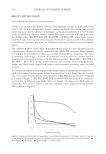
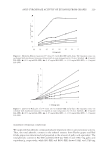
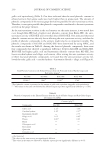
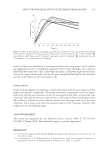
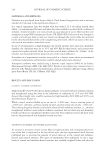
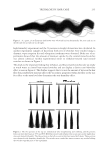
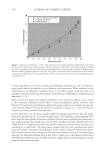
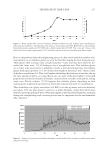
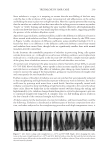
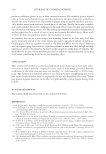
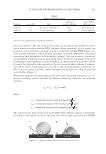
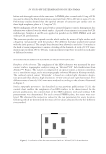
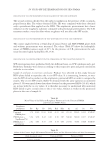
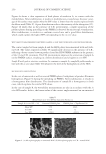
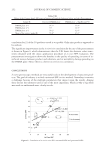
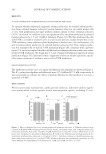
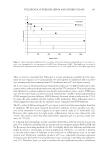
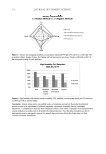
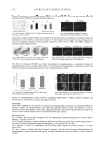
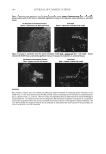
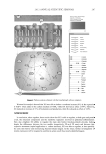
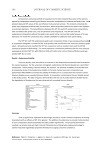
JOURNAL OF COSMETIC SCIENCE 262 RESULTS IN VITRO SUPPRESSION OF SEBUM PRODUCTION IN HAMSTER SEBOCYTES To examine whether fullerenol suppresses sebum production, we assayed sebum produc- tion from cultured hamster sebocytes because hamster sebocytes are useful model cells in vitro, with proliferation and lipid synthesis abilities similar to those of human sebocytes (30,31). As a result, we could not detect any signifi cant effect on sebum production in cultured hamster sebocytes by 1.5 and 15 μM of fullerenol (Figure 1A). We then irradiated the cells with UVB as a model of oxidative stress in acne because previous studies showed that in vivo UVB irradiation causes sebaceous gland hyperplasia of hairless mice (32) and hamsters (33) and stimulates sebum production in cultured hamster sebocytes (34). Then, sebum produc- tion was stimulated by 10 mJ/cm2 UVB irradiation (Figure 1B), consistent with a previous report (34), and so we studied the effect of fullerenol on sebum production in sebocytes stimu- lated by UVB irradiation. We found that 1.5 and 15 μmol/l of fullerenol suppressed sebum production (Figure 1C) fullerenol is thus a suppressor of sebocyte sebum expression, specifi - cally under conditions of oxidative stress such as UVB irradiation. LIPASE-INHIBITORY ACTIVITY The inhibitory activities on P. acnes lipase by fullerenol and adapalene are shown in Figure 2. The IC50 values for adapalene and fullerenol were 197.6 μM and 837.1 μM, respectively. It was not possible to evaluate the effects of pristine fullerene by this method, as it acts as a quencher of 4-MU. DISCUSSION We have previously reported that, unlike pristine fullerene, fullerenol exhibits signifi - cant antimicrobial activity against several microorganism species, including P. acnes. Figure 1. Effect of fullrenol on in vitro sebum production in hamster sebocytes. A. Hamster sebocytes were cultured in HuMedia-BB containing 8% fetal bovine serum, 2% human serum, and 10 μg/ml insulin (dif- ferentiation medium), with either 1.5 μM or 15 μM of fullerenol or control for 14 days. Sebum levels in cell lysate were determined as described in Experimental. B. Cells in the differentiation medium produced ele- vated levels of sebum when subjected to 10 mJ/cm2 UVB. C. Cells were cultured in the differentiation me- dium while being subjected to 10 mJ/cm2 UVB. Sebum production was signifi cantly attenuated in cells whose medium was supplemented with fullerenol (1.5 μM and 15 μM, 14 days). * p 0.05.
Purchased for the exclusive use of nofirst nolast (unknown)
From: SCC Media Library & Resource Center (library.scconline.org)