J. Cosmet. Sci., 63, 233–241 ( July/August 2012) 233 Trehalose in hair care: Heat styling benefi ts at high humidity SUSAN PYE and PREM K. C. PAUL Unilever R&D, Portsunlight, Wirral, UK, CH63 3JW. Accepted for publication November 18, 2011. Synopsis Human hair switches that have been treated with trehalose solution and straightened using hot irons show longevity of the straight style even in high-humidity conditions. This anti-humidity benefi t is especially notice- able if the straight style has been created at low relative humidity. It is proposed that hot-iron straightening of trehalose-treated switches produces in situ glassy forms of the sugar that act as water sinks at high humidity to provide anti-humidity benefi ts. Adsorption isotherms and powder x-ray studies of different forms of trehalose and moisture uptake of hair treated with the sugar suggest that the ability of a glassy form of trehalose to regulate moisture in the fi ber and consequently affect its viscoelastic properties is a major factor in providing long-lasting straight style in humid conditions. INTRODUCTION In the last few years with the advent of ever more sophisticated appliances and hair care products, it has become far easier to create desired hair styles. While in ambient conditions styles last for a few hours, at high humidity hair style loss is accelerated and consumer satis- faction recedes in only a matter of minutes. The retention of hair styles for a longer period, especially at high humidity, is therefore a big and hitherto unmet consumer need. Trehalose, a naturally occurring osmolyte, is a non-reducing disaccharide formed by the 1→1 linkage of two D-glucose residues. Cells of many organisms, including bacteria, yeast, fungi, insects, invertebrates and plants, use trehalose to protect their proteins and biological membranes against extreme dehydration, desiccation, temperatures, and many unfavorable environmental conditions (1–8). For this reason trehalose is increasingly fi nding uses in med- icine, pharmacy, food processing, and personal care products (9). Typical applications include trehalose as a stabilizer of proteins and as an excipient in pharmaceutical formulations. In hair care, trehalose has found increasing use in the benefi t areas of damage repair and style manageability (10). Here we look at the effect of trehalose in heat-styling benefi ts, particularly in providing style maintenance benefi ts in high-humidity conditions. Address all correspondence to Prem K. C. Paul at prem.paul@unilever.com.

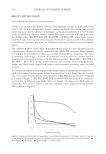
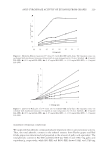
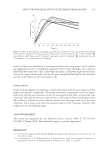
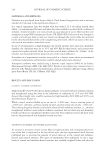
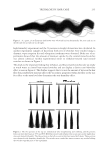
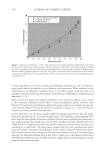
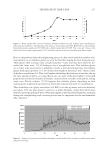
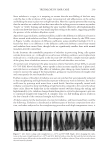
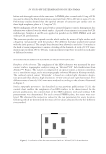
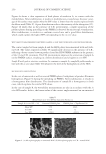
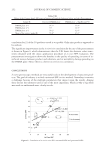
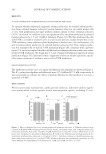
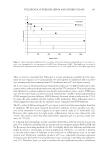
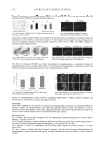
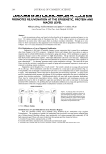
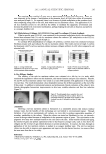
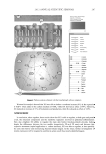
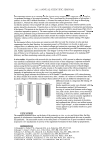
JOURNAL OF COSMETIC SCIENCE 234 MATERIALS AND METHODS Trehalose was purchased from Sigma Aldrich. Dark brown European hair with a waviness number of 6 was used in the experiments (Figure 1). In a typical experiment, hair was washed with base wash (12/1.6 of sodium laureth ether sulfate / cocoamidopropyl betaine) and when dry either soaked in or dosed with a solution of trehalose. Control switches were treated with an equal amount of water. Hair switches were straightened using GHD straighteners (Leeds, UK, BD20 0ES). Each switch was clamped to a stand, and with one hand a comb was slowly run through the switch while the iron held by the other hand followed the comb straightening the switch. After four passes of the iron, each switch was further combed fi ve times. In one set of experiments at high humidity, the treated switches were placed in a humidity chamber, the conditions were set to 30°C and 80% RH for three hours, and pictures were captured at regular intervals. From the pictures and in-house software the “volume” of the switches was measured from the projected area of the switch silhouette. In another set of experiments switches were styled in a climatic room whose environmental conditions (temperature and humidity) could be altered and pictures obtained. Adsorption isotherms were studied using a dynamic vapor sorption (DVS) kit by Surface Measurement Systems (SMS, UK, HA0 4PE). Powder x-ray studies were contracted out to Intertek, UK. Trehalose glass was made from a solution of trehalose dihydrate using a Buchi spray dryer (Buchi UK Ltd., Oldham, OL9 9QL). RESULTS AND DISCUSSION HUMIDITY CHAMBER EXPERIMENTS Dark brown EU wavy #6 switches (as shown in Figure 1), treated with 2% trehalose solution and straightened using hot irons in the laboratory at conditions of 23°C and 40% RH, showed that straight style could be sustained at high humidity (80% RH and 30°C) even after three hours (Figure 2). While control switches fl uffed up to an area of ~14000 mm2, from a starting point of ~5000 mm2, trehalose- and heat-treated switches attained a fi nal area of only ~7000 mm2. This striking longevity benefi t could only be obtained with trehalose and heat, i.e., switches straightened with hot irons without trehalose treatment did not show any anti-humidity benefi t and those not straightened with hot irons but were trehalose-treated did show some but not the pronounced anti-humidity benefi t seen here. ADSORPTION ISOTHERMS AND POWDER X-RAY STUDIES As increase in moisture content in hair fi bers at high humidity and consequent plasticiza- tion of the hair is implicated in the loss of hair style, the fi rst experimental check that was performed was to ascertain the amount of water taken up in the control and trehalose- treated (and ironed) switches. Two types of experiments were performed. In one a large batch of control and trehalose-heated switches was carefully weighed before and after the
Purchased for the exclusive use of nofirst nolast (unknown)
From: SCC Media Library & Resource Center (library.scconline.org)