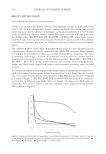
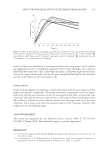
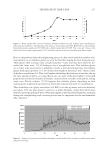
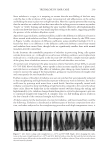
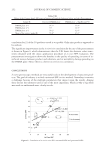
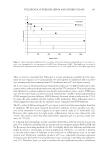
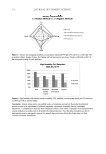
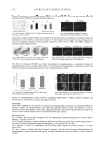
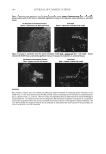
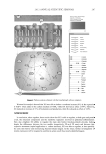
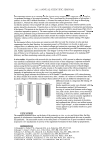
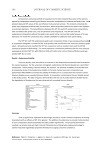
FULLERENOL SUPPRESSES SEBUM AND INHIBITS LIPASE 263 Thus, it may be concluded that fullerenol is a more promising candidate for the treat- ment of acne vulgaris (25). Consequently, we investigated its inhibitory effect on sebo- cyte sebum production resulting from UV irradiation and on P. acnes lipase activity. An in vitro assay of sebum production demonstrated that just 1.5 μM of fullerenol is suffi - cient to reduce sebocyte sebum production induced by UV irradiation. This result indicates that fullerenol is a sebum suppressor specifi cally under oxidative stress, such as UVB expo- sure. On the other hand, our previous study reported that 75 μM of polyvinylpyrrolidone (PVP)-wrapped pristine fullerene (PVP-fullerene) decreased sebum production by 27.4% by using the same method (22) but without UVB irradiation. Thus, fullerenol can be a sebum suppressor more specifi c for oxidative stress, compared with PVP-fullerene. The IC50 value of fullerenol against P. acnes lipase activity was four times higher than that of adapalene. We previously reported that pristine fullerene in olive squalane was effec- tive in the treatment of acne vulgaris in an open clinical study of 11 individuals (22). However, after application for eight weeks, infl ammatory lesions were reduced by only 37.8% this value is lower than that observed for adapalene gel in a previous study (me- dian, 63.7%) (35). It is known that antioxidant activity correlates well with a reduced severity of acne vul- garis (36). Fullerene and fullerenol are potent radical scavengers against ROS by ESR and the β-carotene breaching method (26–28). It is highly likely that fullerene and fullerenol might be effective antioxidants in clinical application. Therefore, we consider it prudent to test the effectiveness of fullerene in the reduction of infl ammatory acne in an open clinical trial. Porphyrins, metabolic products of P. acnes, reportedly stimulate expression of keratinocyte-derived IL-8 in pilosebaceous tissue, resulting in perifollicular infl amma- tion (37). Therefore, there is a need to evaluate the anti-infl ammatory effects of fullerene Figure 2. Dose-dependent inhibition of P. acnes lipase activity by fullerenol and adapalene. P. acnes lipase ac- tivity was determined by its conversion of 4-MUO into (fl uorescent) 4-MU. The inhibitory activities of fullerenol and adapalene were measured at concentrations of 1.9–484.8 μM and 66.5–1050 μM, respectively.

JOURNAL OF COSMETIC SCIENCE 264 and fullerenol on acne vulgaris in order to improve our understanding of their molecular mechanism. CONCLUSION Our present data and existing fi ndings suggest that fullerenol suppresses acne by inhibi- tion of sebum production, by inhibition of P. acnes lipase activity, and by antimicrobial effect against P. acnes (possibly attributable to their antioxidant activity). We consider that both fullerene and fullerenol are suitable as cosmetic and/or “quasi-drug” active in- gredients for acne sufferers following demonstration of their in vivo effi cacy. ACKNOWLEDGMENTS This work was funded by the Vitamin C60 BioResearch Corporation, Tokyo. We thank Miss Aki Nishiyama at the Department of Regenerative Dermatology, Osaka Univer- sity School of Medicine, for her excellent technical assistance. REFERENCES (1) P. Y. Basak, F. Gultekin, and I. Kilinc, The role of the antioxidative defense system in papulopus- tular acne, J. Dermatol., 28, 123–127 (2001). (2) G. Sarici, S. Cinar, F. Armutcu, C. Altinyazar, R. Koca, and N. S. Tekin, Oxidative stress in acne vulgaris, J. Eur. Acad. Dermatol. Venereol., 24, 763–767 (2009). (3) E. B. Kurutas, O. Arican, and S. Sasmaz, Superoxide dismutase and myeloperoxidase activities in polymor- phonuclear leukocytes in acne vulgaris, Acta Dermatovenerol. Alp. Panonica Adriat., 14(2), 39–42 (2005). (4) H. Akamatsu, T. Horio, and K. Hattori, Increased hydrogen peroxide generation by neutrophils from patients with acne infl ammation, Int. J. Dermatol., 42(5), 366–369 (2003). (5) O. Arican, E. B. Kurutas, and S. Sasmaz, Oxidative stress in patients with acne vulgaris, Mediators Infl amm., 6, 380–384 (2005). (6) N. S. Abdel Fattah, M. A. Shahee, A. A. Ebrahim, and E. S. El Okda, Tissue and blood superoxide dismutase activities and malondialdehyde levels in different clinical severities of acne vulgaris, Br. J. Dermatol., 159(5), 1086–1091 (2008). (7) G. Webster and J. Q. Del Rosso, Anti-infl ammatory activity of tetracyclines, Dermatol. Clin., 25(2), 133–135 (2007). (8) A. Jain, L. Sangal, E. Basel, G. P. Kaushal, and S. K. Agarwal, Anti-infl ammatory effects of erythro- mycin and tetracycline on Propionibacterium acnes induced production of chemotactic factors and reactive oxygen species by human neutrophils, Dermatol. Online J., 8(2), 2 (2002). (9) S. Nacht, D. Young, J. N. Beasley, Jr., M. D. Anjo, and H. I. Maibach, Benzoyl peroxide: Percutane- ous absorption and metabolic disposition, J. Am. Acad. Dermatol., 4, 31–37 (1981). (10) L. Hegemann, S. M. Toso, K. Kitay, and G. F. Webster, Anti-infl ammatory actions of benzoyl peroxide: Effects on the generation of reactive oxygen species by leucocytes and the activity of protein kinase C and calmodulin, Br. J. Dermatol., 130, 569–575 (1994). (11) P. J. Krusic, E. Wasserman, P. N. Keizer, J. R. Morton, and K. F. Preston, Radical reactions of C60, Science, 254, 1183–1185 (1991). (12) L. L. Dugan, E. G. Lovett, K. L. Quick, J. Lotharius, T. T. Lin, and K. L. O’Malley, Fullerene- based antioxidants and neurodegenerative disorders, Parkinsonism Relat. Disord., 7, 243–246 (2001). (13) K. Yudoh, R. Karasawa, K. Masuko, and T. Kato, Water-soluble fullerene (C60) inhibits the osteoclast differentiation and bone destruction in arthritis, Int. J. Nanomedicine, 4, 233–239 (2009). (14) K. Yudoh, R. Karasawa, K. Masuko, and T. Kato, Water-soluble fullerene (C60) inhibits the develop- ment of arthritis in the rat model of arthritis, Int. J. Nanomedicine, 4, 217–225 (2009). (15) K. Yudoh, K. Shishido, H. Murayama, M. Yano, K. Matsubayashi, H. Takada, H. Nakamura, K. Masuko, T. Kato, and K. Nishioka, Water-soluble C60 fullerene prevents degeneration of articular cartilage in
Purchased for the exclusive use of nofirst nolast (unknown)
From: SCC Media Library & Resource Center (library.scconline.org)