JOURNAL OF COSMETIC SCIENCE 20 to a single fi ber. Using subjective assessments of wool softness, i.e., the feeling when touched with fi ngers, the softest wool was that which had the smallest diameter and lower degree of crimp (i.e., straighter). Most importantly, Stevens found that it was the unique combination of both diameter and crimp that determined softness. Independently, it has also been concluded that Merino wool is softer if it has a lower mean fi ber diameter, a lower crimp frequency, or a combination of both factors (2). Yu and Liu (3) sampled and compared silk, wool, and alpaca in terms of equivalent bending modulus and rigidity, along with fi ber diameter and fi ber friction coeffi cient. Although alpaca fi bers have an intermediate value of equivalent bending modulus, a high rigidity, and a large diameter, the soft feel of these fi bers was assigned to the low friction coeffi cient. Contrastingly, silk fi ber has a high equivalent bending modulus and a friction coeffi cient similar to that for alpaca, but is very thin. This feature was thus responsible for the soft touch of silk when com- pared with wool, which has a mean diameter between those of silk and alpaca fi bers, an equivalent bending modulus close to, but slightly lower than, that of alpaca fi ber, an interme- diate rigidity, and a high fi ber friction coeffi cient, which signifi cantly worsens handling. The most signifi cant work on human hair fi bers, in terms of softness, was reported by Wortmann and Schwan-Jonczyk (4). By investigating the diameter and cross-sectional geometry of hair from selected tresses, the sensory feeling of those tresses, and the physi- cal attributes of the fi bers, such as bending properties and friction, this work arrived at some key conclusions relating to handling of human hair. Lower diameters and higher ellipticities were considered to play dominant effects on fi ber handle because these prop- erties give low bending stiffness. It was suggested that friction played a much lower part for thin fi bers but was important for thicker and stiffer hair. Stress relaxation is a technique most commonly used to measure the way in which visco- elastic materials relieve stress under a constant strain. Human hair and other keratin fi - bers show viscoelastic properties (5,6), rendering stress relaxation measurements applicable to these bodies. The origin of hair’s viscoelastic behavior lies in the fact that the hydrogen bonds within the fi ber are easily broken by stretching or bending, whereas the disulfi de bonds of hair remain unbroken (7). In the case of hair setting, a hair fi ber is forced into a desired shape, and due to the continuous breaking and building of hydrogen bond cross-links (arising from the abundant CO– and NH– groups present in neighbor- ing chains), the internal stresses in the molecular assembly are relieved, leading to the lowering of the tension within the hair fi ber. Thus, some level of setting is achieved, such that the remaining deformation (set) is strongly determined by the amount of relaxation. As described by Zuidema et al. (7), the higher the relaxation, the better a curl can be maintained. In the literature, however, little information is available that connects phys- ical property changes with particular regions of the hair. Feughelman and Irani (8) specify that the internal stresses during setting of wool fi bers in the so-called Hookean region (described as 2% strain) are mainly carried by the undamaged microfi brils, with no unfolding of the α-helices. On release of the applied stress, the fi ber tends to return to its native length. The authors also state that the setting of fi bers in this region is more dif- fi cult than at higher strains. In their earlier work on the stress relaxation of wool fi bers, however, Feughelman et al. (9) also described a change in behavior of wool fi bers at strains of 1% such that wool behaves as a linear viscoelastic body and relaxation rate becomes independent of strain. It becomes evident, therefore, that the regions of keratin fi bers that undergo stress relaxation differ at different strain levels.

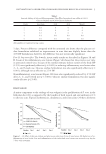
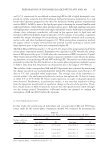
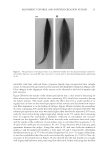
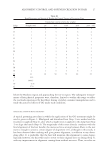
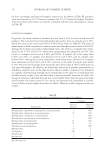
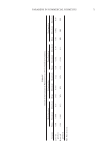
ALIGNMENT CONTROL AND SOFTNESS CREATION IN HAIR 21 In this study, we have investigated the effect of fi ber alignment on the perception of hu- man hair softness, together with a study of the role of a new softening agent, glycylgly- cine (GG), and attempted to connect consumer perception with tangible measurements of fi ber properties. Stress relaxation, assessment of hair initial elastic modulus, and atomic force microscope (AFM) force measurements have been performed to evaluate the changes in hair fi bers after treatment with GG. EXPERIMENTAL HAIR SAMPLES In this study, hair samples for the physical measurements were obtained from a tress of heavily damaged (by bleaching) curly hair provided by a Japanese female volunteer, aged 32 years. For perception tests, hair samples were obtained from a virgin straight tress, collected from a Japanese female volunteer, aged 35 years, and a virgin naturally curly tress, collected from a Japanese female volunteer, aged 32 years. All hair samples were initially around 30 cm in length. For AFM force measurements on hair cross sections, 15-mm length samples from both the roots of the naturally curly Japanese hair fi bers and the tips of the damaged curly Japanese hair fi bers were then selected. For the model damage experiment to show the effect that damage has on the alignment and shape of an otherwise healthy hair bundle, a virgin straight hair tress (approximately 8 g) was subjected to a chemical treatment comprising of permanent waving, followed by 15 cycles of shampooing, conditioning, and blow drying. The tress was then bleached and followed by another 15 cycles of shampooing, conditioning, and blow drying. The bleaching and washing process was repeated fi ve times, in total. The permanent waving treatment was carried out using a commercially available permanent wave/straightening product containing approximately 4.7% thioglycolic acid (liquid 1) and approximately 8.7% sodium bromate (liquid 2). Liquid 1 was applied for 10 min at room temperature, in a ratio of 1:2 (hair/bath). After rinsing for 30 s under warm running tap water, liquid 2 was applied to the tress for 10 min at room temperature, also in the ratio 1:2 (hair/ bath). The tress was then shampooed, using a plain shampoo formulation, for 30 s, before rinsing for 30 s under warm running tap water. The tress was then blow dried. The bleaching treatment was also carried out using a commercially available product, con- taining approximately 1.3% ammonia, 1.0% monoethanolamine, and 3.4% hydrogen peroxide. The processing conditions were 30 min and 30°C, at a hair/bath ratio of 1:1. After processing, the tress was rinsed under warm running tap water for 30 s, shampooed for 15 s, rinsed and shampooed again, and then rinsed for 15 s and blow dried. The wash- ing cycle applied between each treatment consisted of shampooing, with the plain formu- lation, for 30 s, followed by the application of a simple conditioner for 30 s, and then rinsing under warm running tap water for 30 s. Finally, the tress was blow dried. TREATMENT CONDITIONS The treatments used throughout this study are given in Table I. The level of GG used for these experiments was 2%. Prepared solutions were equilibrated at 40°C in a water bath
Purchased for the exclusive use of nofirst nolast (unknown)
From: SCC Media Library & Resource Center (library.scconline.org)