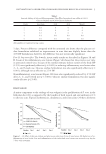
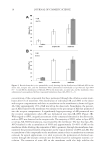
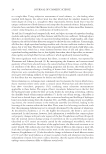
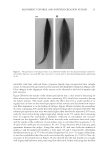
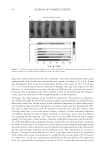
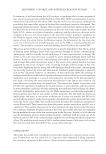
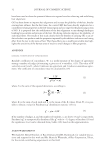
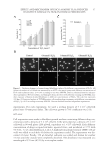
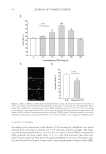
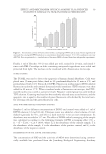
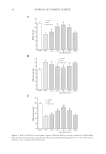
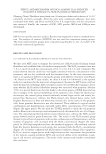
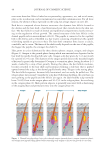
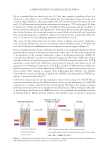
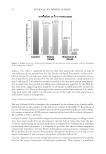
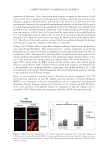
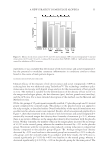
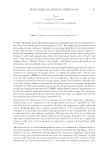
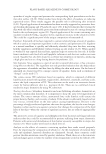
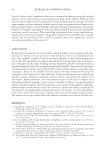
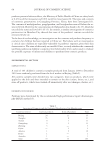
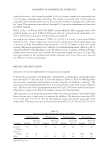
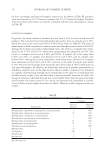
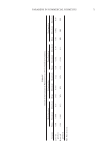
JOURNAL OF COSMETIC SCIENCE 6 effi cacy, whereas tetracyclines including doxycycline and minocycline are effective when taken orally (25–27). However, overuse of these antibiotics can lead to bacterial resistance (10) and have limited usefulness when used alone. One of the strongest antiseptics in common use is BP, which alone or in combination with other antibiotics can signifi cantly reduce acne lesions and infection (28,13), however, with side effects like skin drying (28). Hydrogen peroxide is a common antiseptic that is used diluted on skin to kill bacteria in a wound. It is a powerful oxidizing agent however, it can act as a reducing agent for strong oxidants. Formulation of stable treatment creams with this agent is a challenge because of its reactive nature. Nevertheless, it has been shown to be a successful agent for acne treat- ment when used in combination with adapalene with better tolerability profi le in compari- son with the combination of BP and adapalene (27). Another study has shown hydrogen peroxide to be as effective as BP in reducing both infl ammatory and noninfl ammatory acne vulgaris lesions in patients with mild-to-moderate disease, with a better local tolerability Figure 2. Area under the curves from Figures 1(A) and (B) showing a précis of the activity of each treatment on reduction of size and infl ammation of acne lesions. Figure 3. (A) Infl ammatory lesion count of the full face from a 6-week in-use study. (B) Noninfl ammatory lesion count of the full face.

ENZYMATICALLY GENERATED HYDROGEN PEROXIDE REDUCES ACNE LESIONS 7 profi le (29). We have developed an enzyme system that slowly generates hydrogen peroxide that can cleanse skin of bacteria. This enzymatically generated hydrogen peroxide appears to be as effective as BP but without the drying associated with it. On the basis of the con- fi nes and conditions of this study, there was a distinct reduction in acne lesion size and in- fl ammation on the site treated with the formulations of glucose oxidase and glucose within days of treatment. There is not much known about the effect of long-term use of this sys- tem, nevertheless, it promises to be valuable in the reduction of the intensity of acne lesions without any harsh side effects and drug resistance as with antibiotics. REFERENCES 1. N. Muizzuddin, “Acne: Causes, Treatment and Myths,” in Dermatology Research Focus on Acne Melanoma and Psoriasis, D. E. Roth. Ed. (Nova Science Publishers, NY, 2009), pp. 97–106. 2. A. M. Al-Ameer and O. M. Al-Akloby, Demographic features and seasonal variations in patients with acne vulgaris in Saudi Arabia: a hospital-based study, Int. J. Dermatol., 41(12), 870–871 (2002). 3. I. B. Bassett, D. L. Pannowitz, and R. S. Barnetson, A comparative study of tea-tree oil versus benzoyl- peroxide in the treatment of acne, Med. J. Aust., 153(8), 455–458 (1990). 4. P. Lyte, R. Sur, A. Nigam, and M. D. Southall, Heat-killed Propionibacterium acnes is capable of inducing infl ammatory responses in skin, Exp Dermatol., 18(12), 1070–1072 (2009). 5. B. Dreno, Topical antibacterial therapy for acne vulgaris, Drugs, 64(21), 2389–2397 (2004). 6. H. Gollnick, Current concepts of the pathogenesis of acne: implications for drug treatment, Drugs, 63(15), 1579–1596 (2003). 7. R. A. Bojar and K. T. Holland, Acne and propionibacterium acnes, Clin. Dermatol., 22(5), 375–379 (2004). 8. S. A. Buchner, Acne and its drug treatment, Ther. Umsch., 47(8), 670–674 (1990). 9. J. J. Leyden, Antibiotic resistance in the topical treatment of acne vulgaris, Cutis, 73(Suppl. 6), 6–10 (2004). 10. G. A. Taylor and A. R. Shalita, Benzoyl peroxide-based combination therapies for acne vulgaris: a com- parative review, Am. J. Clin. Dermatol., 5(4), 261–265 (2004). 11. L. Hegemann, S. M. Toso, K. Kitay, and G. F. Webster, Anti-infl ammatory actions of benzoyl peroxide: effects on the generation of reactive oxygen species by leucocytes and the activity of protein kinase C and calmodulin, Br. J. Dermatol., 130(5), 569–575 (1994). 12. J. J. Leyden, Effect of topical benzoyl peroxide clindamycin versus topical clindamycin and vehicle in the reduction of Propionibacterium acnes, Cutis, 69(6), 475–480 (2002). 13. C. M. Chronnell, L. R. Ghali, R. S. Ali, A. G. Quinn, D. B. Holland, J. J. Bull, W. J. Cunliffe, I. A. McKay, M. P. Philpott, and S. Muller-Rover, Human beta defensin-1 and -2 expression in human pilosebaceous units: upregulation in acne vulgaris lesions, J. Invest. Dermatol., 117(5), 1120–1125 (2001). 14. J. A. Cotterill, Benzoyl peroxide, Acta Derm. Venereol. Suppl. (Stockh), (Suppl. 89), 57–63 (1980). 15. A. M. Kligman, The growing importance of topical retinoids in clinical dermatology: a retrospective and prospective analysis, J. Am. Acad. Dermatol., 39, S2–7 (1998). 16. S. Thevarajah, R. Balkrishnan, F. T. Camacho, S. R. Feldman, and A. B. Fleischer Jr., Trends in prescrip- tion of acne medication in the US: shift from antibiotic to non-antibiotic treatment, J. Dermatolog. Treat., 16(4), 224–228 (2005). 17. S. B. Bankar, M. V. Bule, R. S. Singhal, and L. Ananthanarayan, Glucose oxidase—an overview, Biotech- nol. Adv., 27(4), 489–501 (2009). 18. K. L. Allen, P. C. Molan, and G. M. Reid, A survey of the antibacterial activity of some New Zealand honeys, J. Pharm. Pharmacol., 43(12), 817–822 (1991). 19. P. E. Lusby, A. Coombes, and J. M. Wilkinson, Honey: a potent agent for wound healing? J Wound Os- tomy Continence Nurs., 29(6), 295–300 (2002). 20. J. Betts, The clinical application of honey in wound care, Nurs. Times, 104(14), 43–44 (2008). 21. N. Muizzuddin, D. Maes, and T. Mammone, A rapid method to clinically assess the effect of an anti- acne formulation, J. Cosmet. Sci., 60, 25–29 (2009). 22. D. K. Brannan, J. C. Dille, and D. J. Kaufman, Correlation of in vitro challenge testing with consumer use testing for cosmetic products, Appl. Environ. Microbiol., 53(8), 1827–1832 (1987).
Purchased for the exclusive use of nofirst nolast (unknown)
From: SCC Media Library & Resource Center (library.scconline.org)