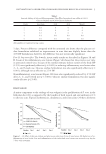
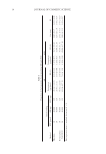
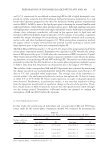
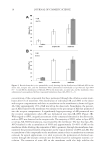
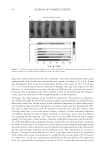
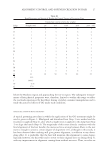
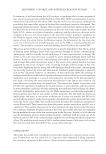
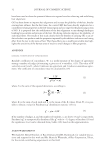
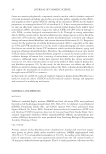
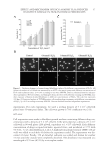
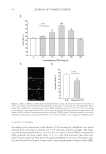
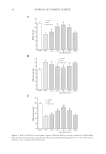
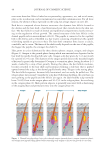
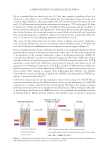
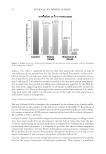
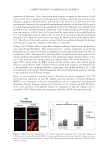
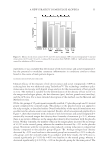
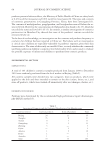
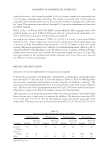
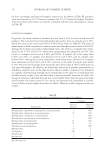
JOURNAL OF COSMETIC SCIENCE 4 Moritex, San Jose, CA) was used to visualize, size, and grade the lesion by two medical doctors at the testing lab. The lesions were treated and photographed every day for 5 days. Part II: long-term effect. Thirty-eight women between the ages of 18 and 50 were recruited for the study, following the same inclusion and exclusion criteria as described in Part I. The panel was divided into three groups as follows: (i) Group A (n = 15), 2.5% BP in an oil-in- water emulsion (ii) Group B (n = 14), 0.36% glucose oxidase substrate and 0.04% glucose oxidase enzyme in an oil-in-water emulsion and (iii) Group C (n = 9), untreated control. The formulations were buffered at pH 7.0. There were no added ions such as copper and iron in these formulations. The panelists exhibited Grade 2 acne (10–30 papules and comedones over about one- fourth of the face) to Grade 4 (about half the face had papules, comedones, and a few pustules some lesions were red and infl amed), or subtypes 1 (erythematotelangiectatic) and 2 (papulopustular) rosacea (National Rosacea Society). This was a 6-week in-use study where the subjects applied the test material on their full face, twice a day. They were examined at baseline (before treatment) and after 2 and 6 weeks of treatment with their assigned test materials. At each time point, lesions of the full face were counted by trained personnel at the contract testing laboratories. Both in- fl ammatory and noninfl ammatory lesions were counted. Since treatment was on full face every day, only the lower concentrations tested in the short-term assay were tested in the long-term assay, to avoid any irritation. RESULTS IN VITRO CHALLENGE TEST Microbiological challenge testing is a useful tool for determining the ability of a material to support the growth of spoilage organisms or pathogens. As observed in Table I, the glucose oxidase and glucose substrate mixture were very effective against Pools 1–3, but not against yeast and molds. CLINICAL Part I: short-term effect. Short-term lesion reduction study exhibited a marked reduction in lesion size on the site treated with the formulations containing glucose oxidase and glucose during course of the study (Figure 1A). As observed in the graph, there was a distinct reduc- tion in acne lesion size on the site treated with 0.5% glucose oxidase enzyme and 4% glu- cose (p = 0.041). The degree of infl ammation on acne sites is shown in Figure 1B. As observed in the graph, there was a marked reduction in acne lesion size on the site treated with the formulation containing 0.5% glucose oxidase enzyme and 4% glucose (p = 0.0467). The lower concentration of these actives was almost as effective as 10% BP, which did not exhibit statistically signifi cant improvement as compared to the untreated site. Area under the curves from Figures 1A and B are described in Figure 2. Area under the curve is a complete and comprehensive representation of the lesion over the course of

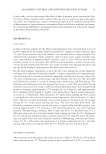
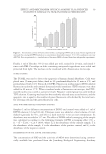
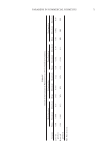
ENZYMATICALLY GENERATED HYDROGEN PEROXIDE REDUCES ACNE LESIONS 5 5 days. Percent difference compared with the untreated site shows that the glucose oxi- dase formulation exhibited an improvement in acne that was slightly better than the 10% BP formulation however, the difference was not statistically signifi cant. Part II: long-term effect. The 6-week, in-use study results are described in Figures 3A and B. Count of the infl ammatory acne lesions (Figure 3A) shows that they resolve over time in untreated control sites, because of the normal immune defense system of the body. BP (2.5%) was signifi cantly effective (p 0.001) in reducing infl ammatory acne lesions after 2-, 4-, and 6-week use. Glucose oxidase formulation was also signifi cantly effective (p 0.001), although not as effective as 2.5% BP. Noninfl ammatory acne lesions (Figure 3B) were also signifi cantly reduced by 2.5% BP after 2-, 4-, and 6-week use (p 0.001). Glucose oxidase formulation was also signifi - cantly effective (p ≤ 0.05). DISCUSSION A major component to the etiology of acne vulgaris is the proliferation of P. acnes in the follicular duct (21) as supported by the benefi ts of both topical and oral antibiotics (13) to alleviate acne. Topical erythromycin, clindamycin, and tetracycline (24) have all shown Table I Survival Ability of Selected Microorganisms That Were Introduced into a Mix of 0.04% Glucose Oxidase and 0.36% Glucose Substrate Pools Inoculum 24 h 48 h Week 1 1 6.6 0 0 0 2 6.5 0 0 0 3 6.3 0 0 0 4 6.4 6.0 6.0 6.0 5 5.0 5.0 5.0 5.0 All numbers are expressed as log counts. Figure 1. (A) Effect of glucose oxidase and glucose on reduction of size of acne lesion. (B) Reduction of in- fl ammation of acne lesion. Size and infl ammation of the individual acne lesions was assessed every day for 5 days with treatment.
Purchased for the exclusive use of nofirst nolast (unknown)
From: SCC Media Library & Resource Center (library.scconline.org)