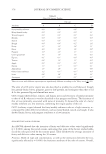
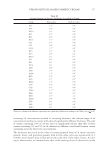
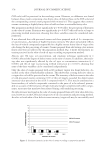
JOURNAL OF COSMETIC SCIENCE 318 of any cosmetic/pharmaceutical product preformulation study to quickly obtain informa- tion about possible interactions among the formulation components according to appear- ance, shift, or disappearance of endothermic or exothermic peaks and/or variations in the corresponding enthalpy values in thermal curves of drug–excipient mixtures. Drug–excipient compatibility testing at an early stage helps in the selection of excipients that increase the probability of developing a stable dosage form (1–34). In particular, the low availability of the drug and the time constraints associated with the early stages of formulation development have made such predictability particularly desirable. Despite the importance of drug–excipient compatibility testing, there is no universally accepted protocol for this purpose. The term thermal analysis refers to a group of techniques in which a physical property of a substance and/or a reaction product is measured as a func- tion of temperature while the substance is subjected to a controlled temperature program. Differential scanning calorimeter (DSC) involves the application of a heating or a cooling signal to a sample and a reference. When the substance undergoes a thermal event, the difference in the heat fl ow to the sample and reference is monitored against time or tem- perature while the temperature is programmed in a specifi ed atmosphere. As a result, the energy associated with various thermal events (e.g., melting, glass transition, and crystal- lization) can be evaluated. This method has been extensively reported in the literature for testing compatibility of excipients with a number of drugs (1–34). Although DSC cannot replace chemical methods for quantitative determination of drug concentration in long- term stability test, it gives fast and adequate data to classify acceptable and unacceptable excipients through the appearance, shift, or disappearance of endothermic or exothermic peaks, as well as variations in the relevant enthalpy values in DSC profi les of drug–excipient combinations. Therefore, the results with the DSC method are comparable and in good agreement with the results obtained with other methods. DSC has, therefore, been proposed as a rapid method for evaluating physicochemical interactions between two components. However, caution needs to be exercised in the interpretation of DSC results. Interpretation of ther- mal data is not always straightforward and, to avoid misinterpretations and misleading of thermal analysis results, it must be emphasized that interactions observed at high tem- peratures may not always be relevant under ambient conditions. Moreover, the presence of a solid–solid interaction does not necessarily indicate incompatibility, but it might instead be advantageous, e.g., as a more desirable form of cosmetic/pharmaceutical for- mulation. DSC cannot replace chemical methods for quantitative determination of drug concentration in long-term stability tests. In this work, DSC was used as a screening technique for assessing the compatibility of avobenzone with some currently used cosmetic excipients. Isothermal stress testing (IST) is another method that involves storing the drug–excipient blends with or without moisture at high temperature to accelerate drug ageing and inter- action with excipients. The samples are then visually observed and the drug content is determined quantitatively. Stressed binary mixtures (stored at 50°C for 15 days) of avobenzone and excipients were evaluated by high-performance liquid chromatography (HPLC). Fourier transform infrared (FT-IR) spectroscopy is another approach used in compatibil- ity tests, based on the hypothesis that some functional groups change during drug– excipient interaction. In cases of suspected incompatibility, FT-IR spectrum of the pure

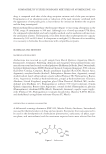
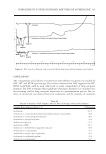
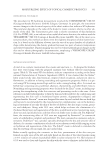
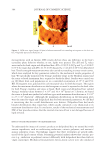
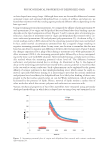
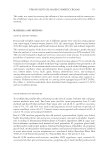
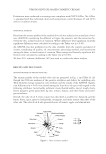
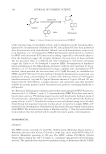
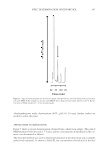
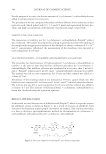
COMPATIBILITY STUDIES IN BINARY MIXTURES OF AVOBENZONE 319 drug is compared with that of the drug–excipient mixture and of the pure excipient. Disappearance of an absorption peak or reduction of the peak intensity combined with the appearance of new peaks gives a clear evidence for interaction between the excipient and the drug investigated. Butyl methoxydibenzoylmethane (Avobenzone) (Figure 1) has strong absorption in the UVA1 range (λ maximum at 380 nm). Although it is a broad-spectrum UVA fi lter, the compound is photolabile and can be rapidly oxidized, and its oxidation will inactivate the antioxidant systems. Unfortunately, it has been shown that its photoprotective capacity decreases by 50% to 60% after 1 h of exposure to sunlight (35). Because of its instability, it is necessary to formulate the avobenzone with compatible excipients. MATERIALS AND METHODS MATERIALS AND REAGENTS Avobenzone was received as a gift sample from Merck Química Argentina (Merck, Darmastadt, Germany). Following chemicals and excipients were purchased from com- mercial sources and used as such: ascorbyl palmitate (Hoffmann La Roche, Basel, Switzerland) butylated hydroxytoluene (BHT) (Eastman Chemical Company, Kingsport, TN) silicone fl uid (Dow Corning, Campinas, Brazil) paraffi num liquidum (R.A.A.M., Buenos Aires, Argentina) acetylated lanolin (Acelan L, Fabriquímica, Buenos Aires, Argentina) cetearyl alcohol/sodium lauryl sulfate/sodium cetearyl sulfate (Flamacer SX, Flamaquímica, Buenos Aires, Argentina) methyl p-hydroxybenzoate, propyl p-hydroxybenzoate (Clariant, Aberdeen, United Kingdom) propylene glycol (Dow Chemical, Midland, MI) imidaz- olidinyl urea (Biofl ama 115, Flamaquímica) sorbitol 70% (water solution), (Unión Química Argentina, Buenos Aires Argentina) cetearyl alcohol (Flamaquímica) glycerin (Flamaquímica) disodium EDTA (Merck, Darmstadt, Germany) caprylic capric triglyc- eride (Flamacer CC, Flamaquímica) titanium dioxide/silica (Eusolex T-AVO, Merck), and diethylhexyl syringylidene malonate (Oxynex ST, Merck). DIFFERENTIAL SCANNING CALORIMETRY A differential scanning calorimeter (DSC 822, Mettler Toledo, Greifensee, Switzerland) was used for thermal analysis of drug and excipients. Excipients that were expected to be used in the development of a formulation (preservatives, surfactants, oil phase, aque- ous phase, and antioxidants) and the maximum expected ratio were selected for this Figure 1. Avobenzone.
Purchased for the exclusive use of nofirst nolast (unknown)
From: SCC Media Library & Resource Center (library.scconline.org)