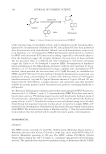
JOURNAL OF COSMETIC SCIENCE 320 study. Individual samples (drug and excipients) as well as physical mixtures of the drug and selected excipients were weighed directly in the pierced DSC aluminum pan and scanned in the temperature range of 25–400°C under atmosphere of dry nitrogen. A heating rate of 10°C/min was used and the obtained thermograms were observed for any interaction. The DSC cell was calibrated with indium (m.p. 156.6°C ΔHfus = 28.5 J/g) and zinc (m.p. 419.6°C) as standards. ISOTHERMAL STRESS TESTING For IST studies, the active and different excipients were weighed directly in 5-ml glass vials (n = 2) and mixed on a vortex mixer for 2 minutes. In each of the vials, the active– excipient blend was further mixed with a sealed glass capillary. To prevent any loss of material, capillary was broken and left inside the vial. Each vial was sealed using a Tefl on- lined screw cap and stored at 50°C (Hot air oven, Ionomex, Buenos Aires, Argentina). These samples were periodically examined for any unusual color change. After 15 days of storage at the above conditions, samples were quantitatively analyzed using HPLC. For sample preparation, an amount of powder equivalent to 50 mg of avobenzone was taken in a 100-ml volumetric fl ask, dissolved in 60 ml of methanol, stirred for about 5 min, and then diluted to volume with methanol. A 1-ml aliquot of the solution was trans- ferred to a 50-ml volumetric fl ask. The sample was diluted to volume with methanol. For standard preparation, 25 mg of avobenzone was taken in a 50-ml volumetric fl ask, dissolved in 20 ml of methanol, stirred for about 5 min, and then diluted to volume with methanol. A 1-ml aliquot of the solution was transferred to a 50-ml volumetric fl ask. The sample was diluted to volume with methanol. For the analysis of active–excipient mixtures, an HPLC system equipped with a dual piston reciprocating Spectra Physics pump (Model ISO Chrom. LC pump, Irvine, CA), a UV-Vis Hewlett Packard detector (Model 1050), a Hewlett Packard integrator (Series 3395, Loveland, CO), and a Rheodyne injector (Model 7125) were used. Chromato- graphic quantifi cation of lipoic acid was performed on a Microsorb-MV® 100 Å C18 (5 μm) Varian Analytical Instruments (Walnut Creek, CA). The mobile phase used was methanol:water (95:5, v/v) (pH 3.2) adjusted with 85% of phosphoric acid. Separation was isocratically carried out at room temperature the fl ow rate was 1.0 ml/min, with UV detection at 315 nm. The volume of each injection was 20 μl. Before injecting solutions, the column was stabilized for at least 30 min with the mobile phase fl owing through the system. Quantifi cation was accomplished using an external standard method. In the external standard method, the solute chosen as the reference is chromatographed separately from the sample. However, results from two chromatograms will be compared, so chromatographic conditions must be maintained extremely constant. Each solution was prepared in dupli- cate and was injected in triplicate, and the relative standard deviation was below 2.0%. IR SPECTROSCOPY IR spectra of active and active–excipient blends were recorded on an IR spectrophotom- eter Perking Elmer FT-IR Spectrum One (Shelton, CT), in the range of 4000–450 cm-1. Solid and liquid samples were analyzed using nujol suspensions.

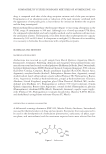
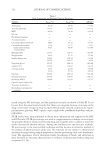
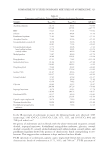
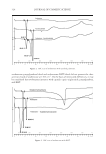
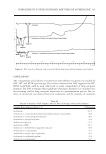
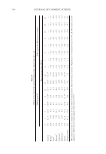
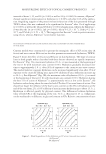
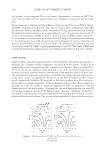
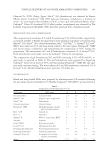
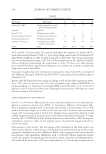
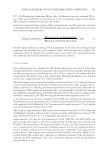
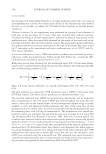
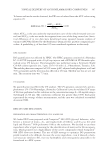
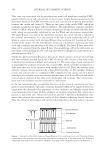
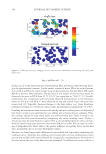
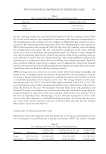
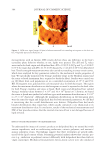
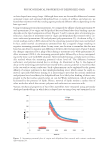
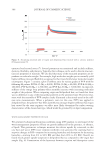
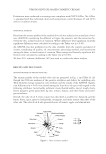
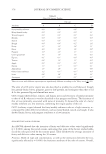
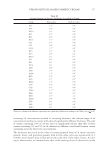
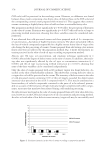
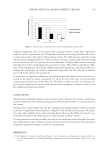
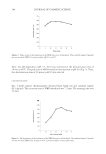
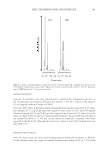
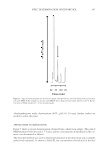
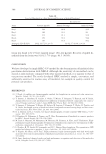
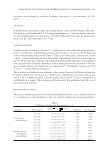
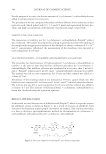
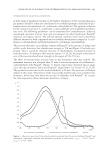
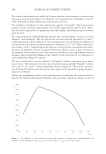
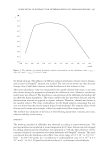
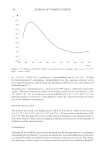
COMPATIBILITY STUDIES IN BINARY MIXTURES OF AVOBENZONE 321 RESULTS AND DISCUSSION The thermal behavior of the pure drug, respective excipient, and the combination of drug and excipient is compared in the DSC thermograms. The thermogram of avobenzone showed an endothermic peak at 86.4°C (corresponding to its melting point) with an as- sociated enthalpy of −75.01 J/g. DRUG–EXCIPIENT COMPATIBILITY TESTING In a majority of the cases, melting endotherm of the drug was well preserved with slight changes in terms of broadening or shifting toward a lower temperature. It has been re- ported that the quantity of material used, especially in active–excipient mixtures, affects the peak shape and enthalpy (33). Thus, these minor changes in the melting endotherm of a drug could be attributed to the mixing of active and excipient, which lowers the purity of each component in the mixture and may not necessarily indicate potential in- compatibility (31). Variations in the enthalpy values for the binary mixtures can be at- tributed to some heterogeneity in the small samples used for the experiments (3–4 mg) (22). The enthalpy values are reduced to half, less the binary mixtures mentioned. DSC data of avobenzone and excipient thermal events in single or binary systems are presented in Tables I and II. The melting endotherm of avobenzone was well retained in the blends of avobenzone with silicone, imidazolidinyl urea, sorbitol 70%, ascorbyl pal- mitate (Figure 2), propylene glycol, titanium dioxide/silica, and disodium EDTA. In the DSC scan of avobenzone with acetylated lanolin or methyl p-hydroxybenzoate (Methyl- paraben), the peak of avobenzone shifted to a lower temperature and broadened. There was also a signifi cant reduction in the enthalpy value. In the DSC scan of avobenzone with cetearyl alcohol, isopropyl myristate, propyl p-hydroxybenzoate (Propylparaben), diethylhexyl syringylidene malonate, caprylic capric triglyceride, BHT (Figure 3), cetearyl alcohol/ceteareth 20, cetearyl alcohol/sodium lauryl sulfate/sodium cetearyl sulfate (Figure 4), and paraffi num liquidum the peak of avoben- zone shifted to a lower temperature, broadened, and there was also a signifi cant reduction in the enthalpy value or the enthalpy value could be the average of both substances. In the DSC scan of avobenzone–glycerine mixture, the peak of avobenzone showed broad- ening and shifting to a higher temperature (93.12°C) with an anomalous enthalpy value. Appreciable decreasing or the absence of the melting temperature and its respective val- ues of fusion enthalpy suggests a process that takes place with low intensity or even disap- pears (the case of the binary mixture of avobenzone–acetylated lanolin). A higher value of fusion enthalpy shows an overlapping of two processes (the case of the binary mixture of avobenzone–BHT). The small variations in the enthalpy values for the binary mixtures can be attributed to some heterogeneity in the small samples used for the DSC experi- ments (3–4 mg). The difference of enthalpy for the binary mixtures of avobenzone with acetylated lanolin, imidazolidinyl urea, and sorbitol 70% can suggest a physical interac- tion that does not determine an incompatibility. On the basis of the DSC results, cetearyl alcohol, isopropyl myristate, propylparaben, diethylhexyl syringylidene malonate, caprylic capric triglyceride, BHT, glycerin, cetearyl alcohol/ceteareth 20, cetearyl alcohol/sodium lauryl sulfate/sodium cetearyl sulfate, and paraffi num liquidum seem to exhibit interaction with avobenzone. These excipients were
Purchased for the exclusive use of nofirst nolast (unknown)
From: SCC Media Library & Resource Center (library.scconline.org)